

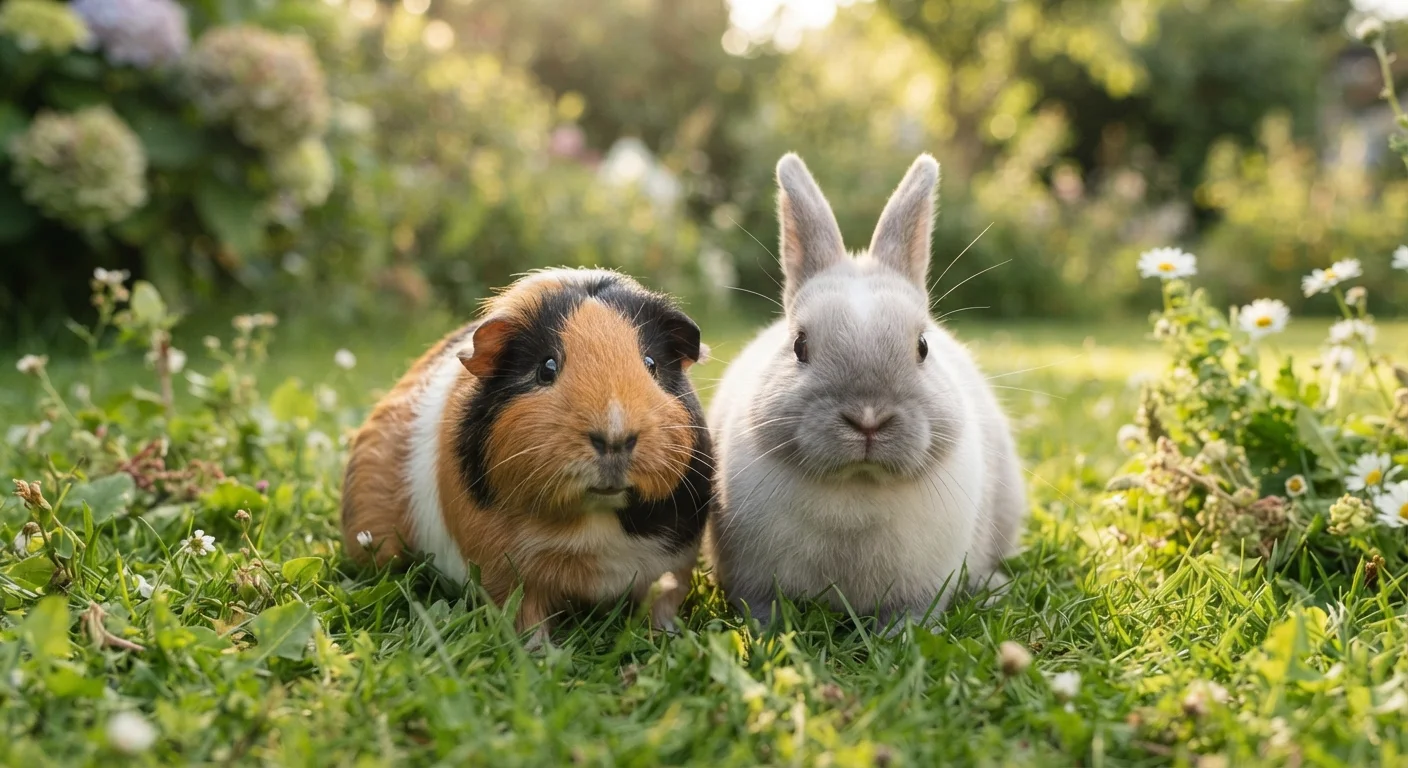
Key Takeaways
Option A
Guinea Pig
The sociable, low-to-the-ground companion.
Best for: Households wanting a gentle, vocal pet that thrives with a same-species companion and moderate daily interaction.
Option B
Rabbit
The active, inquisitive pet with room to roam.
Best for: Owners who can provide substantial free-roaming space and are ready for a longer, more demanding commitment.
If you want a gentle first pet for a calm household
Guinea Pig
Guinea pigs are less prone to stress-related injury when handled carefully and communicate their mood clearly through sounds and body language.
If you have ample indoor space and plenty of time daily
Rabbit
Rabbits reward owners who can provide a large enclosure and several hours of supervised free-roaming exercise each day.
If you're concerned about a longer commitment
Guinea Pig
With an average lifespan of 4-7 years, guinea pigs suit those who want a meaningful but somewhat shorter relationship before life circumstances change.
If children will be the primary caregivers
Guinea Pig
Guinea pigs are sturdier in low-to-the-ground handling situations and rarely kick the way rabbits can when frightened.
If you want a highly interactive, trainable pet
Rabbit
Rabbits can learn their names, use litter boxes reliably, and respond to positive reinforcement training in ways guinea pigs generally don't.
Space and Housing: More Room Than You Might Expect
Both guinea pigs and rabbits need far more space than the small cages typically sold in pet stores. Our guide explains what animal welfare research recommends in detail - the short version is that enclosure size is one of the most commonly underestimated needs for both species.
Guinea pigs should be housed in pairs or small groups (same-sex or neutered) and need a minimum footprint of around 7.5 square feet per pair, though more is always better. A single-level enclosure with solid flooring - not wire mesh, which can injure their feet - works well. They don't jump or climb, so a shorter pen with no top is practical for indoor setups.
Rabbits need even more room. A rabbit should have an enclosure large enough to take at least three full hops in any direction, plus several hours of daily free-roaming exercise outside that enclosure. They are athletic animals; boredom and physical restriction can lead to destructive behavior and stress-related health issues. Many rabbit welfare organizations now discourage traditional hutch-only housing entirely.
| Criterion | Guinea Pig | Rabbit |
|---|---|---|
| Typical lifespan | 4-7 years | 8-12 years |
| Minimum enclosure size | 7.5+ sq ft per pair | 12+ sq ft plus daily free-roaming time |
| Social housing | Pairs or groups strongly recommended | Companion beneficial; can bond with humans |
| Vitamin C requirement | Yes - daily dietary source needed | No special requirement |
| Trainability | Limited | Can litter-train and learn name |
| Handling tolerance | Moderate with gentle habituation | Can be stressed; injury risk if dropped |
| Noise level | Moderate - vocal and expressive | Mostly quiet; thumps when alarmed |
| Exercise needs | Moderate - large pen sufficient | High - must roam freely daily |
Diet and Daily Nutrition
Both species are herbivores and share one critical dietary cornerstone: unlimited grass hay (such as timothy or orchard grass) should make up around 70-80% of their daily intake. Hay keeps their continuously growing teeth worn down and their digestive systems healthy.
The key difference lies in vitamin C. Guinea pigs cannot produce vitamin C on their own and must receive it through fresh vegetables or a supplement daily. Without adequate vitamin C, they develop scurvy - a serious and painful condition. Leafy greens like romaine lettuce, bell peppers, and parsley are good dietary sources. See our detailed breakdown of what guinea pigs can and cannot eat for a safe food list.
Rabbits also benefit from fresh leafy greens daily, but do not have a vitamin C requirement. Fruit should be offered only sparingly for both species - the sugar content is high relative to their small body size. Pellets can supplement hay and greens but should not form the bulk of either animal's diet.
Social Needs and Temperament
Understanding each animal's social wiring helps you set realistic expectations before you bring one home.
Guinea pigs are highly social and, in most cases, should not be kept alone. A guinea pig without companionship can become withdrawn and show signs of chronic stress. Bonded pairs or small groups of the same sex (or neutered animals) are the standard recommendation from animal welfare organizations. Their communication is rich - wheeking, purring, and chutting are all normal vocalizations that owners quickly learn to read. Our article on guinea pig loneliness myths explores the science behind this in more depth.
Rabbits can bond closely with a companion rabbit or, in some cases, a bonded guinea pig - though housing the two species together is generally discouraged by veterinarians due to different dietary needs and the risk of injury. A solitary rabbit can bond with attentive human caregivers, but many welfare experts still recommend rabbit-rabbit companionship when possible.
Neither species is naturally a cuddling animal. Both can become comfortable with gentle, consistent handling, but forcing physical contact typically increases stress rather than building trust. Enrichment - foraging opportunities, tunnels, and safe chew items - matters as much as human interaction. Explore ideas in our guide to small pet enrichment.
4-7 yrs
Average guinea pig lifespan
According to veterinary guidance from the Humane Society of the United States, guinea pigs commonly live 4 to 7 years with proper care.
8-12 yrs
Average domestic rabbit lifespan
The House Rabbit Society notes that well-cared-for domestic rabbits routinely reach 8 to 12 years, a commitment many owners underestimate.
~80%
Portion of diet that should be hay
Veterinary nutritionists broadly recommend grass hay make up roughly 70-80% of both rabbits' and guinea pigs' daily food intake.
Health, Lifespan, and Veterinary Care
Both guinea pigs and rabbits require care from a veterinarian experienced with exotic or small animals - not all general practice vets see these species regularly. Locate a qualified vet before bringing your pet home, not after a health problem arises.
Guinea pigs typically live 4-7 years. Common health concerns include respiratory infections, dental problems, skin conditions, and - as mentioned - vitamin C deficiency. They are good at masking illness, so subtle behavior changes are often the first warning sign.
Rabbits can live 8-12 years, making them a longer commitment than many first-time owners anticipate. They are prone to gastrointestinal stasis (a potentially life-threatening slowdown of the digestive system), dental disease, and uterine cancer in unspayed females - which is a strong reason to have female rabbits spayed. Knowing the signs that a small pet needs urgent veterinary attention can be the difference between a manageable illness and a serious crisis for either species.
Before committing to either animal, review our full preparation checklist for new small pet owners to make sure your home is ready from day one.
A Note on Exotic Vet Access
Not every veterinary clinic is equipped to treat guinea pigs or rabbits. These animals are classified as 'exotic' patients and require a vet with specific training in small mammal care. Before adopting, call local clinics to confirm they see these species and ask about emergency coverage. Finding this out in advance can be critically important if your pet falls ill suddenly.