

Key Takeaways
Brake Wear
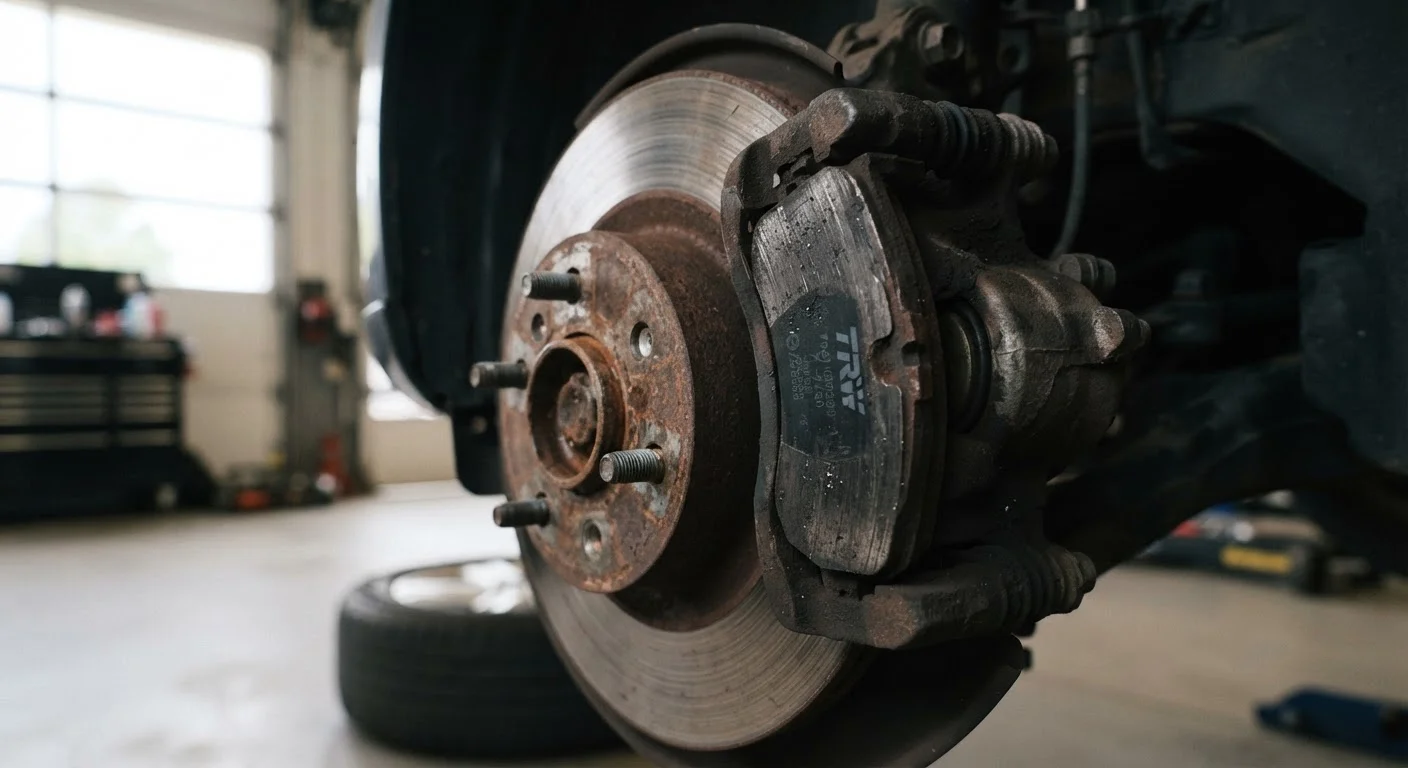
Brake wear refers to the gradual thinning of the friction material on your brake pads and, over time, the surface of your brake rotors. Every time you press the brake pedal, that material rubs against a metal rotor to slow the vehicle, and slowly wears away. Recognizing the early signs of wear helps you catch problems before they turn into safety risks or expensive repairs.
Most brake pads start with 10-12mm of friction material; mechanics generally recommend inspection or replacement when pads reach 3-4mm, and replacement is typically urgent at 2mm or less.
What Your Brakes Are Trying to Tell You
Your brakes communicate wear in a surprisingly straightforward way - if you know what to listen and feel for. The challenge is that most drivers learn to tune out unfamiliar sounds or dismiss minor changes in pedal feel until the problem becomes hard to ignore. By that point, the repair bill is usually larger and the safety margin is smaller.
Here are the four most common signals worth paying attention to:
- Squealing or squeaking: A high-pitched noise during braking is often caused by a wear indicator - a small metal tab built into the pad that contacts the rotor when friction material gets thin. It's designed to get your attention.
- Grinding: A deeper, metallic grinding sound typically means the pad material has worn through completely. Metal is now contacting metal. This damages rotors quickly and reduces stopping effectiveness. Have this checked without delay.
- Soft or spongy pedal: If the pedal travels farther than usual before the brakes engage, or feels mushy underfoot, this may point to air in the brake lines or degraded brake fluid. Our guide on checking your brake fluid can help you understand what healthy fluid looks like.
- Vibration or pulsing: If you feel a shudder through the pedal or steering wheel when braking, it often signals warped rotors - usually caused by overheating or uneven wear.
Noise Doesn't Always Mean Danger - But Don't Ignore It
Not every squeak signals a worn pad. Cold weather, surface rust after rain, or low-dust brake pads can all cause temporary noise that clears up quickly. The difference is persistence: noise that occurs consistently during braking and doesn't go away is worth investigating. When in doubt, a visual inspection costs very little and gives you a clear answer.
How Fast Do Brakes Actually Wear?
There's no single answer, because wear rate depends heavily on how and where you drive. Stop-and-go city traffic wears pads much faster than highway cruising. Towing a trailer, riding the brakes down steep grades, and aggressive braking all shorten pad life. Even the type of pad material matters - softer compounds tend to wear faster than harder ones, though each type has trade-offs in noise and dust.
25,000-65,000 mi
Typical brake pad lifespan range
This broad range reflects differences in driving style, vehicle weight, pad material, and traffic conditions.
3-4mm
Pad thickness that typically triggers inspection
Many mechanics use this threshold as a prompt to discuss replacement, with 2mm or less considered urgent.
~1 in 5
Vehicles with brake issues found during inspection
Industry inspection data consistently finds a significant share of vehicles on the road have brake components below recommended minimums.
As a general baseline, many mechanics suggest having your brakes visually inspected at least once a year or with every tire rotation. Your vehicle's maintenance schedule may include brake inspection intervals as well - it's worth checking.
Rotors last longer than pads on average, but they aren't immune to wear. Over time, rotors thin from repeated friction and may develop surface rust, grooves, or warping. A mechanic measures rotor thickness against the manufacturer's minimum specification to determine whether they can be resurfaced or need replacing.
Make Brake Checks Part of Tire Rotation Visits
Every time your tires are rotated - typically every 5,000-7,500 miles - ask the shop to visually inspect your brake pads and rotors at the same time. The wheels are already off, so the extra check adds minimal time and no extra cost at most shops. It's one of the simplest ways to stay ahead of brake wear without adding anything to your schedule.
When to Stop Driving and Get Help Immediately
Most brake wear is gradual and gives you time to schedule an inspection. But some signs call for more urgent action:
- The brake pedal sinks close to the floor before the car slows
- You hear loud grinding or metal scraping with every stop
- The vehicle pulls noticeably to one side when braking
- The brake warning light comes on while driving
If you notice any of these, it's wise to avoid highway speeds and minimize driving until a qualified mechanic can assess the system. Brakes are not a component where waiting pays off.
For a broader picture of how brake health fits into your overall vehicle upkeep, see our pre-trip safety checklist - it covers what to scan for before every drive, including a quick check of brake feel.