

Key Takeaways
Start here
Why Plate Balance Matters More Than Calorie Counting
Core concept
The Four Building Blocks of a Balanced Meal
Apply it
The Half-Plate Rule: A Visual Guide You Can Use Right Now
Watch out for
Common Mistakes Beginners Make (and How to Avoid Them)
Put it in practice
Putting It All Together: Simple Meal Examples
Why Plate Balance Matters More Than Calorie Counting
If nutrition has ever felt like a complicated math problem, you're not alone. Many people start their wellness journey convinced they need to track every calorie or memorize daily macro targets. The good news: building a genuinely nourishing meal is far simpler than that.
Rather than counting numbers, a balanced plate approach focuses on proportions - making sure each meal includes a variety of food groups that together supply your body with what it needs to function well. This method is more forgiving, easier to maintain long-term, and doesn't require an app or a spreadsheet.
If the very idea of thinking about food still feels overwhelming, our simpler nutrition framework might be a reassuring place to start first.
This Is General Guidance, Not a Prescription
The principles in this article reflect broadly accepted public health nutrition guidance suitable for most generally healthy adults. Individual needs differ significantly based on age, activity level, health conditions, and other factors. A registered dietitian can help tailor these ideas to your specific situation.
The Four Building Blocks of a Balanced Meal
Every nutritionally sound meal can be built from four core components. Understanding each one gives you a flexible template you can adapt to almost any cuisine or food preference.
Macronutrients
The three main nutrients your body needs in relatively large amounts: carbohydrates (for energy), protein (for building and repair), and fat (for energy storage and cell function).
Fiber
A type of carbohydrate found in plants that your body can't fully digest. It supports digestive health, helps you feel full, and may support stable blood sugar levels.
Whole grains
Grains that retain all three parts of the original grain kernel - the bran, germ, and endosperm. Examples include oats, brown rice, and whole-wheat bread. They contain more fiber and nutrients than refined grains.
Lean protein
Protein sources that are relatively low in saturated fat, such as chicken breast, fish, eggs, beans, lentils, and tofu.
Healthy fats
Fats that come primarily from plant sources or fatty fish and are associated with supporting heart and brain health. Examples include olive oil, avocado, nuts, and seeds.
Satiety
The feeling of fullness and satisfaction after eating. Protein and fiber both tend to increase satiety, which can help with comfortable portion awareness.
- Vegetables and fruit - These supply vitamins, minerals, fiber, and water. They form the largest portion of a balanced plate. Variety in color generally means variety in nutrients.
- Lean protein - Protein supports muscle, immune function, and helps you feel full. Sources include beans, lentils, eggs, tofu, fish, poultry, and low-fat dairy.
- Whole grains and starchy vegetables - Foods like brown rice, oats, whole-wheat bread, and sweet potatoes provide sustained energy and fiber. They're an important part of most people's diets.
- Healthy fats - Small amounts of fats from sources like olive oil, avocado, nuts, and seeds help your body absorb certain vitamins and add satiety to meals.
For a deeper look at the vitamins and minerals these food groups supply, see our micronutrients beginner's guide.
The Half-Plate Rule: A Visual Guide You Can Use Right Now
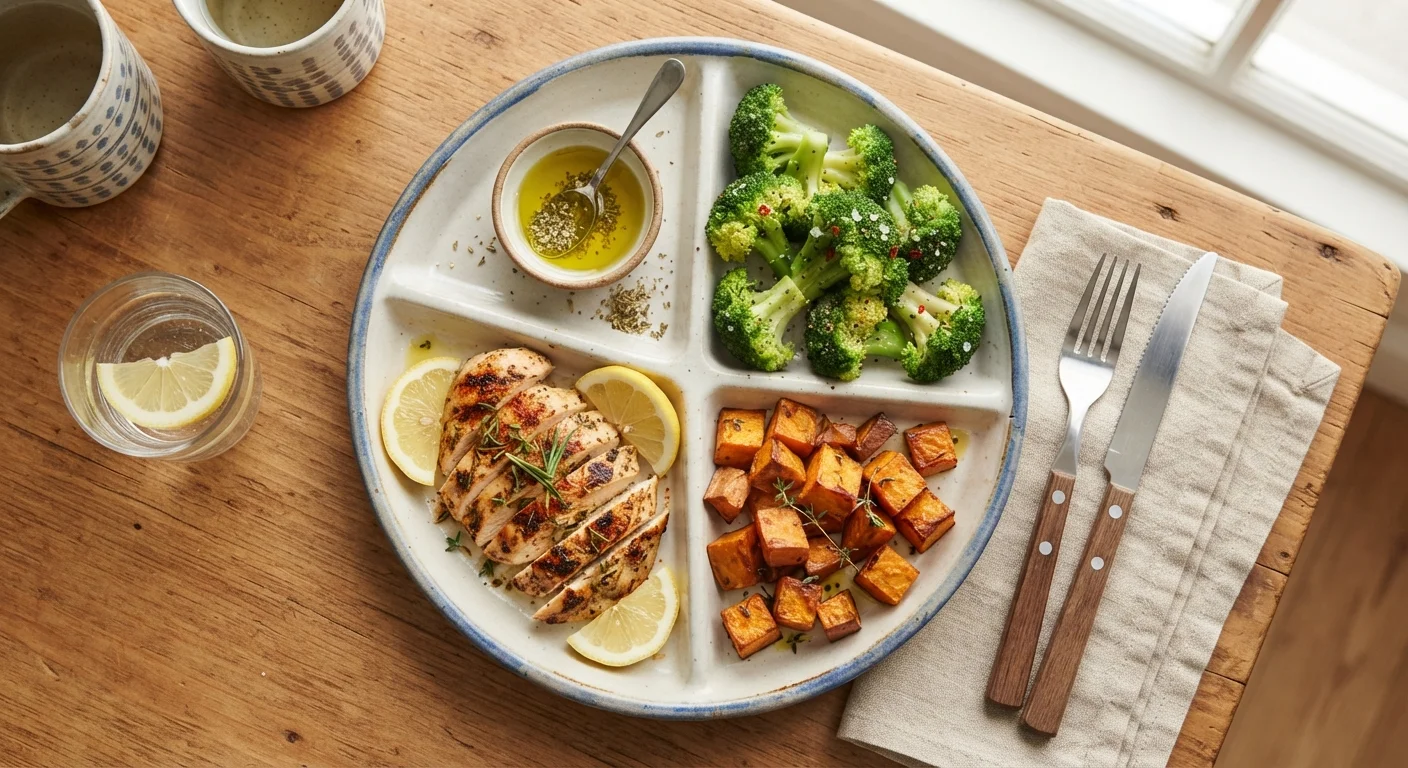
One of the most practical tools in everyday nutrition is a simple visual framework: divide your plate into sections by eye before you eat. Here's a starting point used in many public health guidelines:
- Half your plate: non-starchy vegetables (broccoli, spinach, peppers, cucumber, carrots)
- One quarter: a lean protein source
- One quarter: a whole grain or starchy vegetable
- A small addition: a healthy fat (a drizzle of olive oil, a few slices of avocado)
You don't need to measure portions precisely. The visual split is a useful habit - your eye becomes a reasonable guide with a little practice. Over time, this becomes intuitive rather than effortful.
Make the Visual Habit Stick
When you're first learning to balance your plate, try using a dinner plate with a slightly smaller diameter than usual - it naturally encourages appropriate portion sizes without any mental effort. After a few weeks of applying the visual framework, most people find they can replicate it without thinking at all.
Common Mistakes Beginners Make (and How to Avoid Them)
Even well-intentioned eaters fall into habits that quietly work against their goals. Knowing these pitfalls in advance makes them much easier to sidestep.
- Skipping vegetables to save time. Frozen vegetables are just as nutritious as fresh and take minutes to prepare. Keeping a bag of frozen spinach or mixed vegetables on hand removes the convenience barrier.
- Over-relying on processed protein sources. Deli meats and protein bars can be convenient occasionally, but they're often high in sodium or added sugars. Whole-food protein sources are worth prioritizing most of the time.
- Treating all carbohydrates the same. White bread and oats affect the body differently. Choosing whole grains more often - not eliminating carbs entirely - is a more sustainable approach.
- Expecting every meal to be perfect. Balance is a pattern, not a single event. One less-nutritious meal doesn't undo a week of good habits.
For a closer look at the patterns that can quietly undermine an otherwise decent diet, our article on nutritional blind spots goes deeper.
Avoid Swapping One Rule for Another
It can be tempting to turn the half-plate guideline into a rigid rule you feel anxious about breaking. That kind of all-or-nothing thinking often makes eating feel stressful rather than nourishing. If a meal doesn't match the framework, simply return to it at the next one - no guilt needed.
Putting It All Together: Simple Meal Examples
Applying the half-plate framework doesn't require cooking elaborate meals. Here are a few straightforward examples to illustrate how it works in practice:
- Quick weeknight dinner
- Half the plate: roasted zucchini and cherry tomatoes. One quarter: baked salmon fillet. One quarter: cooked brown rice. Small addition: a drizzle of olive oil and lemon.
- Easy lunch
- Half the plate: a large mixed green salad with cucumber and carrots. One quarter: canned chickpeas or hard-boiled eggs. One quarter: a slice of whole-grain bread. Small addition: a tablespoon of tahini or a few walnuts.
- Simple breakfast adaptation
- Breakfast doesn't always follow the plate model exactly - and that's fine. A bowl of oatmeal topped with berries and a small handful of nuts covers whole grains, fruit, and healthy fat in one dish.
Once you feel comfortable building individual meals, the next natural step is planning ahead. Our meal planning guide for beginners walks you through how to make a weekly routine that actually holds up.
Nutrition pairs well with movement too. If you're also looking to build physical activity habits, our beginner bodyweight training guide is a practical companion.
This article is for general informational and educational purposes only and does not constitute medical or dietary advice. Please consult a qualified healthcare professional or registered dietitian before making significant changes to your diet, especially if you have an existing health condition.