

Key Takeaways
Start here
Why Meal Planning Fails Before It Starts
Learn the basics
The Core Concepts You Need to Know First
Take action
How to Build Your First Weekly Plan
Go further
Making the Habit Stick Long-Term
Why Meal Planning Fails Before It Starts
Most beginners approach meal planning with the best intentions and a brand-new weekly template - then abandon the whole thing by day four. The problem is rarely motivation. It's scope. Trying to plan every breakfast, lunch, dinner, and snack for seven days creates a system so rigid that one unexpected work event or a sudden craving sends the whole structure crashing down.
This is the same pattern that undoes many well-intentioned routines. As explored in why organizing systems collapse after two weeks, the culprit is usually an over-engineered approach that leaves no room for real life.
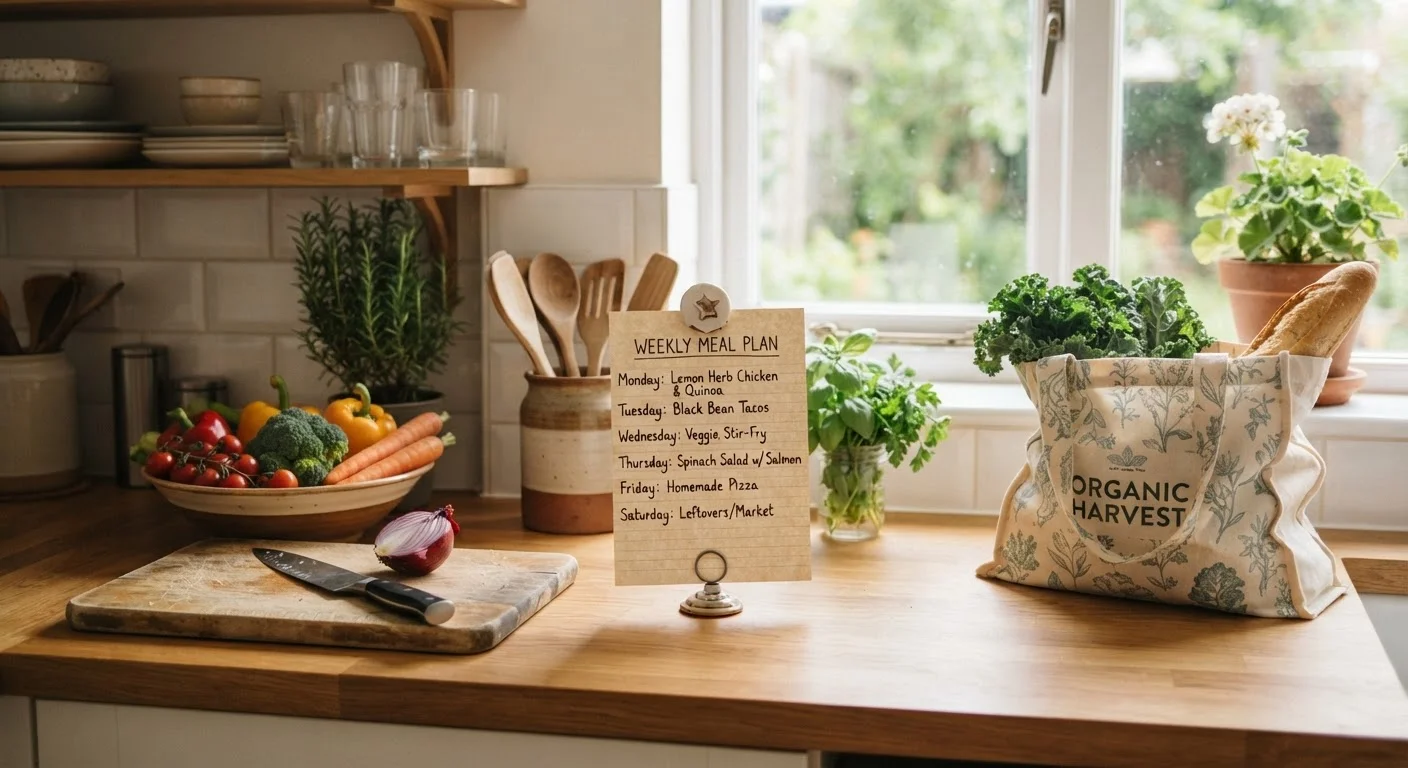
The fix is to start deliberately small. Plan three dinners in your first week - not fourteen meals. Give yourself built-in flexibility nights. Treat the plan as a guide, not a contract.
The Core Concepts You Need to Know First
Meal planning
Deciding in advance what meals you will eat over a set period - usually a week - before you shop or cook. It's a decision-making tool, not a strict schedule.
Recipe rotation
A personal shortlist of meals your household already enjoys and you know how to prepare, used repeatedly on a rolling basis to reduce planning effort.
Ingredient overlap
Choosing weekly meals that share one or more ingredients so you buy less and waste less. For example, using the same onions in both a stir-fry and a soup.
Flexible night
A planned break in your meal plan - designated in advance - for takeout, leftovers, or a simple pantry meal, so unexpected events don't derail the whole week.
Habit stacking
A technique where you link a new habit to an existing one to make it easier to remember and maintain - for example, always planning meals right after your weekly grocery receipt review.
Understanding a few foundational ideas will save you from common beginner mistakes. Meal planning is not the same as meal prepping - you don't need to spend Sunday afternoon cooking everything in advance. Planning simply means deciding in advance what you'll eat so you're not making that decision at 6 p.m. when you're already hungry and tired.
Two concepts matter most at the start: recipe rotation and ingredient overlap. A recipe rotation is a personal shortlist of 10 to 15 meals your household already likes and knows how to make. Ingredient overlap means choosing weekly meals that share ingredients - buy one bunch of cilantro, use it in two or three different dishes rather than letting it go to waste.
How to Build Your First Weekly Plan
Follow these steps in order during a single 30-minute session, ideally on the same day each week - many people choose Saturday or Sunday morning.
- Check your calendar first. Identify nights when you'll be home late, have guests, or genuinely won't cook. Mark those as flexible nights now, before you plan anything else.
- Choose three to four dinners from your rotation. Pull from meals you already know. This is not the week to experiment with five new recipes.
- List every ingredient those meals require. Cross-reference with what you already have at home. Write your grocery list only for what's missing.
- Add one or two simple lunches if you want - leftovers from dinners count.
- Shop from the list only. Impulse purchases are the main source of waste in beginner planning.
Use a Recipe Shortlist, Not a Search Engine
When it's time to choose this week's meals, resist the urge to scroll recipe sites for inspiration - that leads to complexity and longer prep times than expected. Instead, keep a handwritten or digital list of 10 to 15 meals your household reliably enjoys and rotate through them. Novelty can come in gradually, one new recipe per week at most.
Good nutrition doesn't require complicated meals. For broader guidance on eating well day-to-day, the Nutrition Basics hub covers practical, beginner-friendly eating principles that pair naturally with a planning routine.
Making the Habit Stick Long-Term
The planning session itself needs to become a recurring anchor in your week. Pairing it with an existing habit - like your Sunday reset routine - dramatically increases the chance it continues. Habit researchers call this habit stacking: attaching a new behavior to one already in place.
Expect to refine your system over the first three to four weeks. You'll discover which meals your household reliably finishes, which recipes take longer than expected, and how many flexible nights you actually need. That feedback is valuable - adjust accordingly rather than starting from scratch.
For beginners juggling multiple responsibilities, meal planning is one piece of a broader time management approach. Managing a packed week offers a practical framework for fitting planning sessions and other structured habits into a busy schedule without feeling overwhelmed.
Don't Treat a Skipped Week as Failure
Missing a week of planning is normal, especially early on. The risk is letting one skipped week convince you the habit 'didn't work.' Planning is a skill that improves with repetition - returning to it after a gap is part of the process, not a sign you've failed.
Finally, don't treat a missed week as a failure. Life interrupts every system eventually. The goal is a routine you return to easily - not one you maintain perfectly.
This article is for general informational and educational purposes only. It does not constitute dietary or medical advice. Consult a qualified healthcare or nutrition professional for guidance tailored to your individual health needs.