

Key Takeaways
Why Busy Weeks Feel Unmanageable
Most people don't struggle with a packed week because they have too much to do - they struggle because everything feels equally urgent at once. Without a structure for sorting and sequencing your obligations, your brain stays in a constant low-level state of alert, scanning for what might be missed.
The solution isn't doing more or working faster. It's building simple, repeatable habits that put your time in order before the week begins. If you've ever found yourself wondering whether a planning system might help, comparing common approaches like time blocking and to-do lists is a useful starting point.
“It is not enough to be busy; so too are the ants. The question is: what are we busy about?”
— Henry David Thoreau, Author and philosopher
Core Practices for a More Manageable Week
The habits below aren't complicated, but they do require consistency. Start with one or two that address your biggest pain point, rather than trying to adopt all of them simultaneously.
Do a 15-minute weekly preview every Sunday evening
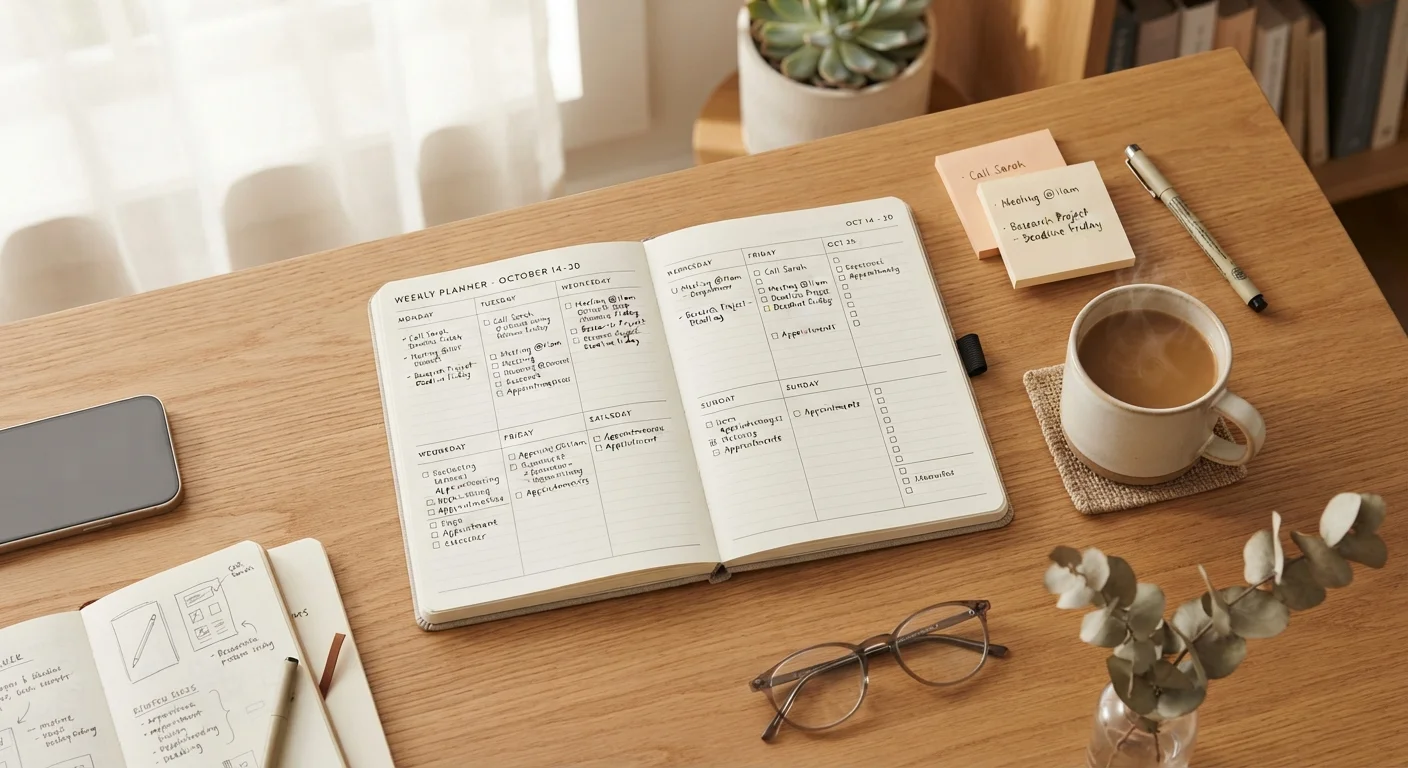
Starting the week without a plan means reacting to whatever appears most urgent rather than what actually matters. A short review session lets you see the full picture - deadlines, appointments, and errands - before Monday arrives, so you're not scrambling.
Batch errands by location and day rather than running them piecemeal
Every individual errand trip costs you transition time - getting ready, driving, parking, and returning home. Grouping errands into one or two dedicated blocks per week dramatically reduces that overhead and frees up mental bandwidth on other days.
Schedule rest the same way you schedule meetings
Rest tends to get cut first when life gets busy, yet cognitive performance, mood, and physical health all depend on adequate recovery. Treating rest as a committed block - not something you'll 'get to if there's time' - makes it far more likely to happen.
Use a single trusted system to capture all tasks and appointments
Splitting tasks across sticky notes, phone reminders, email flags, and mental memory creates invisible workload - you spend energy remembering where things are stored rather than actually doing them. One centralised system, used consistently, eliminates that overhead.
Protect at least one hour each day for focused, uninterrupted work
Fragmented attention makes even simple tasks take longer. A single daily block of focused time - free from notifications and interruptions - allows you to make real progress on meaningful work rather than just responding to what's in front of you.
For home-related tasks specifically, a short Sunday reset routine can sit neatly alongside your weekly planning session and prevent domestic clutter from eating into your week.
Fitting Meals and Errands Into the Plan
Food and household logistics are two of the biggest time drains in a typical week - and two of the most plannable. Deciding what you'll eat in advance removes a daily decision that often triggers last-minute, expensive choices. See how building a basic meal planning routine can slot into your weekly structure. Pairing that with consistent grocery shopping habits reduces both stress and food waste.
No System Works Perfectly Every Week
Life is unpredictable - unexpected obligations, illness, or simply a bad day will disrupt even the best-laid plan. The goal isn't perfection; it's having a structure flexible enough to absorb disruption and resume. If a week goes sideways, treat it as data rather than failure and adjust your approach for the next one.
For movement, remember that exercise doesn't have to be a scheduled gym session. Short bursts of activity spread across the day can support your energy levels without requiring a dedicated block of time.
Start Small: Quick Wins You Can Try This Week
You don't need to overhaul your entire routine to feel more in control. These immediately actionable steps can shift your week noticeably, even if you only pick one.
The goal is to reduce friction, not add more structure for its own sake. Once a habit feels automatic - typically after several consistent weeks - you can layer in the next one.