

Key Takeaways
What Are Movement Snacks - and Do They Actually Help?
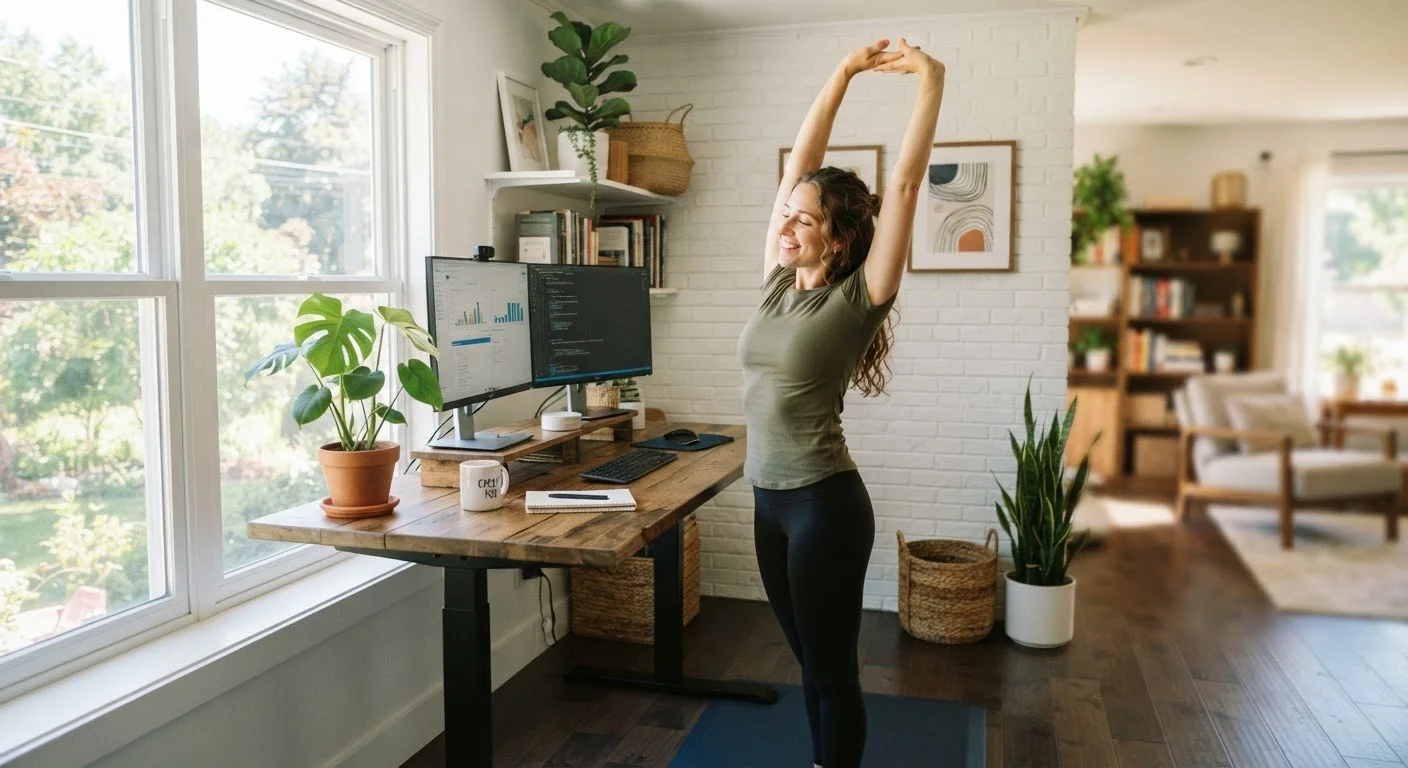
A movement snack is exactly what it sounds like: a short, intentional burst of physical activity woven into your day rather than saved for a dedicated workout block. Think two minutes of marching in place, a few wall push-ups between meetings, or a brisk walk to the end of the street and back.
Public health guidelines generally recommend accumulating moderate physical activity throughout the week, and growing evidence suggests that spreading activity across the day in smaller increments - rather than one long session - can still support cardiovascular health, mood, and energy levels. For complete beginners especially, movement snacks lower the barrier dramatically: there's no gym, no commute, no special outfit required.
If a packed schedule is making any exercise feel out of reach, you're not alone - and you're exactly who this approach was designed for. See how practical time management habits can complement this strategy by creating small pockets of space in even the busiest weeks.
Talk to Your Doctor First
This article provides general health information, not personal medical advice. If you have a chronic condition, recent injury, or haven't been active for a long time, please speak with a qualified healthcare professional before starting any new movement routine. They can help you identify what's safe and appropriate for your specific situation.
How to Build Your Movement Snack Routine
What you will need
Comfortable, supportive footwear
Reduces strain on your feet and joints during standing and walking snacks.
Interval timer app
Helps you set simple reminders to move throughout the day without watching the clock.
Resistance band
Adds light resistance to seated or standing exercises for variety.
Identify your natural pause points
Scan your typical day for moments when you're already stopping: waiting for your coffee, transitioning between tasks, or finishing a phone call. These are your natural anchors. Jot down three to five of them - you'll use these as cues to move.
Choose simple movements you can do anywhere
Start with movements that require no equipment and minimal space: marching in place, standing calf raises, chair squats (sitting and standing from your seat), or gentle neck rolls. Keep the list short - two or three go-to moves is plenty to begin.
If you want more variety over time, our guide to low-impact exercise options covers accessible movements that are easy on the joints.
Set a manageable duration
Aim for two to five minutes per movement snack. That's it. Research suggests that even brief bouts of movement can contribute to overall activity levels, and starting small makes the habit far easier to sustain than ambitious goals you'll skip on busy days.
Pair each movement snack with a habit anchor
Attach each snack to a specific existing habit - not a vague intention. Instead of "I'll move more in the morning," try "After I pour my first glass of water, I'll do one minute of marching in place." Specificity is the difference between a plan and a wish.
Track and gradually build
After one to two weeks, notice how many snacks you're actually completing. If you're hitting your targets consistently, consider adding one more snack per day or extending the duration by a minute. Progress should feel easy, not forced.
On days when you do find longer windows, a proper warm-up and cool-down routine can help you get more out of that time safely.
Stack Snacks onto Existing Habits
The easiest way to remember your movement snacks is to attach them to things you already do. Try a set of calf raises while the coffee brews, a few shoulder rolls before every video call, or a short walk right after lunch. These habit anchors remove the need to find willpower each time.
Don't Push Through Pain
Movement snacks should feel manageable - maybe a little challenging, but never painful. If you feel sharp pain, dizziness, or shortness of breath beyond mild exertion, stop immediately and seek medical attention. Discomfort is your body's signal to slow down, not push harder.
Keeping the Habit Going
The most common reason movement routines fade is that they feel like one more obligation on an already overwhelming list. The antidote is to keep expectations realistic. Missing a day doesn't erase your progress - it's a normal part of building any new habit. Simply return to it the next day without self-criticism.
Pairing consistent movement with other supportive habits amplifies the benefit. For example, simple weekly grocery habits can support your energy levels, making it easier to feel like moving in the first place. And remember that rest matters too - our article on understanding recovery and rest days explains why downtime is a legitimate part of any movement plan, not a sign of laziness.
Start with one snack per day. Let that feel easy. Then add another. Small and consistent will always outperform ambitious and short-lived.
This article is for general informational purposes only and does not constitute medical advice. Please consult a qualified healthcare professional before making changes to your physical activity routine, especially if you have any existing health conditions.