

Key Takeaways
Why Basic First Aid Knowledge Matters
Most emergencies don't happen in hospitals - they happen at home, at work, or on the road. The minutes before professional help arrives can make a meaningful difference in outcomes. Yet basic first aid is one of those skills that many adults assume they'll figure out in the moment, or that someone else will handle.
This guide is part of a broader look at skills people assume adults just know - first aid firmly belongs on that list. You don't need a medical background. You need a handful of reliable responses that you've thought through before a crisis hits.
This article is for general educational purposes only and is not a substitute for professional medical training or advice. Always call 911 for any life-threatening emergency.
70%
Emergencies occur at home
The American Red Cross estimates that roughly 70% of emergencies happen in or around the home, where trained bystanders can make an immediate difference.
3-5 min
Brain injury risk window without oxygen
Medical sources consistently note that brain damage can begin within 3 to 5 minutes of oxygen deprivation, underscoring why immediate bystander response matters.
Cuts and Bleeding
Minor cuts are among the most common household injuries. The goals are to stop bleeding, keep the wound clean, and protect it while it heals.
- Apply direct pressure. Use a clean cloth, gauze pad, or bandage and press firmly on the wound. Hold pressure continuously for at least 10 minutes without peeking - lifting the cloth disrupts clot formation.
- Rinse the wound. Once bleeding slows, rinse gently under clean running water for a minute or two to remove debris. Avoid scrubbing.
- Cover it. Apply an adhesive bandage or sterile dressing. Change it daily or whenever it gets wet or dirty.
Watch for signs of infection over the following days: increasing redness, warmth, swelling, pus, or fever. These warrant a visit to a healthcare provider. Deep wounds, wounds that won't stop bleeding after 10-15 minutes of pressure, or wounds with embedded objects need emergency care.
Build a Simple Home First Aid Kit
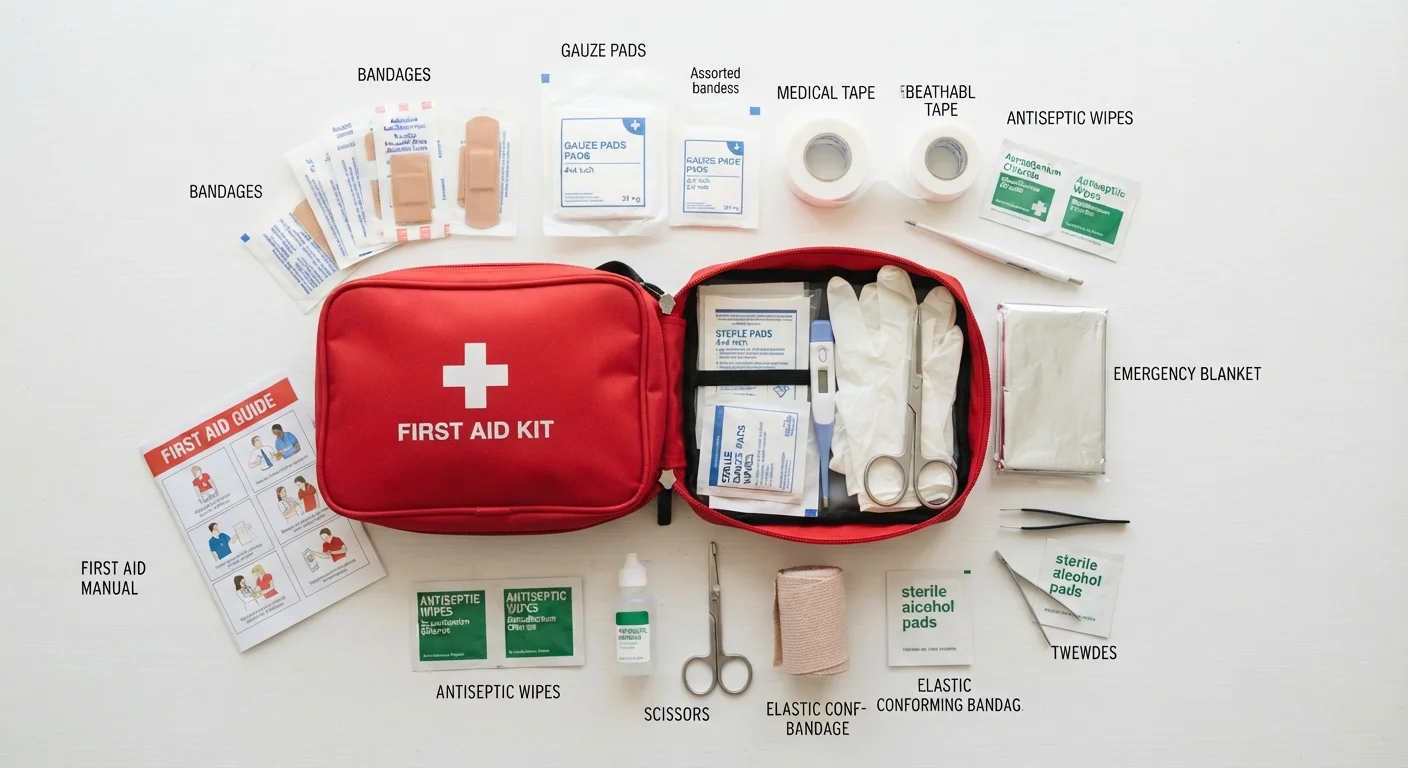
A basic kit should include adhesive bandages in multiple sizes, sterile gauze pads, medical tape, antiseptic wipes, and disposable gloves. Store it somewhere accessible but out of reach of young children. Knowing where your kit is before an emergency is half the battle.
Burns
Burns are classified by depth. Minor (superficial) burns affect only the outer skin layer and typically cause redness and pain. More serious burns - which may appear white, brown, or involve blistering over a large area - need professional evaluation.
For minor burns, follow these steps:
- Cool the burn immediately. Hold the area under cool (not cold or icy) running water for 10 to 20 minutes. This is the most evidence-supported first response and helps reduce tissue damage.
- Do not apply butter, toothpaste, or ice. These home remedies can worsen damage or introduce infection.
- Cover loosely. Use a clean, non-fluffy material such as cling wrap or a sterile dressing. Avoid adhesive bandages directly on burned skin.
- Leave blisters intact. Popping blisters increases infection risk.
Seek emergency care for burns on the face, hands, feet, genitals, or over joints; burns larger than about 3 inches; chemical or electrical burns; and any burn in a child or elderly person.
Keep a small first aid kit in both your home and car, and check it once a year to replace expired items like antiseptic wipes and adhesive bandages.
Supplies that are expired or depleted are useless in a real emergency; a quick annual check takes under five minutes and ensures you're actually prepared.
When treating a burn, set a timer for your 10-20 minutes of cool water - most people stop far too soon because the pain eases quickly.
Evidence-based burn guidelines emphasize the full cooling period for best outcomes; cutting it short because the pain has dulled doesn't mean the cooling work is done.
Choking
Choking occurs when the airway is partially or fully blocked. A person who can cough forcefully should be encouraged to keep coughing - don't interfere. If someone cannot cough, speak, or breathe, act immediately.
For a conscious adult or child over 1 year
- Stand behind the person and lean them slightly forward.
- Give up to 5 firm back blows between the shoulder blades with the heel of your hand.
- If that doesn't clear the blockage, perform abdominal thrusts (the Heimlich maneuver): place one fist just above the navel, grip it with your other hand, and give quick inward-and-upward thrusts.
- Alternate 5 back blows and 5 abdominal thrusts until the object is expelled or the person loses consciousness.
If the person becomes unconscious
Call 911 immediately and begin CPR if you are trained. CPR training is beyond the scope of this article - the American Red Cross and American Heart Association both offer accessible in-person and online courses, and completing one is strongly encouraged.
Learn CPR From a Certified Course
This article describes the Heimlich maneuver for choking, but CPR requires hands-on practice to perform correctly. Written instructions alone are not adequate preparation. The American Red Cross and American Heart Association both offer widely available, affordable CPR certification courses - completing one is one of the most valuable things an adult can do.
Sprains and Suspected Fractures
A sprain is a stretch or tear of the ligaments - the connective tissue holding joints together. Ankles, wrists, and knees are most commonly affected. It can be difficult to tell a sprain from a fracture without imaging, so when in doubt, treat it as a fracture and seek evaluation.
The standard first-response protocol is RICE:
- Rest
- Stop using the injured area. Continuing to bear weight on a sprained ankle, for example, can worsen the injury.
- Ice
- Apply an ice pack wrapped in a thin cloth for 15-20 minutes at a time, several times in the first 24-48 hours. Never apply ice directly to skin.
- Compression
- Wrap the area with an elastic bandage - snug but not tight enough to cut off circulation. Loosen if tingling or numbness develops.
- Elevation
- Raise the injured limb above heart level when possible to reduce swelling.
Seek medical care if the person cannot bear any weight, there is significant deformity, or pain and swelling are severe. Suspected fractures - especially in children - always warrant professional assessment.
When to Call 911
First aid is a bridge, not a replacement for emergency services. Call 911 immediately for any of the following:
- Unconsciousness or unresponsiveness
- Difficulty breathing or no breathing
- Severe or uncontrollable bleeding
- Chest pain, tightness, or pressure
- Signs of stroke: sudden face drooping, arm weakness, speech difficulty
- Seizures
- Suspected poisoning or overdose
- Severe allergic reaction (anaphylaxis): throat swelling, hives, difficulty breathing
- Head, neck, or spine injuries
When calling 911, stay calm, state the location clearly, describe what happened, and follow the dispatcher's instructions. Don't hang up until told to do so.
For non-emergencies that still need professional attention - an injury from a minor vehicle accident, for example - an urgent care clinic is often the right next step. Building these response habits now means you'll act more effectively when it counts.
American Red Cross First Aid Training
The Red Cross offers in-person and online first aid and CPR courses across the US, including options designed for complete beginners with no prior training.
American Heart Association CPR & First Aid
The AHA provides evidence-based CPR, AED, and first aid certification programs, with courses available in most communities and workplaces nationwide.
MedlinePlus First Aid Reference
A free, government-backed health information resource from the National Library of Medicine covering first aid procedures in plain, reliable language.
This article is for general educational purposes only and does not constitute medical advice. Always consult a qualified healthcare professional for personal medical decisions, and call 911 for any emergency.