

Key Takeaways
Why Minor Accidents Feel Major - And What That Means for You
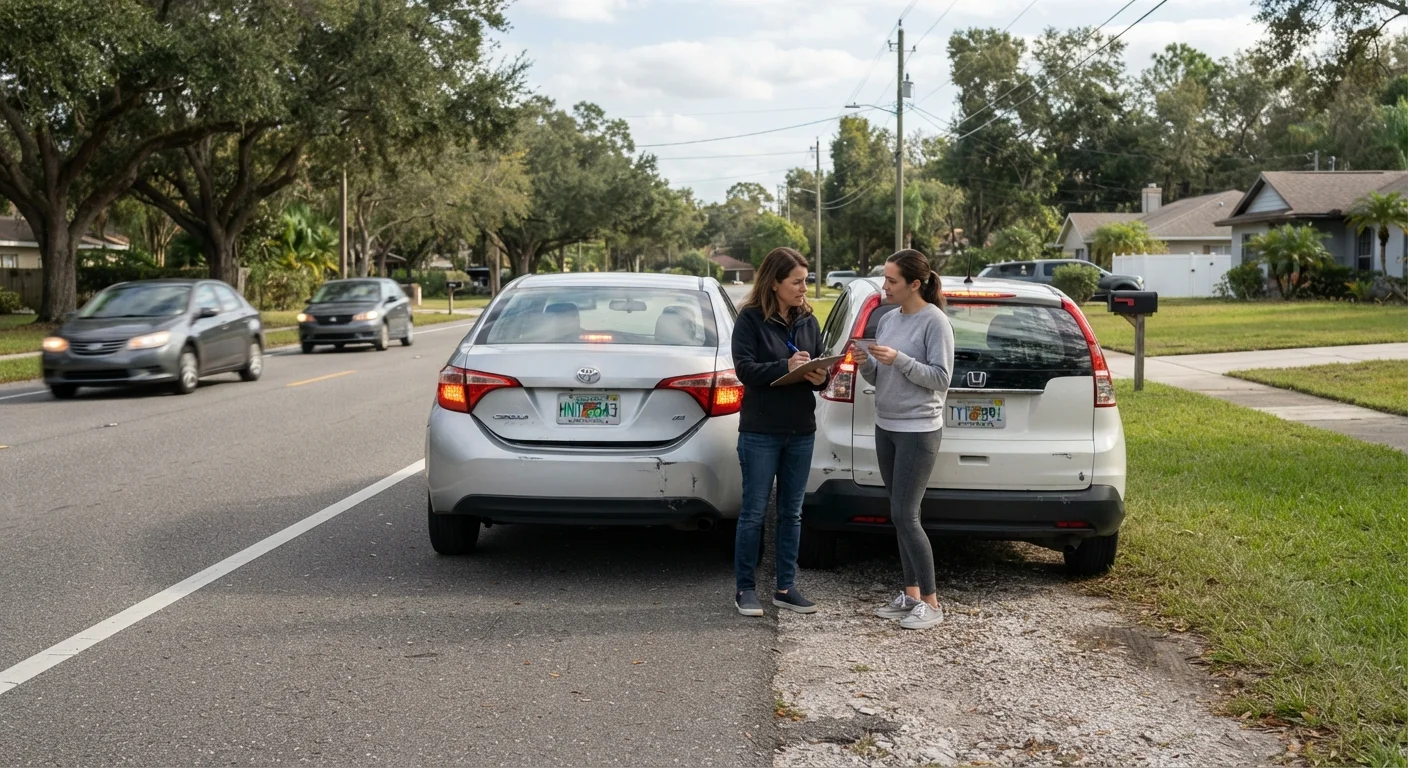
A fender bender is defined as a low-speed collision that causes minor vehicle damage - a scraped bumper, a small dent, a cracked tail light. By definition, these accidents are minor. But in the moment, your heart rate doesn't know that. Stress, adrenaline, and uncertainty about what to do next can make even a small crash feel overwhelming.
The good news: the process is manageable. There's a clear set of steps that covers your legal obligations, protects you financially, and keeps things from escalating unnecessarily. If you're new to car ownership, it also helps to be familiar with the basics covered in our first-month car ownership checklist, which includes setting up insurance correctly before you ever need it.
Never Leave the Scene Early
Leaving the scene of an accident - even a minor one - before exchanging information and waiting for police (when required) is a criminal offense in every U.S. state. It's commonly referred to as a hit-and-run, regardless of how small the damage appears. Stay at the scene until it's legally appropriate to leave.
The steps below apply to the most common scenario: a minor collision between two vehicles on a public road with no serious injuries. More serious accidents, or those involving injuries, require calling 911 immediately and following emergency responder instructions.
What to Do at the Scene
The first few minutes after a fender bender set the tone for everything that follows. Working through these steps in order - even when you're flustered - keeps you legally protected and helps the claims process go smoothly.
What you will need
Auto Insurance Card
Required to share your coverage details with the other driver and to file a claim.
Smartphone with Camera
Used to photograph vehicle damage, license plates, and the overall scene.
Pen and Paper (or Notes App)
Used to record the other driver's name, contact info, license plate, and insurance details.
Emergency Triangles or Road Flares
Placed behind your vehicle to warn approaching traffic while you're stopped.
Move to a safe location
If the vehicles are driveable and it's safe to do so, pull them out of the lane of traffic - to a shoulder, parking lot, or side street. Turn on your hazard lights immediately. Staying in an active lane significantly increases the risk of a secondary collision.
Check for injuries
Before anything else, check yourself and your passengers for injuries. Then check on the occupants of the other vehicle. If anyone is hurt - even mildly - call 911 immediately. Do not attempt to move an injured person unless they are in immediate danger.
For general guidance on responding to minor injuries while help is on the way, see basic first aid responses every driver should be familiar with.
Call the police if needed
In many states, you're legally required to call police if there are injuries or if damage exceeds a certain dollar threshold (often $1,000-$2,500, depending on the state). Even when it's not required, a police report creates an official record that can protect you if a dispute arises later. Ask the responding officer how to obtain a copy of the report.
Exchange information with the other driver
Collect the following from every driver involved:
- Full name and phone number
- Driver's license number and state
- License plate number
- Insurance company name and policy number
- Vehicle make, model, and year
Share the same information from your own documents. Be polite and calm - this is not the moment to argue about who was at fault.
Document the scene thoroughly
Use your phone to photograph:
- Damage to all vehicles from multiple angles
- The position of the vehicles before they're moved
- License plates of all vehicles involved
- Any relevant road conditions, traffic signs, or skid marks
- The other driver's insurance card and license (with their permission)
More photos than you need is always better than too few.
Notify your insurance company
Contact your insurer as soon as reasonably possible - ideally the same day. Most policies require prompt notification of accidents, even if you don't plan to file a claim. Give them the facts: location, time, what happened, and the other party's information. Your insurer will explain what happens next, including whether an adjuster needs to inspect your vehicle.
Follow up on repairs and paperwork
Once your claim is open, your insurer will walk you through the repair process. Depending on your coverage, they may direct you to an approved repair shop or allow you to choose your own. Keep copies of all repair estimates, receipts, and written communications related to the accident. If a rental car is part of your policy, ask your insurer about that coverage upfront.
Keep a Simple Accident Info Card in Your Glove Box
Print or write out a short checklist of what to collect at the scene - names, license, plate, insurer, policy number - and keep it with your registration. In a stressful moment, it's easy to forget details. Having a prompt card ready takes the guesswork out of it.
What Happens After You File a Claim
Once you've notified your insurer, the process typically follows a predictable path. An adjuster will assess the damage - either in person or using photos you submit - and provide an estimate for repairs. Depending on your policy, you may be responsible for a deductible (a set amount you pay before insurance covers the rest).
If the other driver was at fault, their liability insurance generally covers your repair costs and any medical bills up to their policy limits. If there's a disagreement about fault, the insurers negotiate with each other. This can take days to weeks depending on complexity.
Be Wary of Roadside Scams
After an accident, some bad actors may pressure you to settle privately without involving insurance, or push you toward specific repair shops or legal services. Settling privately removes the paper trail that protects you if the other party later claims greater damage or injury. Always go through official channels.
Throughout this process, keep your own records. Note every conversation with insurers, including the date, who you spoke to, and what was discussed. This paper trail matters if a dispute develops later.
Staying on top of your vehicle's overall condition also helps prevent situations that complicate accident claims. Our first car maintenance schedule explains which regular checks keep your car in the kind of documented, well-maintained condition that supports your case if questions arise about pre-existing damage.