

Key Takeaways
What Is Bodyweight Training?
Bodyweight training is exactly what it sounds like: exercise that uses your own body weight as the source of resistance, rather than dumbbells, machines, or barbells. Push-ups, squats, lunges, and planks are all classic examples. No gym membership, no equipment budget, no commute required.
This isn't a watered-down alternative to "real" exercise. Research consistently shows that well-structured bodyweight programs can improve muscular strength, cardiovascular fitness, and mobility - all at once. If you're just getting started with fitness, it's one of the most approachable entry points available. See our guide to building your first exercise habit for a broader look at how to begin active living from scratch.
This article is for general informational purposes only and is not a substitute for professional medical or fitness advice. Consult a qualified healthcare provider before starting any new exercise program, especially if you have existing health conditions or injuries.
Why Beginners Benefit from Starting Here
For someone new to exercise, one of the biggest obstacles is simply getting started without feeling overwhelmed or risking injury. Bodyweight training removes most of those barriers.
- Low injury risk: Because you're working within a natural range of motion and can stop or modify at any moment, the risk of overdoing it is lower than with weighted equipment you may not yet know how to use safely.
- No cost: A clear floor space roughly the size of a yoga mat is all you need.
- Teaches body awareness: Learning to feel and control your own body is a foundational skill that carries over to any future fitness activity.
- Flexible scheduling: A 15-minute session at home counts. You don't need a full hour blocked out.
64%
Adults who cite cost as a gym barrier
According to a survey published by the International Health, Racquet & Sportsclub Association, affordability is among the top reasons people avoid traditional gym membership.
8 weeks
Time to measurable strength gains for beginners
Exercise science research generally finds that untrained individuals can observe meaningful strength and endurance improvements within six to eight weeks of consistent training.
150 min
Weekly moderate activity recommended by health guidelines
The U.S. Department of Health and Human Services Physical Activity Guidelines for Americans recommend at least 150 minutes of moderate-intensity activity per week for adults.
Wondering how bodyweight workouts compare to the gym? Our article on home workouts vs. gym workouts walks through the honest trade-offs of each.
The Core Movement Patterns to Know
Rather than memorizing a long list of exercises, it helps to think in terms of movement patterns - the fundamental ways the human body moves. Bodyweight training covers all of them:
- Push
- Moving weight away from your body. Example: push-ups (standard, incline, or wall variations).
- Pull
- Drawing your body toward a fixed point. Example: door-frame rows or a basic pull-up, if you have a bar.
- Squat (hinge)
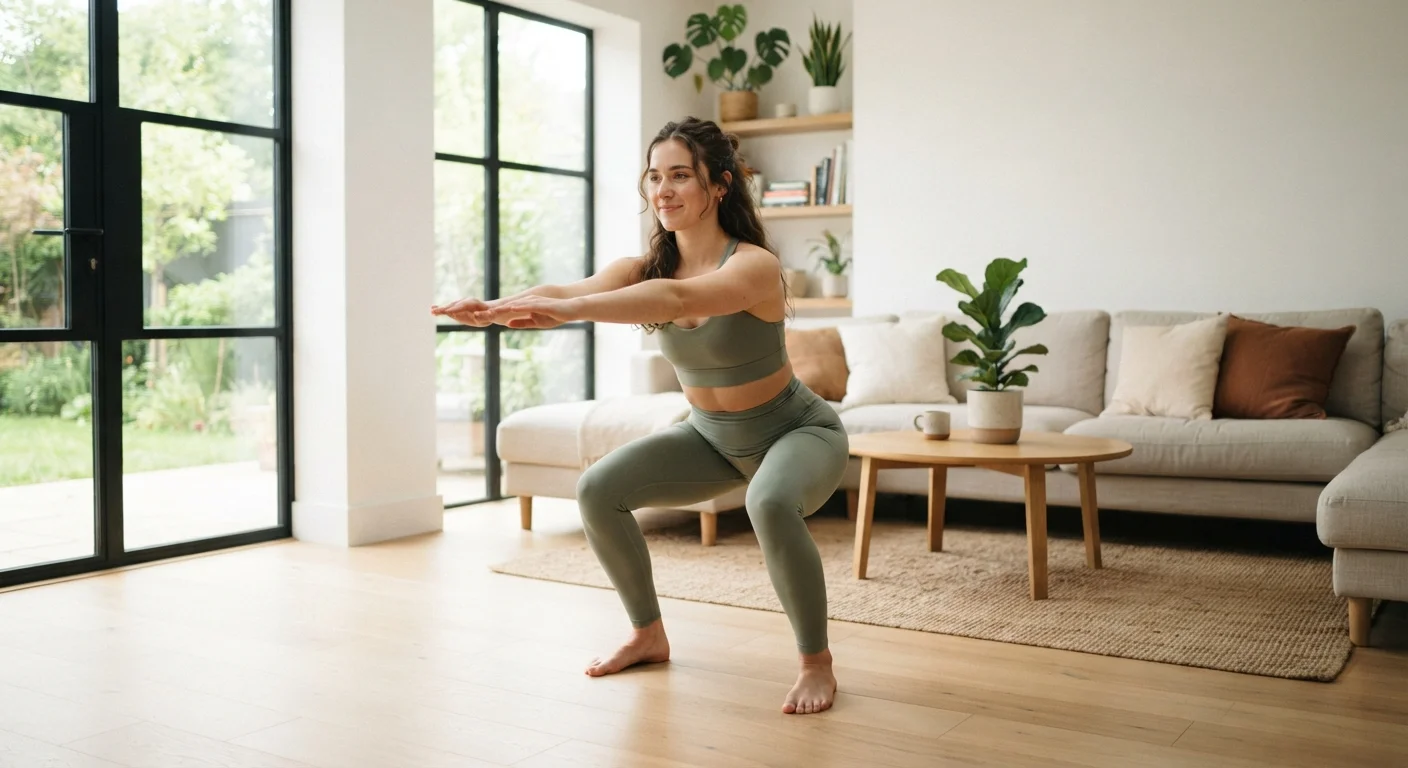
- Bending at the hips and knees under load. Example: bodyweight squats, glute bridges.
- Carry/Stability
- Maintaining posture and control under tension. Example: planks, dead bugs, bird dogs.
If your weekly routine touches each of these patterns at least once, you're covering the whole body in a balanced way - without needing to know dozens of individual exercises.
Start every session with a movement you already know you can do well - it builds confidence and primes your nervous system before tackling harder variations.
Beginning with a familiar, achievable movement reduces the psychological friction of starting and helps establish a positive exercise association over time.
Film yourself doing a squat or push-up from the side once a week - it's far easier to spot form issues on video than it is to feel them in the moment.
Visual feedback is one of the most effective self-coaching tools available, and catching a form issue early prevents it from becoming a habit that leads to discomfort or injury.
How to Progress Without Equipment
One common worry is: "Won't I plateau without adding weight?" The short answer is no - at least not for a long time. Progression in bodyweight training works through several levers:
- Leverage: Elevate your feet in a push-up to shift more load onto your shoulders and chest. Move from a wall push-up to an incline, then a flat version.
- Range of motion: A deeper squat recruits more muscle than a shallow one.
- Tempo: Slowing down the lowering phase (the eccentric portion) of any movement dramatically increases difficulty.
- Volume: Gradually adding one or two more reps or an extra set each week provides steady overload.
- Exercise variation: Progress from a two-legged squat to a single-leg squat (often called a pistol squat) when ready.
Start Slower Than You Think You Need To
Most beginners underestimate how much early progress comes from simply practicing movements consistently rather than from pushing intensity. In your first two weeks, focus on completing sessions comfortably rather than making them as hard as possible. Building the habit matters more than the difficulty level right now.
This is also why bodyweight training pairs well with an understanding of how strength and cardio interact. Our piece on whether you need to choose between strength and cardio puts that in context.
Building a Simple Weekly Plan
A sustainable beginner plan doesn't need to be complicated. A solid starting framework looks like this:
| Day | Focus | Example Duration |
|---|---|---|
| Monday | Full-body workout | 20-30 min |
| Wednesday | Full-body workout | 20-30 min |
| Friday | Full-body workout | 20-30 min |
| Other days | Light walking or rest | Your choice |
Three sessions per week with rest days in between gives your muscles time to recover and adapt - that adaptation is where the actual improvement happens. You don't need to train every day to see results; in fact, pushing too hard too soon is one of the most common beginner mistakes.
Recovery Is Non-Negotiable
Muscles repair and grow stronger during rest periods - not during the workout itself. Skipping rest days to train more often, especially as a beginner, can lead to fatigue, reduced performance, and a higher risk of injury. Build recovery into your plan from day one, not as an afterthought.
Nutrition plays a real supporting role here too. You don't need a complicated diet plan - our Nutrition Basics hub offers beginner-friendly guidance on eating in a way that supports an active lifestyle.
Common Mistakes to Avoid
Even with the best intentions, a few patterns tend to trip beginners up:
- Skipping the warm-up: Five minutes of gentle movement - leg swings, arm circles, slow marching in place - prepares your joints and reduces discomfort during exercise.
- Rushing reps: Faster isn't better. Controlled, deliberate movement builds more strength and reduces strain.
- Ignoring rest days: Muscle is built during recovery, not during the workout itself. Rest is part of the program.
- Expecting instant results: Noticeable changes in strength and endurance typically take four to eight weeks of consistent effort to appear. That timeline is normal and healthy.
- Believing fitness myths: Ideas like "no pain, no gain" can push beginners to train through signals they should heed. Our article on fitness myths that keep beginners stuck separates fact from fiction.
Pain Is Different from Discomfort
Mild muscular fatigue during exercise is normal. Sharp, stabbing, or joint pain is not. If something hurts beyond normal exertion, stop the movement and rest. If pain persists, consult a healthcare professional before continuing. Pushing through genuine pain is never part of a sound exercise plan.
Bodyweight training is genuinely beginner-friendly, but your body is still doing real work. Listen to what it tells you, progress at your own pace, and remember: showing up consistently - even imperfectly - is the most important thing you can do.