

Key Takeaways
Start here
Why Starting Small Is the Smartest Move
Next
Choosing Movements That Feel Manageable
Then
Building a Routine That Actually Sticks
When you're ready
What to Expect in the First Few Weeks
Round it out
Supporting Your Movement with Good Habits
Why Starting Small Is the Smartest Move
If you've tried to start exercising before and it didn't stick, you're not alone - and the reason usually has nothing to do with willpower. Most beginners set goals that are simply too big, too soon. Going from zero activity to five gym sessions a week is a recipe for burnout, not a fitness foundation.
Research into habit formation consistently shows that small, repeated actions build stronger long-term behaviors than ambitious efforts that fade. Think of your first goal not as "getting fit" but as making movement a normal part of your week. Two or three short sessions - even 10 to 15 minutes each - is a legitimate and effective place to start.
Make Your First Goal Embarrassingly Small
If two sessions a week feels too easy, that's a good sign - it means you'll actually do it. Undershooting your starting point is a deliberate strategy, not a lack of ambition. You can always add more once the habit is established. Momentum is far easier to build from a small win than to recover from a missed ambitious target.
Read more about the planning mistakes that derail beginners in our guide on why workout routines fall apart by week two.
Choosing Movements That Feel Manageable
The best exercise for a beginner is one you'll actually do. That sounds simple, but it matters enormously. You don't need to run, lift heavy weights, or follow a trending workout program. Start with movements that feel accessible to your current body and fitness level.
Habit stacking
A technique where you link a new behavior to an existing one, so the old habit automatically triggers the new one. For example, doing stretches right after brushing your teeth.
DOMS
Delayed onset muscle soreness - the muscle ache you feel 24 to 48 hours after unfamiliar exercise. It is a normal sign of adaptation and is not an injury.
Cardiovascular fitness
Your heart and lungs' ability to supply oxygen to working muscles during sustained movement. It improves gradually with regular aerobic activity like walking or cycling.
Bodyweight exercise
Any movement that uses your own body weight as resistance - such as squats, push-ups, or lunges - requiring no gym equipment.
Progressive overload
Gradually increasing the challenge of your workouts over time - by adding a few more minutes, repetitions, or effort - so your body continues to adapt and improve.
Good starting options include:
- Walking: One of the most underrated forms of exercise. A 15-minute brisk walk improves cardiovascular health, mood, and energy levels with minimal injury risk.
- Bodyweight basics: Movements like wall push-ups, chair squats, and standing marches require no equipment and can be scaled to any fitness level. Our bodyweight training beginner's guide covers how to build from these foundations.
- Gentle stretching or yoga: Improves flexibility, reduces tension, and helps you reconnect with how your body feels - especially useful if you sit for most of the day.
Pick one or two options that appeal to you and commit to those for the first two weeks. Variety can come later.
Building a Routine That Actually Sticks
Consistency is built through structure, not motivation. Motivation fluctuates - a scheduled habit does not. The most effective way to make exercise stick is to attach it to something you already do. This is sometimes called habit stacking.
For example: if you always make coffee in the morning, you might do 10 minutes of gentle movement right after. If you walk the dog each evening, that already counts as a session. The goal is to reduce the mental effort of deciding whether to exercise - the decision is already made.
A few practical anchors that work well for beginners:
- Same time of day, three days per week (e.g., Monday, Wednesday, Friday mornings)
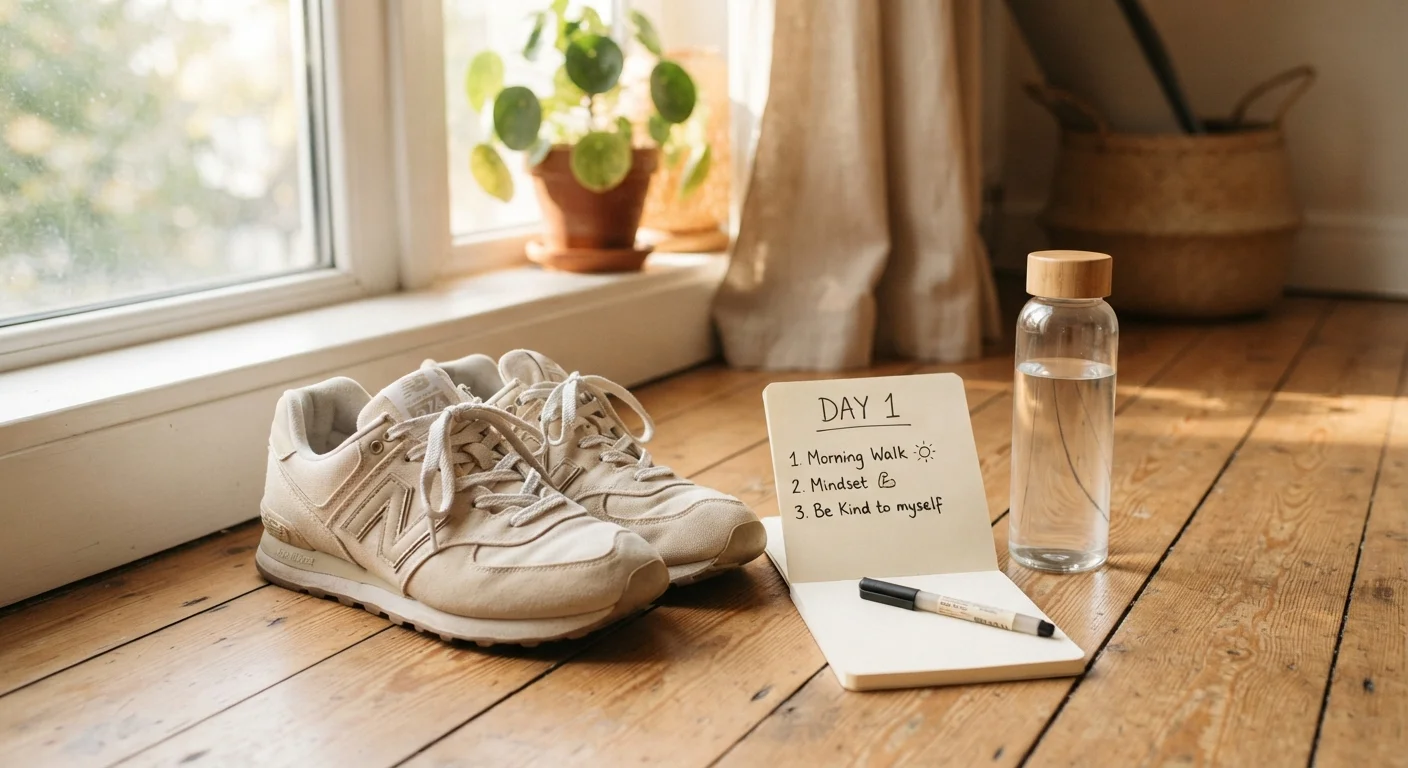
- Keeping workout clothes visible and ready the night before
- Tracking sessions with a simple checkmark in a notebook - the visual streak becomes its own motivation
If you want a more structured look at what derails new routines, our article on avoiding common beginner mistakes is a helpful next read.
What to Expect in the First Few Weeks
Week one may feel awkward, tiring, or both - and that is completely normal. Your body is adapting to demands it isn't used to. You might experience mild muscle soreness (known as DOMS), lower energy on workout days, or a general sense of "this is harder than I expected."
Don't Push Through Sharp or Joint Pain
Muscle soreness is expected and harmless, but sharp, stabbing, or joint pain during exercise is a signal to stop. Pushing through that kind of discomfort can lead to injury and set your progress back significantly. If you experience chest pain, dizziness, or shortness of breath during activity, stop immediately and seek medical attention.
Stay the course, because this phase is temporary. Most people report that the same workouts feel noticeably easier after three to six weeks of regular effort. Your cardiovascular system becomes more efficient, your muscles grow stronger, and the mental resistance fades. Our article on how long before exercise feels easier explains that adaptation timeline in reassuring detail.
What progress looks like in the early weeks often isn't visible - it's felt. You sleep a little better. Climbing stairs is slightly less winded. Your mood on movement days improves. These small internal shifts are real, meaningful changes worth noticing.
Supporting Your Movement with Good Habits
Exercise doesn't happen in isolation - how you eat, sleep, and manage stress all influence how your body responds to movement. You don't need to overhaul everything at once, but a few supportive habits make a meaningful difference.
Hydration: Drink water before, during, and after movement - even gentle exercise increases fluid needs. Sleep: This is when your body repairs muscle tissue and consolidates the adaptations from exercise. Most adults benefit from seven to nine hours. Nutrition: Eating a balanced mix of proteins, carbohydrates, and healthy fats gives your body the fuel it needs. Our Nutrition Basics hub is a gentle starting point if you want to align your eating with your new activity level.
Bodyweight Training Beginner's Guide
A comprehensive introduction to no-equipment exercise covering how to start, how to progress, and how to build a sustainable plan. Ideal next reading once you've established a basic movement habit.
Nutrition Basics Hub
Beginner-friendly guidance on eating well to support an active lifestyle. Covers simple principles for fueling your body without restrictive rules or overwhelming detail.
This article is for general informational purposes only and is not a substitute for professional medical advice. If you have any health conditions or concerns, please consult a qualified healthcare professional before beginning a new exercise program.