

Cars & Driving

Before You Pull Out of the Driveway: A Pre-Trip Safety Checklist

Share
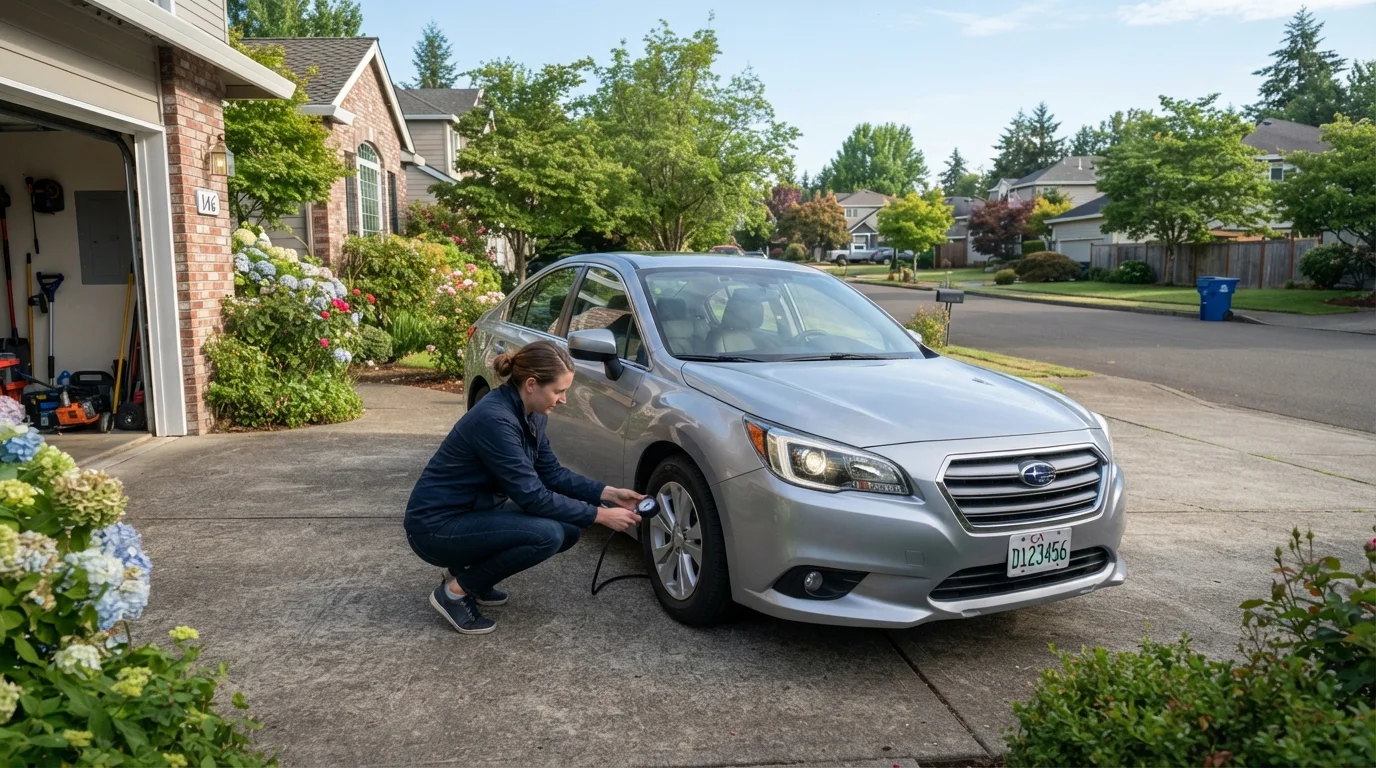
Driver performing a pre-trip walk-around safety inspection of a sedan in a driveway

Key Takeaways

A quick pre-trip inspection takes under ten minutes and can catch serious problems before they escalate.
Most checks require no tools — just your eyes, ears, and a moment of attention.
Tire condition, lights, and fluid levels are the three areas most often overlooked before a drive.
Building this routine into your habit stack makes it faster and more reliable over time.
Some warning signs — like a spongy brake pedal or low oil — mean you should not drive until the issue is resolved.
5–10 min

Summary

18 items · 5–10 minutes

Why a Two-Minute Habit Can Make a Real Difference

Most vehicle problems that turn into roadside emergencies did not appear suddenly. A low tire, a dimming headlight, or an oil level creeping toward empty all give early warnings — if you know where to look. The goal of a pre-trip check is not to turn every commute into a mechanical inspection. It is simply to build a repeatable, quick habit that catches obvious issues before they become dangerous ones.

New drivers benefit because the routine reinforces what a healthy car actually looks and feels like. Experienced drivers benefit because familiarity can breed inattention — you stop noticing what has gradually changed. Either way, the checklist below gives you a structured starting point you can adapt to your vehicle and schedule.

For longer road trips, you may also want to run through a broader pre-departure checklist that covers documents, emergency contacts, and route planning beyond the car itself.

Warning Lights Mean Stop and Investigate

If your oil pressure light, brake warning light, or engine warning light stays illuminated after starting the car, do not drive. These lights indicate conditions that can cause mechanical failure or loss of vehicle control. Have the vehicle inspected by a qualified mechanic before operating it.

Low Tire Pressure Is a Blowout Risk

A tire that looks slightly low can be dangerously under-inflated. Under-inflated tires handle poorly, overheat on highways, and are far more likely to blow out. Check your vehicle's recommended PSI on the sticker inside the driver's door jamb — not on the tire sidewall, which shows the maximum, not the ideal pressure.

How to Use This Checklist

Work through the four groups below in order — outside the vehicle, under the hood, inside the cabin, and cargo and visibility. The outside walk-around takes under a minute and is often the most valuable step because it catches flat tires and damage you may not notice from the driver's seat.

Required

Tire pressure gauge

Gives you an accurate PSI reading so you know whether a tire needs air before you leave.

Required

Engine oil dipstick (built-in)

Used to check your engine oil level — located under the hood, usually marked with a brightly colored handle.

Optional

Flashlight or phone torch

Helps you inspect tires, under the hood, and under the vehicle in low-light conditions.

Optional

Roadside emergency kit

Contains jumper cables, reflective triangles, a first-aid kit, and a flashlight for use if something goes wrong on the road.

You do not need to complete every item on every single trip. Items marked must should be non-negotiable before any drive. Items marked should are strongly recommended, especially before highway or long-distance driving. Items marked nice to have are worth building toward as your routine matures.

Pairing this habit with regular maintenance is what really extends a vehicle's life. Our article on habits that keep a car running well for the long haul covers the broader ownership routines — things like scheduled oil changes and tire rotations — that complement what you do in the driveway each day.

Spongy Brakes: Do Not Drive

If your brake pedal feels soft, sinks toward the floor, or requires more pressure than usual, your braking system may have a serious problem — potentially a fluid leak or air in the brake lines. This is a safety emergency. Do not drive the vehicle; have it inspected by a qualified mechanic immediately. See our guide to brake wear signs for more on what to watch for.

The Pre-Trip Safety Checklist

Outside the Vehicle

Walk completely around the car and look for any new damage, fluid puddles under the vehicle, or objects behind the tires before you back out. Must
Check all four tires visually for obvious low pressure, sidewall bulges, or embedded nails or glass. Must
Verify that headlights, taillights, brake lights, and turn signals are functioning — ask a passenger to help, or use a wall reflection. Must
Confirm all doors, the trunk, and the hood are fully latched before pulling away. Must
Clear any snow, ice, or debris from all windows, mirrors, the roof, and the hood so it does not fly off and strike other vehicles. Must

Under the Hood

Check the engine oil level using the dipstick when the engine is cold or has been off for at least a few minutes; top up if it is below the minimum mark. Must
Inspect the coolant reservoir level through the translucent plastic — never open it on a hot engine. Must
Glance at the windshield washer fluid level and refill if running low, especially before highway or winter driving. Should
Look for any visible cracks in hoses, fraying belts, or corrosion on battery terminals that were not there on your last check. Should

Inside the Cabin

Adjust your seat, steering wheel, and all mirrors before starting the engine — never while moving. Must
Fasten your seatbelt and confirm any passengers — including children in appropriate car seats — are buckled before shifting into gear. Must
Check your dashboard warning lights after starting: if the oil pressure, brake, or engine warning lights stay on, do not drive until the cause is identified. Must
Confirm your fuel level is sufficient for your trip; plan a fuel stop before the gauge reaches the last quarter of the tank. Should
Silence or stow your phone in a holder before moving so you are not tempted to handle it while driving. Must

Cargo and Visibility

Secure any loose items in the cabin or trunk that could slide, roll, or become projectiles during hard braking. Must
Confirm your rear window and all side mirrors provide clear, unobstructed lines of sight — rearrange cargo if needed. Must
If carrying a roof rack, bike carrier, or trailer, double-check that all attachments are locked and load limits are not exceeded. Should
Verify you have your driver's license, proof of insurance, and vehicle registration in the car — required by law in every US state. Must
Check that your emergency kit (jumper cables, flashlight, first-aid kit, reflective triangles) is accessible and stocked. Nice to have

Weather adds extra steps. Ice on your roof can slide onto another driver's windshield at highway speed. Summer heat accelerates tire pressure changes. Our seasonal car care guide covers what to add to your routine as conditions shift throughout the year. For general upkeep beyond the driveway, the Car Maintenance hub is a useful reference point for owners at any experience level.

Cars & Driving Editorial Team is the collective byline for our editorial team and contributor network. Articles published under this byline or an editorial pen name are researched, written, and reviewed according to our editorial standards for clarity, consistency, and independence before publication.

View all articles by Cars & Driving Editorial Team →
Disclaimer: The content provided on our blog site traverses numerous categories, offering readers valuable and practical information. Readers can use the editorial team’s research and data to gain more insights into their topics of interest. However, they are requested not to treat the articles as conclusive. The website team cannot be held responsible for differences in data or inaccuracies found across other platforms. Please also note that the site might also miss out on various schemes and offers available that the readers may find more beneficial than the ones we cover.