

Key Takeaways
Why Mental Stimulation Matters for Small Pets
It's easy to assume that a clean enclosure, fresh water, and a full food bowl cover everything a small pet needs. But for rabbits, guinea pigs, hamsters, gerbils, and rats, mental stimulation is just as foundational as nutrition. In the wild, these animals spend most of their waking hours foraging, exploring territory, digging, and staying alert to their surroundings. When captive environments don't offer similar outlets, that energy turns inward - producing stress, boredom, and sometimes stereotypic behaviors (repetitive, purposeless movements like bar-chewing or circling).
Enrichment doesn't require expensive equipment. It means thoughtfully designing your pet's environment and daily routine to engage their instincts. Before diving into specific strategies, it helps to understand what your particular species is wired to do. If you're still deciding which pet suits your home, see our guide on choosing between a guinea pig and rabbit. And once you've brought a new pet home, the preparation checklist can help you get enrichment in place from day one.
Start Simple and Observe Closely
When introducing new enrichment, add one item at a time and watch how your pet responds. Some animals - particularly prey species - are cautious around novel objects and need time to approach them at their own pace. If your pet avoids something entirely after a few days, swap it out for something different. Enrichment that causes stress is counterproductive.
Build Foraging Opportunities Into Every Meal
In the wild, prey animals like rabbits and guinea pigs spend several hours a day grazing and searching for food. Replicate this by spreading hay in multiple locations, hiding small pieces of leafy greens inside cardboard tubes, or placing pellets inside a paper bag that your pet has to tear open. For rats and mice - which are highly intelligent omnivores - scatter-feeding dry food across a substrate (bedding material) layer encourages natural sniffing and searching behavior.
Foraging enrichment slows eating, reduces food-related anxiety, and keeps animals physically and mentally occupied. It's one of the easiest forms of enrichment to build into a daily routine without any cost.
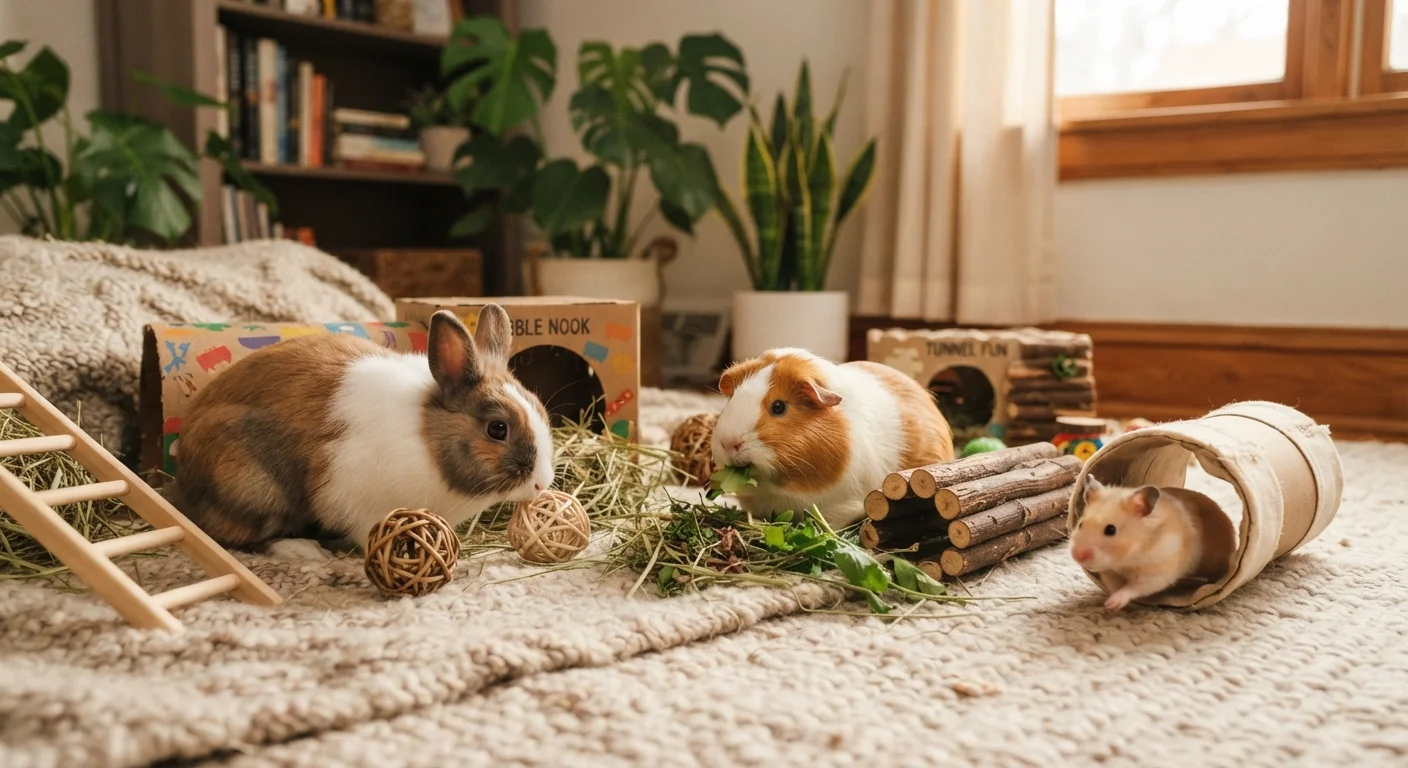
Hiding food triggers natural foraging instincts and keeps small pets occupied for hours.
Provide Species-Appropriate Chewing Materials
Gnawing isn't just a habit - it's a biological need. Rabbits and guinea pigs have continuously growing teeth that require regular wear, while rodents chew to explore and manage their incisors. Without appropriate materials, animals may redirect this drive onto enclosure bars, water bottles, or other unsuitable surfaces.
Offer untreated wooden blocks, willow balls, dried apple sticks, or hay-based chew toys. Cardboard - from plain boxes or toilet paper rolls - works well for hamsters and rats. Rotate chew items so the novelty stays fresh. Avoid anything dyed, lacquered, or treated with chemicals. If you're unsure what's safe for your species, your exotic animal vet is a reliable source. Check out our overview of what guinea pigs can and can't eat for guidance on safe materials for that species.
Appropriate chewing materials protect teeth and satisfy a deep behavioral drive in small pets.
Create Tunnels, Hides, and Exploration Zones
Prey animals feel safest when they can retreat quickly. Hides - small covered spaces - reduce stress by giving animals a sense of control over their environment. But enrichment goes beyond just providing shelter. Tunnels encourage exploration and simulate the burrow networks that species like rabbits and gerbils navigate naturally.
Use cardboard tubes, untreated wooden hides, or paper bags folded into arches. Rearrange items periodically so the space feels novel. For rabbits specifically, free-roaming time in a pet-proofed room - with cardboard boxes to investigate - provides exercise alongside genuine mental engagement. Our article on why small pets need more space than most enclosures provide explains why roaming space matters so much.
Tunnels and hides give prey animals a sense of safety that reduces stress and encourages exploration.
Use Social Companionship as a Core Enrichment Strategy
For guinea pigs, social companionship isn't a luxury - it's a welfare requirement. Guinea pigs are highly social animals that communicate through vocalizations and physical contact. Keeping a single guinea pig without a same-species companion causes chronic stress, regardless of how attentive the owner is. Most animal welfare organizations recommend keeping guinea pigs in bonded pairs or small groups.
Rats are similarly social; they thrive in same-sex pairs or groups and show measurable signs of distress when isolated. Rabbits can bond with other rabbits (always spay/neuter first to reduce conflict) and some form cross-species companionships, though this requires careful supervision. Hamsters - especially Syrian hamsters - are the notable exception: they are solitary animals that must be housed separately. Our article on guinea pig loneliness and small-pet myths explores these social needs in more depth.
Guinea pigs and rats require same-species companionship - it's a welfare need, not an optional extra.
Introduce Puzzle Feeders and Cognitive Challenges
Rats and mice are among the most cognitively capable small pets - they can learn to navigate mazes, open latch mechanisms, and solve multi-step food puzzles. Even simpler species benefit from mild problem-solving: a guinea pig nosing a ball to release a hidden treat, or a rabbit nudging a stacking toy to reach hay packed inside.
Puzzle feeders don't need to be commercial products. A muffin tin with hay or food hidden under crumpled paper balls, a toilet roll sealed at both ends, or a cardboard box with multiple small openings all engage problem-solving without spending anything. Increase difficulty gradually as your pet becomes more confident - the goal is to keep them engaged, not frustrated.
Even simple DIY puzzle feeders can meaningfully engage a small pet's problem-solving abilities.
Incorporate Gentle Handling and Bonding Time
Positive interaction with their human caretaker is itself a form of enrichment - but only when the animal is comfortable. Rushing handling or forcing contact creates stress rather than reducing it. Start with short, calm sessions where your pet approaches you voluntarily, using food as a bridge. Over time, regular gentle interaction builds trust and provides genuine stimulation through novel sensory experiences.
For rabbits especially, floor-level interaction is usually better than lifting - rabbits are ground animals and can feel vulnerable when elevated. Learning to read your pet's signals is key. See our guide to handling small pets safely for a step-by-step approach that builds confidence gradually.
Gentle, voluntary handling builds trust and provides sensory enrichment small pets genuinely benefit from.
Putting It All Together
Good enrichment isn't a one-time setup - it's an ongoing practice. Rotate items every few days to keep things novel, observe how your pet responds, and adjust based on what genuinely holds their interest. Watch for positive signs: a rabbit doing a happy binky (a spontaneous mid-air twist), a guinea pig popcorning (jumping and twitching with excitement), or a rat eagerly working a puzzle feeder. These behaviors signal that an animal feels safe and engaged.
If you notice the opposite - withdrawal, repetitive movements, excessive hiding, or changes in appetite - it may signal under-stimulation or stress. Our article on signs that warrant a vet visit can help you distinguish between behavioral boredom and something that needs medical attention. Understanding body language also helps - for rabbit owners especially, reading your rabbit's body language is an invaluable skill.
Enrichment Looks Different by Species
There's no single enrichment formula that applies to all small pets. A hamster's needs - nocturnal activity, burrowing, solo housing - differ substantially from a guinea pig's social and foraging-focused lifestyle. Always research the specific behavioral needs of your pet's species. If you're also caring for birds, our article on setting up an enriching bird cage covers parallel principles for avian companions.
This article is for general informational purposes only and is not a substitute for professional veterinary advice. If your pet shows sudden behavioral changes or signs of illness, consult a qualified exotic animal veterinarian.