

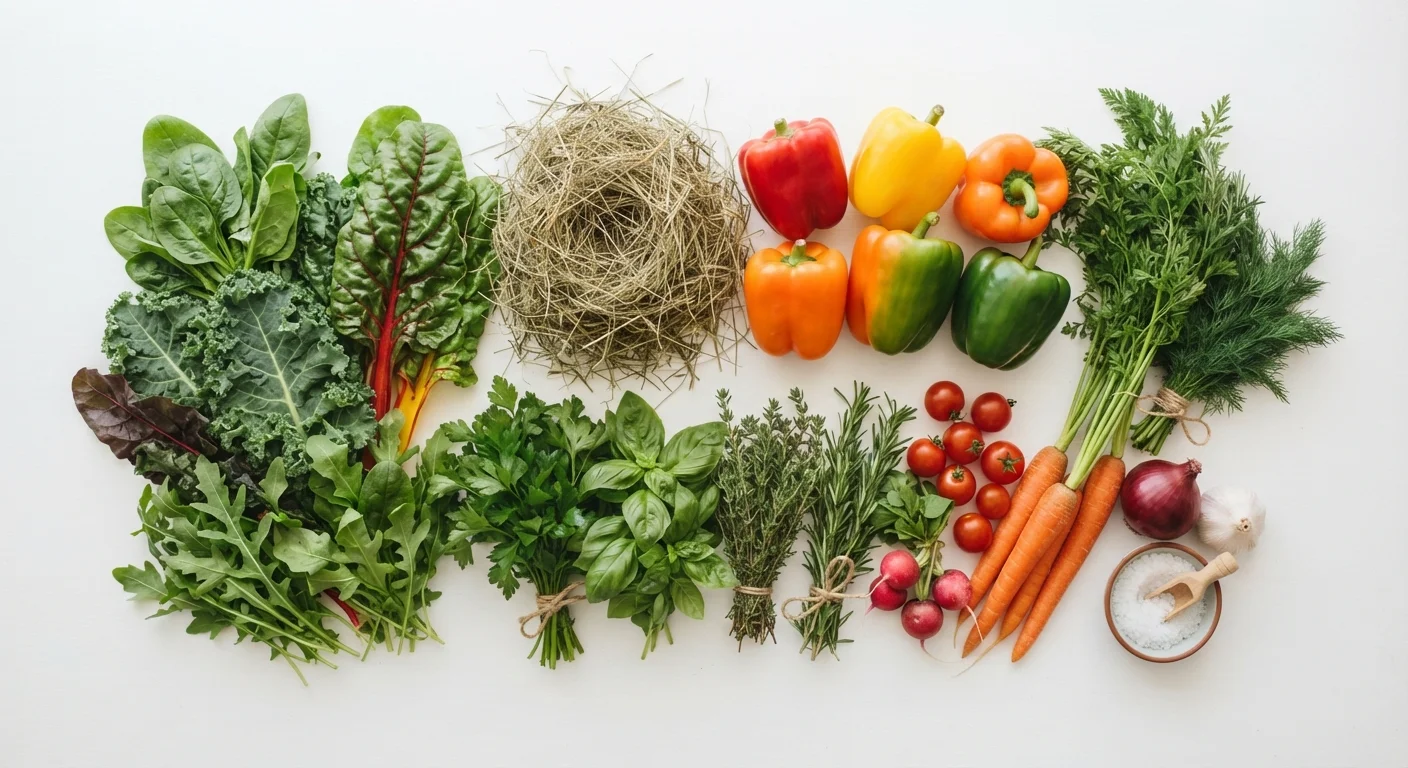
The Foundation: Hay, Pellets, and Water
Guinea pigs are strict herbivores, meaning their bodies run entirely on plant-based foods. Understanding the basic structure of their diet helps prevent the most common feeding mistakes new owners make.
Hay is the single most important part of a guinea pig's diet and should be available around the clock - not as a treat, but as the foundation of every meal. Timothy hay is the standard choice for adult guinea pigs because it has the right fiber-to-calcium ratio to support healthy digestion and prevent tooth overgrowth. Orchard grass hay is a widely accepted alternative with a slightly softer texture some pigs prefer. Alfalfa hay is higher in calcium and protein, making it appropriate only for young guinea pigs under six months or those recovering from illness - regular use in adults can contribute to bladder stones.
Pellets play a supporting role, not a starring one. A small daily portion - roughly one-eighth of a cup per guinea pig - of plain, hay-based pellets provides consistent nutrients. Avoid pellet mixes that include seeds, dried fruit, or colorful puffed pieces; guinea pigs selectively eat the sugary bits and leave the nutritious ones behind.
Fresh water must be available at all times, changed daily. A sipper bottle keeps the water cleaner, but a heavy ceramic bowl works too - just rinse it thoroughly each day.
Safe Vegetables and Why Vitamin C Matters
Guinea pigs share one critical nutritional quirk with humans: their bodies cannot produce vitamin C on their own. Without a daily dietary source of vitamin C, guinea pigs develop scurvy - a condition causing joint pain, lethargy, and poor coat health. Fresh vegetables are the most reliable and natural way to meet this need.
Timothy hay
A type of grass hay that forms the dietary backbone for adult guinea pigs. It provides the long-strand fiber needed for healthy digestion and natural tooth wear.
Oxalates
Naturally occurring compounds found in some leafy greens like spinach and kale. Consumed in large quantities over time, they can contribute to bladder or kidney stones in guinea pigs.
Scurvy
A disease caused by vitamin C deficiency. In guinea pigs, symptoms include lethargy, rough coat, swollen joints, and reluctance to move. It is preventable with a consistent fresh-food diet.
Solanine
A naturally occurring toxic compound found in potatoes and other nightshade plants. It is harmful to guinea pigs even in small amounts.
Herbivore
An animal whose diet consists exclusively of plant matter. Guinea pigs are obligate herbivores and cannot safely digest animal proteins, dairy, or fats.
Aim to offer a small cup of fresh vegetables per guinea pig daily. Rotate variety rather than feeding the same thing every day to provide a broader nutrient profile and prevent boredom. Reliable, safe options include:
- Bell peppers (all colors) - among the highest vitamin C sources available; red peppers are especially rich
- Romaine lettuce and green leaf lettuce - hydrating and well-tolerated; iceberg lettuce provides little nutrition and can cause loose stools
- Cilantro and parsley - popular with most guinea pigs and good vitamin C contributors
- Cucumber and zucchini - gentle on digestion and good for hydration
- Kale and spinach - nutritious but high in oxalates and calcium; offer only occasionally, not daily
Fruits like strawberries, blueberries, and small wedges of apple (seeds removed) are safe in very small amounts - think a thumbnail-sized piece once or twice a week. Their sugar content makes them an occasional treat, not a dietary staple. If you're still exploring whether a guinea pig is the right pet for your household, see our comparison of guinea pigs and rabbits for a broader look at their daily care needs.
Foods That Can Seriously Harm Guinea Pigs
Several everyday human foods are toxic or seriously harmful to guinea pigs. This is not a complete list - when in doubt, check with a veterinarian before offering any new food.
When in Doubt, Ask Your Vet First
This list covers the most commonly reported harmful foods, but it is not exhaustive. Guinea pig physiology is sensitive, and reactions can vary between individual animals. Before introducing any unfamiliar food - even one labeled "natural" or "organic" - consult a veterinarian familiar with small animal care. If you suspect your guinea pig has eaten something toxic, contact a vet or an animal poison control line promptly.
- Onions, garlic, leeks, and chives - all members of the allium family damage red blood cells and can cause life-threatening anemia
- Potatoes and potato tops - contain solanine, a compound toxic to guinea pigs
- Rhubarb leaves - highly toxic; the stalk is also not recommended
- Avocado - contains persin, which is toxic to many small animals
- Dairy products, meat, and eggs - guinea pigs are herbivores and cannot process animal proteins or fats
- Chocolate, caffeine, and alcohol - toxic to virtually all companion animals
- Mushrooms - even varieties considered safe for humans can cause digestive distress or worse in guinea pigs
- Iceberg lettuce and cabbage in large amounts - not acutely toxic but associated with bloating and diarrhea
A well-fed guinea pig is generally a healthy, curious one. Pair good nutrition with mental stimulation - our guide on enrichment for small pets covers ways to keep guinea pigs active and engaged beyond mealtime.
This article is for general informational purposes only and is not veterinary advice. If your guinea pig shows signs of illness or you have concerns about their diet, consult a licensed veterinarian experienced with small animals.