

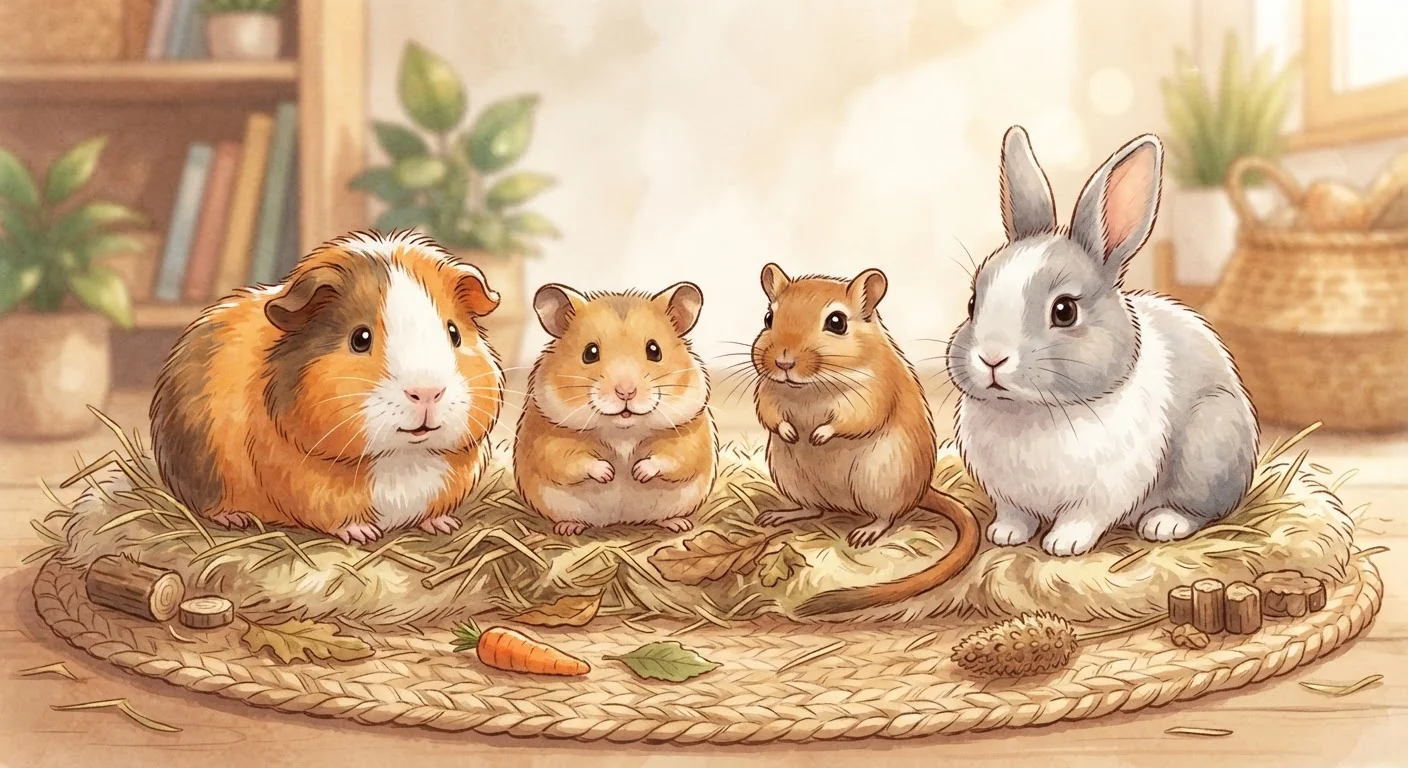
Key Takeaways
Our Verdict
No single small pet is universally better - the right choice depends entirely on your household's schedule, space, budget, and how much hands-on interaction you want. Guinea pigs and rabbits reward patience with genuine companionship; hamsters and gerbils suit smaller spaces and lighter daily commitment. Matching the animal's natural behavior to your real lifestyle gives both of you the best chance of a happy arrangement.
| Best for | Recommended |
|---|---|
| Families with children aged 8 and up who want an interactive, gentle pet | Guinea pig |
| Adults or older teens with limited space who are home mostly in evenings | Hamster |
| Those who want an active, curious pet that is fun to watch and handle | Gerbil |
| Committed owners with ample space who want a long-term, bonded companion | Rabbit |
Why the Choice Matters More Than You Might Expect
Small pets are often marketed as easy starter animals, but each species comes with specific social, dietary, and space needs that can surprise unprepared owners. A hamster kept in a cage that is too small, or a guinea pig living alone, can develop signs of stress - even if they look fine to an untrained eye. Understanding what each animal actually needs before you bring one home is the kindest thing you can do.
Before diving into the comparison, it helps to ask yourself a few honest questions: How much free time do you have each day? Do you have children, and how old are they? How much space can you dedicate to an enclosure? And are you prepared for a commitment that could last two years (hamster) or up to ten (rabbit)? See our preparation checklist for everything you should have ready before your new pet arrives.
| Guinea Pig | Hamster | Gerbil | Rabbit | |
|---|---|---|---|---|
| Typical lifespan | 4-7 years | 2-3 years | 3-5 years | 8-12 years |
| Social needs | Pairs required | Solitary (Syrian) | Pairs recommended | Pairs recommended |
| Activity pattern | Daytime | Mostly nocturnal | Short bursts, day & night | Crepuscular (dawn/dusk) |
| Minimum enclosure size | 7.5 sq ft (pair) | 4 sq ft+ | 4 sq ft (pair) | 12+ sq ft or free-roam |
| Handling temperament | Gentle, rarely bites | Can nip if startled | Curious, usually calm | Dislikes being lifted |
| Daily time commitment | Moderate | Low-moderate | Low-moderate | High |
| Diet complexity | High (vitamin C needed) | Moderate | Moderate | High (hay-focused) |
| Best age for children | 8 and up | 10 and up | 8 and up | 12 and up |
Guinea Pigs: Social, Vocal, and Beginner-Friendly
Guinea pigs (also called cavies) are widely considered among the most approachable small pets for families. They rarely bite when handled calmly, they communicate through a range of recognizable sounds - including a distinctive purring when content - and they are active during the day, which means your interactions are more natural.
The single most important thing to know: guinea pigs are highly social animals and generally should not be kept alone. A bonded pair of same-sex guinea pigs is the standard recommendation from most animal welfare organizations. They also require daily fresh leafy greens alongside unlimited grass hay, since they cannot produce their own vitamin C. Learn exactly what guinea pigs should and shouldn't eat before you set up their diet.
Introduce Guinea Pigs to Children Gradually
Let children sit on the floor and allow the guinea pig to approach rather than reaching into the enclosure. Guinea pigs that feel safe and unhurried are far more likely to become relaxed, handleable pets. Short, positive sessions repeated daily build trust more effectively than long, infrequent ones.
Their enclosure should be spacious - a minimum of 7.5 square feet for two guinea pigs, though more is always better. Find out what animal welfare research says about small-pet space needs.
Hamsters and Gerbils: Compact Pets With Important Differences
Hamsters and gerbils are often grouped together, but they behave quite differently. Hamsters are solitary and largely nocturnal - most Syrian hamsters (the most common pet species) prefer to live alone and are most active from dusk onward. This makes them a quieter daytime presence but means your child may not see much activity during after-school hours. They can also nip if startled, so gentle, patient handling matters.
Gerbils, by contrast, are social animals that do best in same-sex pairs or small groups, and they are active in short bursts throughout the day and night. They tend to be curious and less likely to bite than hamsters when properly socialized. Both species need more enclosure space than most commercial cages provide. For a detailed side-by-side look, see how gerbils and hamsters actually differ.
2-3 years
Typical hamster lifespan
Hamsters have one of the shortest lifespans of common small pets, which is worth discussing with children before adopting.
8-12 years
Average rabbit lifespan
Domestic rabbits live significantly longer than most new owners expect, making them a long-term commitment comparable to a cat or small dog.
Rabbits: The Biggest Commitment - and the Biggest Reward
Rabbits are intelligent, trainable, and capable of forming strong bonds with their owners - but they are also the most demanding of the four animals covered here. They need the largest enclosure (or free-roam access to a bunny-proofed room), a diet built primarily around unlimited grass hay, and daily interaction to stay mentally healthy. Many rabbits dislike being picked up, which surprises owners who expected a cuddly pet. They communicate through body language, and learning to read it takes time.
Rabbits also live considerably longer than the other pets on this list - often 8 to 12 years - so adopting one is a genuine long-term commitment. Read our introduction to rabbit care for new owners for a full picture of what the first weeks look like. If you are weighing a rabbit against a guinea pig specifically, this direct comparison of the two can help you decide.
This article is for general informational purposes only. Always consult a qualified exotic or small-animal veterinarian for advice specific to your pet's health and care needs.