

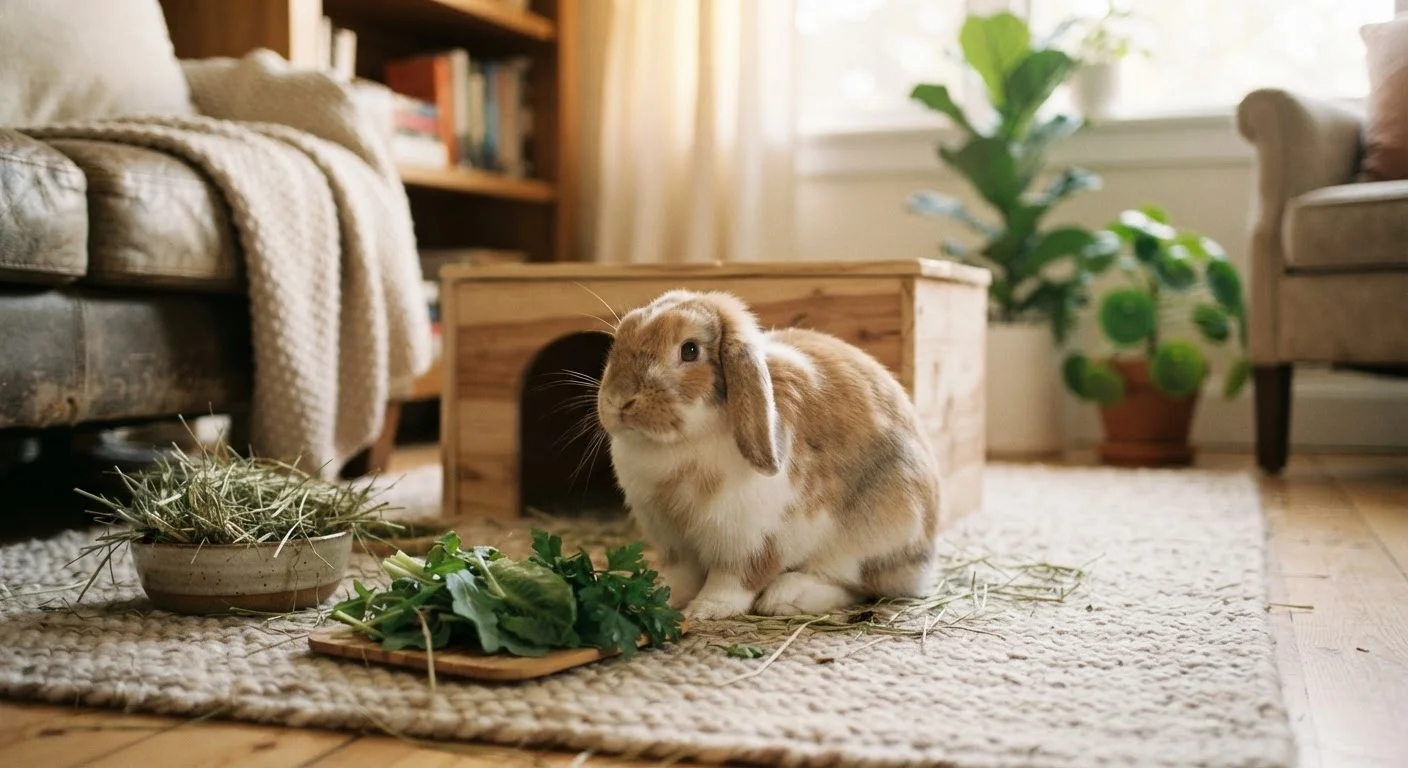
Key Takeaways
Start here
Setting Up Your Rabbit's Living Space
Next
What Rabbits Actually Eat
Then
Understanding Rabbit Behavior
Also important
Health Basics and Vet Care
When you're ready
Handling and Building Trust
Setting Up Your Rabbit's Living Space
Before your rabbit arrives, having the right environment ready makes an enormous difference. See our preparation checklist for small pets for a full rundown of what to have on hand.
At minimum, your rabbit's enclosure should allow them to stretch out fully, stand upright on their hind legs, and move around without obstruction. Wire-bottomed cages are not recommended - they are hard on rabbit feet. Solid-floored pens or large exercise playpens work well for most setups.
- Bedding: Paper-based or fleece bedding is gentle on paws and easy to clean. Avoid cedar or pine shavings, which can irritate respiratory tracts.
- Litter box: Place it in a corner of the enclosure - rabbits often choose one spot naturally. Fill with paper-based litter and a layer of hay on top.
- Hideaway: A wooden box or tunnel gives your rabbit a retreat space. Feeling safe is essential for their wellbeing.
- Chew items: Rabbits' teeth grow continuously. Untreated wooden toys, cardboard, and willow sticks satisfy the natural urge to chew.
Rabbit-Proof Before You Let Them Roam
Rabbits will chew almost anything within reach, including electrical cords, baseboards, and houseplant leaves. Before allowing free-roam time, cover cords with cable protectors, block off hazardous areas, and double-check that any plants in the space are non-toxic to rabbits.
Rabbit-proof any room where your rabbit will roam freely. Cover electrical cords, block access under furniture, and remove houseplants - many common plants are toxic to rabbits.
What Rabbits Actually Eat
Diet is one of the most misunderstood parts of rabbit care. The classic image of a rabbit eating mostly pellets and carrots does not reflect what rabbits actually need to stay healthy.
Crepuscular
Most active during the hours around dawn and dusk, rather than during the day or night.
GI stasis
A dangerous condition in rabbits where the digestive system slows or stops moving food through properly. It can become life-threatening within hours.
Binkying
A spontaneous leap and twist in the air that rabbits perform when they feel happy and safe in their environment.
Spaying / Neutering
Surgical procedures performed by a veterinarian to remove a rabbit's reproductive organs, reducing health risks and certain unwanted behaviors.
Timothy hay
A type of grass hay that forms the nutritional cornerstone of an adult rabbit's diet, supporting digestion and healthy tooth wear.
A well-balanced rabbit diet looks like this:
- Unlimited timothy hay (80% or more of the diet): Hay is essential for digestive health and dental wear. It should always be available.
- Fresh leafy greens (about 1-2 cups per day for an average-sized adult rabbit): Romaine lettuce, cilantro, parsley, and leafy herbs are good choices. Introduce new greens one at a time.
- Pellets (a small, measured amount): Plain timothy-based pellets are appropriate for adult rabbits in limited quantities. Young rabbits under 7 months have different needs - consult your vet.
- Fresh water, always available: Provide water in a heavy ceramic bowl or a bottle - many rabbits drink more from a bowl.
Treats like fruit should be rare and tiny due to their sugar content. Foods to avoid entirely include iceberg lettuce, onions, garlic, and any high-starch snacks.
Introduce New Foods Slowly
When adding a new leafy green to your rabbit's diet, offer a small amount and wait 24 hours before offering it again. This gives you time to watch for any loose droppings or digestive upset. Once a green is well-tolerated, it can become a regular part of the rotation.
Understanding Rabbit Behavior
Rabbits communicate through body language far more than sound. Learning to read these signals helps you respond appropriately and strengthens your bond. For a deeper look, see our guide on reading your rabbit's body language.
A few behaviors to know right away:
- Thumping: A firm thump of the hind foot signals alarm or displeasure. It is a warning signal in the wild.
- Binkying: A joyful leap and mid-air twist. This is a very good sign - it means your rabbit feels happy and comfortable.
- Flopping: A rabbit that dramatically flops onto its side is not in distress - it is deeply relaxed.
- Circling your feet: Often a sign of hormonal behavior, which typically reduces after spaying or neutering.
- Tooth grinding (loud): Different from the quiet tooth purring of a content rabbit - loud grinding can indicate pain and warrants a vet visit.
Rabbits are crepuscular, meaning they are most active at dawn and dusk. Plan playtime and feeding around those windows for a more engaged pet.
If you are still deciding between species, our comparison of guinea pigs and rabbits covers the key lifestyle differences.
Health Basics and Vet Care
Rabbits are prey animals by instinct, which means they tend to hide illness until it becomes serious. Routine observation and regular veterinary care are your best tools.
Find a rabbit-savvy vet before you bring your rabbit home. Not all veterinary practices see exotic or small mammals - confirm in advance that the practice has experience with rabbits.
Key health priorities include:
- Spaying or neutering: Female rabbits (does) have a very high risk of uterine cancer if left unspayed. Neutering males (bucks) reduces aggression and scent-marking. Most vets recommend this procedure at around 4-6 months, though this can vary.
- Annual wellness exams: A vet can catch dental problems, weight changes, and other early signs of illness that owners may miss.
- GI stasis awareness: Gastrointestinal stasis - a slowdown or stop of the digestive system - is a life-threatening emergency in rabbits. If your rabbit has not eaten or produced droppings in 12 hours, contact a vet immediately.
This article provides general educational information about rabbit care and is not a substitute for professional veterinary advice. Always consult a qualified veterinarian for guidance specific to your rabbit's health needs.
Handling and Building Trust
Unlike dogs or cats, most rabbits do not instinctively seek human contact. Trust is built gradually through consistent, calm interaction - and it is worth every bit of effort.
Start by sitting quietly on the floor and letting your rabbit approach you at their own pace. Offer a hand for them to sniff before reaching toward them. Over days and weeks, most rabbits become noticeably more curious and relaxed around owners who respect their boundaries.
When lifting is necessary - for health checks or transport - always support the full weight of the hindquarters. A rabbit that feels unsupported will kick powerfully, which can cause spinal injury to the rabbit and scratches to you.
Supervise Children Around Rabbits
Rabbits startle easily and can be seriously injured if dropped even a short distance. Always have an adult present when children interact with a rabbit, and encourage low, slow, quiet interactions at floor level rather than picking the animal up.
Children should always be supervised around rabbits. Teach young family members to interact at floor level rather than picking the rabbit up, and to move slowly and quietly. Accidental drops are one of the most common causes of rabbit injury in family homes.
Compared to dogs, rabbits require a different kind of relational patience. If you have recently welcomed a dog and are curious how that experience compares, see our guide on bringing a dog home for the first time.