

Key Takeaways
Start here
Before Your Dog Arrives: What to Have Ready
Next
The First 24 Hours at Home
Then
Feeding Your New Dog
Build on it
Starting Basic Training Early
Stay prepared
Health Basics Every New Owner Should Know
Before Your Dog Arrives: What to Have Ready
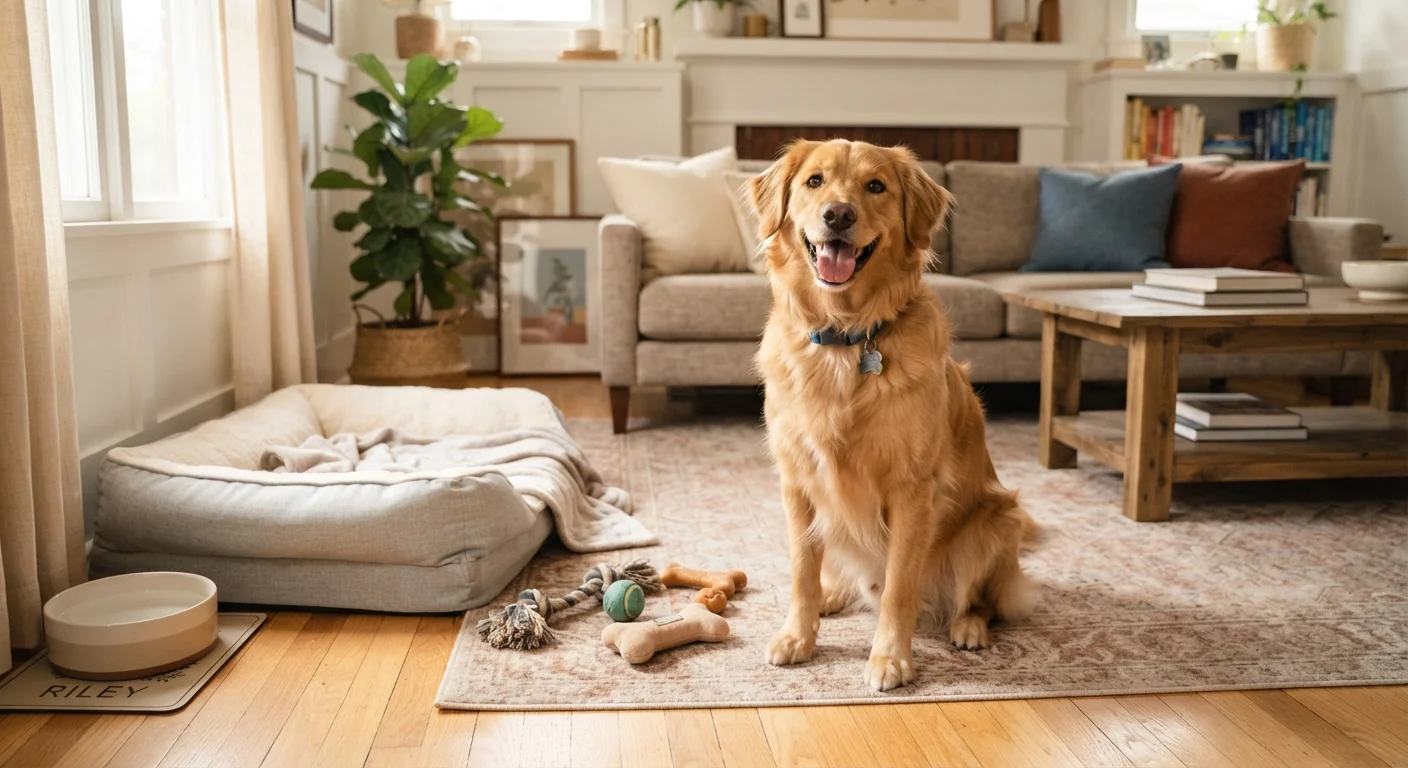
Preparation makes the transition smoother for both you and your dog. Having the right supplies in place before day one removes scrambling from the equation.
Core supplies to have ready:
- Food and water bowls - stainless steel or ceramic tend to be easiest to clean thoroughly.
- A collar, ID tag, and leash - your dog should wear an ID tag from the moment it arrives.
- A crate or dog bed - a defined resting space helps dogs feel secure.
- Dog food - ask the shelter or breeder what your dog has been eating and start with that.
- Waste bags and a cleaning spray - accidents during the first days are normal.
- A few toys - appropriate for your dog's size and chewing habits.
Walk through your home from a dog's point of view. Secure loose electrical cords, move toxic houseplants out of reach, and store household chemicals in closed cabinets. This applies to adult dogs, not just puppies - a new environment brings out curiosity in any dog.
If you're still weighing whether you're ready, our self-assessment for prospective dog owners covers the practical questions worth asking yourself first.
Positive reinforcement
A training method where you reward a behavior you want to see more of - with a treat, praise, or play - so the dog is more likely to repeat it.
Crate training
Teaching a dog to see a crate as a safe, comfortable resting place rather than a punishment. It helps with housetraining and gives the dog a defined space of its own.
Decompression period
The adjustment time a dog needs after a major change, like moving to a new home. During this period, the dog is learning its environment and may behave differently than it normally would.
Food transition
The process of gradually mixing a new food into a dog's existing diet over 7-10 days to prevent digestive upset from a sudden change.
Parasite prevention
Ongoing veterinary-recommended measures (like monthly treatments) that protect a dog from fleas, ticks, and heartworm - parasites that can cause serious illness.
The First 24 Hours at Home
The first day sets the tone. Your instinct may be to introduce your dog to everyone and everything immediately - but most dogs benefit far more from calm and quiet.
When you arrive home, give your dog a chance to sniff and explore each room at its own pace. Avoid loud gatherings or overwhelming attention. Show your dog where its water bowl, sleeping area, and outdoor access point are located.
Give Your Dog Room to Decompress
Many rescue and shelter dogs have experienced significant stress before arriving in your home. Resist the urge to overwhelm them with activity, visitors, or new experiences in the first few days. A quiet introduction to a calm household is one of the kindest things you can offer a newly arrived dog.
Take your dog outside frequently during the first day - every hour or two if possible. Even a house-trained dog may have accidents in a new environment simply due to stress or an unfamiliar routine. Reward calm outdoor elimination with praise.
Expect some behavioral quirks in the early days. Some dogs are initially withdrawn; others are overly excited. Both are normal responses to a major change. Learning to read what your dog is communicating helps enormously - our guide on dog body language explains the signals to watch for.
If you plan to crate train, introduce the crate during the first day with the door open and something comfortable inside. Let your dog choose to enter rather than forcing it in.
Feeding Your New Dog
Nutrition is foundational to your dog's health, and the first weeks are a critical time to establish good habits. Begin with whatever food your dog was eating before arrival - an abrupt switch can cause digestive upset including vomiting and diarrhea.
If you plan to switch to a different food, do so gradually over 7-10 days by mixing increasing amounts of the new food with the old. A typical transition looks like this:
- Days 1-3: 75% old food, 25% new food
- Days 4-6: 50% old food, 50% new food
- Days 7-9: 25% old food, 75% new food
- Day 10: 100% new food
Feeding frequency depends on age. Puppies generally need three to four meals a day; adult dogs typically do well with two. Your veterinarian can help you determine appropriate portion sizes based on your dog's weight, age, and activity level.
For a fuller picture of how nutritional needs shift as dogs age, see our article on dog nutrition across life stages. It's also worth familiarizing yourself with foods that are toxic to dogs - some common human foods pose real risks.
Starting Basic Training Early
Training is not a separate project to start later - it begins the moment your dog walks through the door. Every interaction teaches your dog something about how life in your home works.
Positive reinforcement (rewarding desired behaviors with treats, praise, or play) is widely supported by veterinary and animal behavior organizations as an effective and humane approach. Start with the basics: sit, stay, come, and leave it. Keep sessions short - five to ten minutes - and end on a success.
Consistency matters most. Decide on house rules before your dog arrives (allowed on the furniture? which rooms are off-limits?) and make sure everyone in the household applies the same rules. Mixed signals slow progress significantly.
Leash manners are worth addressing early. Pulling is one of the most common frustrations new owners report - our article on why dogs pull on the leash explains what's behind the behavior and what tends to help.
If your dog shows signs of distress when left alone, take that seriously. Our guide on separation anxiety in dogs can help you distinguish normal adjustment behavior from genuine anxiety.
Health Basics Every New Owner Should Know
Schedule a veterinary appointment within the first week, even if your dog received a health check before adoption. Your vet will confirm that vaccinations are up to date, screen for intestinal parasites, and discuss parasite prevention (fleas, ticks, heartworm). This visit also establishes a baseline for your dog's health.
Get familiar with what's normal for your dog - how it moves, eats, and behaves - so you can notice when something seems off. Dogs rarely vocalize pain clearly, so changes in behavior are often the first signal that something's wrong. Our article on signs your dog may be in pain describes the subtle cues to watch for.
Don't Skip the First Vet Visit
A dog that looks healthy can still carry intestinal parasites, be behind on vaccinations, or have underlying issues not visible to an untrained eye. A vet check in the first week is not optional - it's part of responsible ownership and protects both your dog and your household.
Beyond veterinary care, grooming is part of routine health maintenance - not just appearance. Even short-coated dogs benefit from regular brushing, nail trims, and ear checks. Our at-home grooming guide walks you through building a routine your dog can learn to tolerate and even enjoy.
This article provides general information for educational purposes only and is not a substitute for professional veterinary advice. Always consult a licensed veterinarian for guidance specific to your dog's health and needs.