

Key Takeaways
Why Some Human Foods Don't Belong in Your Dog's Bowl
Dogs and humans share a lot of the same living spaces - and often the same kitchen scraps. But a dog's metabolism is meaningfully different from ours, and compounds that humans process without issue can trigger serious, sometimes life-threatening reactions in dogs. Understanding why certain foods are dangerous (not just that they are) helps you make smarter decisions and respond quickly if something goes wrong.
This guide covers the most commonly encountered toxic foods, explains the mechanism behind each, and tells you what signs to watch for. If you're new to dog ownership, our first-time dog owner guide also walks through basic household safety and nutrition fundamentals.
This article is general educational information, not veterinary advice. Always consult a licensed veterinarian for guidance specific to your dog's health.
Chocolate
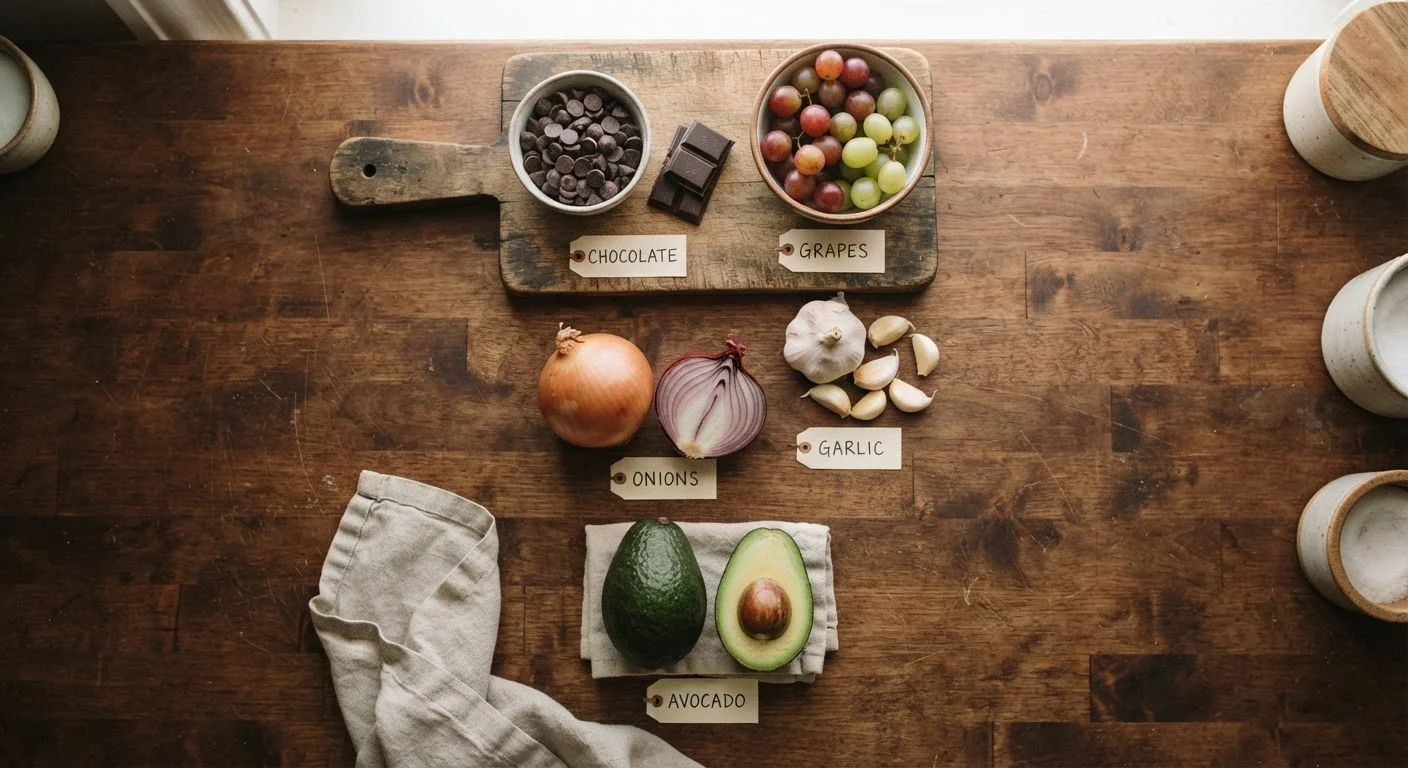
Chocolate contains two compounds - theobromine and caffeine - that dogs metabolize far more slowly than humans do. This slow clearance allows these stimulants to build to toxic levels in the body. The darker the chocolate, the higher the theobromine concentration: baking chocolate and dark chocolate are considerably more dangerous than milk chocolate, though no form is safe.
Symptoms include vomiting, diarrhea, restlessness, rapid breathing, muscle tremors, and in severe cases, seizures. Even a relatively small amount of dark chocolate can be dangerous for a small dog.
Darker chocolate contains more theobromine - no form of chocolate is safe for dogs.
Grapes and Raisins
Grapes and raisins can cause acute kidney failure in dogs, and the toxic compound responsible has not yet been definitively identified by researchers. What makes this particularly concerning is that the toxic threshold varies unpredictably - some dogs have had serious reactions to a small handful while others appear unaffected by similar amounts. Because there is no established safe dose, any ingestion should be treated as a potential emergency.
Watch for vomiting, lethargy, loss of appetite, and decreased urination within 24 hours of ingestion.
There is no established safe amount - even a few grapes can trigger kidney failure in some dogs.
Xylitol
Xylitol is an artificial sweetener found in sugar-free gum, some peanut butters, certain baked goods, oral care products, and medications. In dogs, it triggers a rapid release of insulin from the pancreas, causing a dangerous drop in blood sugar (hypoglycemia). Higher doses can also cause liver failure.
Symptoms - which may appear within 30 minutes - include vomiting, weakness, loss of coordination, and seizures. Always check ingredient labels before offering your dog any human food, particularly products marketed as "sugar-free."
Xylitol can cause life-threatening blood sugar crashes in dogs within 30 minutes of ingestion.
Onions, Garlic, Leeks, and Chives
All members of the Allium family - including onions, garlic, leeks, and chives - contain compounds called thiosulfates, which damage the hemoglobin inside a dog's red blood cells. The damaged cells are then destroyed by the dog's immune system, leading to hemolytic anemia (a shortage of functional red blood cells). Garlic is generally considered more potent by weight than onions.
These foods are harmful whether raw, cooked, or powdered - onion powder in seasonings and baby food is a common overlooked source. Symptoms include pale gums, weakness, reduced appetite, and reddish urine, and may take several days to appear.
Onion and garlic damage red blood cells whether raw, cooked, or in powdered form.
Macadamia Nuts
Macadamia nuts are toxic to dogs, though the precise mechanism is not yet fully understood. Ingestion typically causes weakness - particularly in the hind legs - along with vomiting, tremors, and fever. Symptoms usually appear within 12 hours and tend to resolve within 48 hours with supportive veterinary care, but a veterinarian should still be consulted promptly.
Chocolate-covered macadamia nuts combine two hazards and are especially dangerous.
Macadamia nuts cause hind-leg weakness and tremors; the exact toxic compound remains unidentified.
Alcohol and Unbaked Yeast Dough
Alcohol affects dogs far more severely than it does humans - even small amounts can cause vomiting, disorientation, dangerous drops in blood sugar and body temperature, and respiratory depression. This applies to beer, wine, spirits, and any food containing alcohol as an ingredient.
Raw yeast dough poses a related risk: in a dog's warm stomach, yeast ferments and produces ethanol (alcohol) as a byproduct, simultaneously causing the dough to expand and create painful gastric distension. Both problems can become life-threatening without prompt treatment.
Raw dough ferments inside a dog's stomach, producing alcohol and causing dangerous swelling.
Caffeine
Beyond chocolate, caffeine appears in coffee, tea, energy drinks, some sodas, and certain medications and supplements. Like theobromine, caffeine is a methylxanthine stimulant that dogs process poorly. It accelerates heart rate, raises blood pressure, and can trigger tremors and seizures at sufficient doses.
Coffee grounds and tea bags are higher in concentration than brewed beverages and represent a particular risk if a curious dog gets into a trash can or compost bin.
Coffee grounds and tea bags are far more concentrated sources of caffeine than brewed drinks.
What to Do in an Emergency
If you believe your dog has eaten any of the foods listed above, do not wait for symptoms to appear. Contact your veterinarian or call the ASPCA Animal Poison Control Center (888-426-4435) or the Pet Poison Helpline (855-764-7661) immediately - note that these hotlines may charge a consultation fee. Have the food item, the approximate amount eaten, and your dog's weight ready when you call.
Store Food Securely - Prevention First
Many poisoning cases happen when dogs access countertops, open trash cans, or unattended bags. Store potentially toxic foods in sealed containers in closed cupboards. Be especially mindful during holidays and gatherings, when chocolate, grapes, nuts, and alcohol are commonly left within reach. Prevention is always easier than treatment.
Never attempt to induce vomiting at home unless specifically directed to do so by a veterinary professional. Some substances cause more damage coming back up, and timing matters. Speed of professional intervention is one of the most significant factors in recovery outcomes.
For a broader look at symptoms that may signal your dog is unwell, recognizing pain signals in dogs is a useful companion read. And if you'd like to better understand what your dog should be eating, our guide to reading a dog food label breaks down ingredients and nutritional panels in plain language.