

Key Takeaways
Separation Anxiety in Dogs
Separation anxiety is a behavioral condition in which a dog becomes severely distressed when left alone or separated from a person they are bonded to. It goes beyond missing company - the dog experiences genuine panic that can lead to destructive behavior, excessive vocalization, or self-harm. It is one of the most common behavioral complaints among dog owners in the United States.
Clinically, separation anxiety is considered a fear-based disorder rooted in the dog's stress response system. It is distinct from boredom or under-stimulation, though those can produce similar surface behaviors.
What Separation Anxiety Actually Looks Like
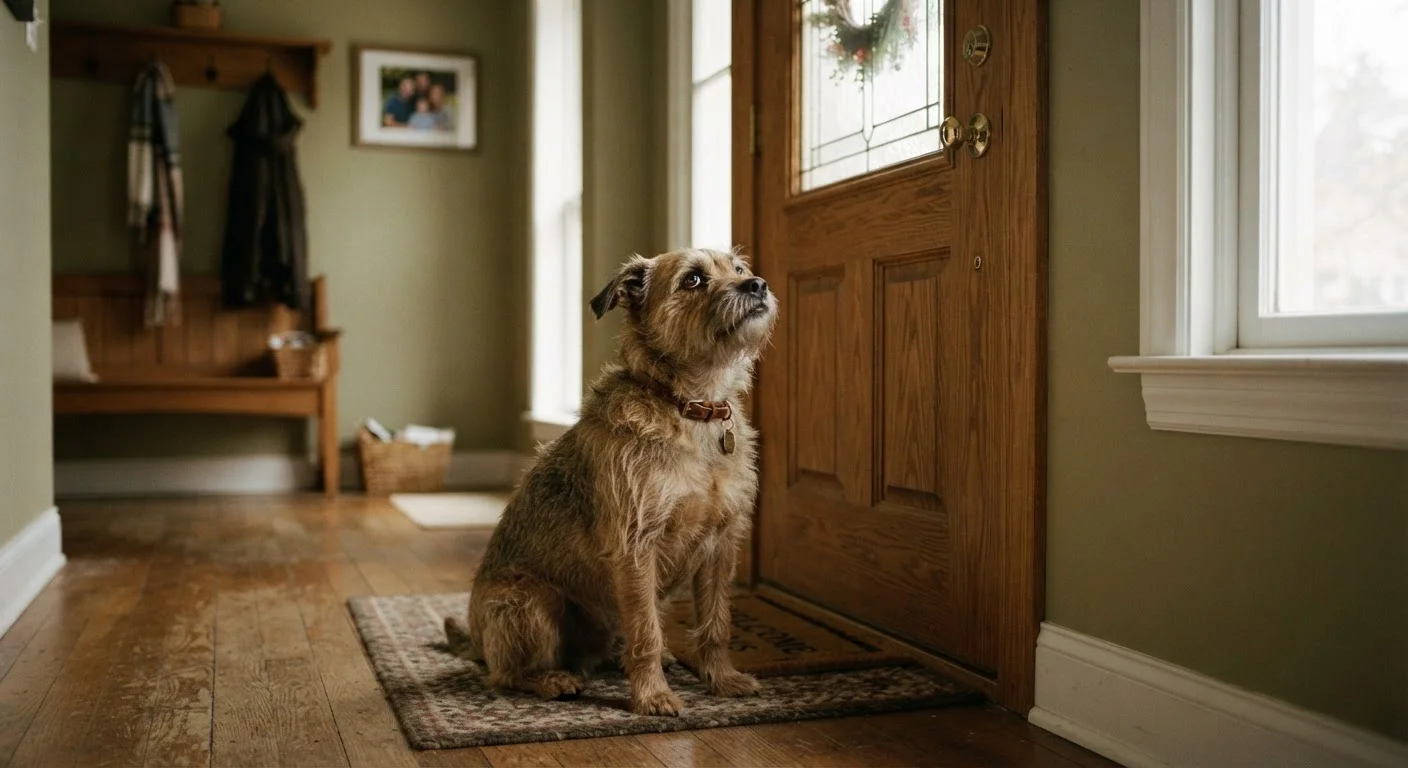
Dogs are social animals, and most prefer company to solitude. But separation anxiety describes something more intense than a dog simply preferring you to be home. It is a fear response - a state of genuine panic that some dogs experience the moment they sense they will be left alone.
Common signs include:
- Destructive behavior concentrated near exits - chewed door frames, scratched floors by the front door
- Excessive vocalization - prolonged barking, howling, or whining that begins shortly after you leave
- House soiling in an otherwise house-trained dog, occurring only when alone
- Pacing, drooling, or panting beyond what the temperature warrants
- Escape attempts that can result in self-injury
A telling detail: these behaviors typically start during your departure routine - some dogs begin showing distress when you pick up your keys or put on your coat. Understanding your dog's body language in everyday moments can help you spot early stress signals. See our guide to reading dog body language for what to watch for.
Not All Distress Is Separation Anxiety
Some dogs vocalize or become restless due to noise sensitivities, medical discomfort, or confinement frustration rather than separation anxiety specifically. A thorough behavioral and veterinary assessment helps identify the actual driver before committing to a treatment approach.
Separation Anxiety vs. Boredom: Why the Difference Matters
Boredom and under-stimulation can produce surface behaviors that look a lot like separation anxiety - chewing, barking, getting into things. Treating the wrong problem wastes time and can actually make things worse if anxiety is the real issue.
The clearest distinguishing factor is when the behavior occurs and the emotional state behind it. A bored dog tends to engage in calm, exploratory mischief - methodically working through the trash or chewing a shoe left out. An anxious dog is in a heightened state: panting, unable to settle, focused on exits.
One of the most useful tools owners have is a simple camera or pet monitoring app. Recording your dog for the first 30-60 minutes after you leave can reveal whether your dog is distressed or just opportunistic. If you are bringing a dog home for the first time, know that some initial adjustment-period anxiety is normal and different from a persistent disorder.
Use a Camera Before You Conclude Anything
Before starting any intervention, record your dog for the first hour after you leave on a normal day. Many owners are surprised to find their dog is calm - or conversely, in significant distress - in ways that aren't visible from the damage left behind. What you observe on camera should guide which approach you take.
Behavioral Approaches That Commonly Help
The most evidence-supported approach for separation anxiety is graduated desensitization - systematically exposing a dog to departure cues and short absences at an intensity low enough not to trigger panic, then very gradually increasing duration over many sessions.
In practice, this might start with simply picking up your keys and sitting back down, repeated until the dog stays calm. The next step might be walking to the door and returning immediately. The key is never progressing faster than the dog can handle without distress.
Additional strategies that are commonly paired with desensitization include:
- Pre-departure calm: Avoiding long, emotionally charged goodbyes, which can heighten a dog's anticipatory anxiety
- Enrichment before leaving: A tired dog with a filled puzzle feeder is better positioned to settle than one with pent-up energy
- Safe confinement: For some dogs, a crate they associate with comfort - not punishment - can feel like a secure den rather than isolation
- Consistent routines: Predictable schedules reduce uncertainty, which is a significant contributor to anxiety
~17%
Dogs estimated to experience separation anxiety
Research published in veterinary behavioral literature suggests roughly 17% of dogs exhibit some form of separation-related behavior problems, making it one of the most prevalent behavioral concerns in companion dogs.
Top 3
Reason dogs are surrendered to shelters
Separation anxiety and destructive behavior tied to it are consistently cited among the leading reasons owners surrender dogs to shelters in the United States, according to animal welfare organizations.
For moderate to severe cases, behavioral work alone may not be enough. A veterinarian can evaluate whether medication might help reduce the dog's baseline anxiety to a level where training becomes possible. This is a medical decision requiring professional guidance - not something to pursue without a veterinarian's involvement.
When to Seek Professional Help
If your dog is injuring themselves, cannot be left alone for even a few minutes without significant distress, or has not responded to basic management strategies after several consistent weeks, it is time to bring in a professional.
Your first call should generally be your veterinarian, who can rule out any underlying medical causes and discuss whether behavioral medication is appropriate. From there, a certified professional animal behaviorist or a veterinary behaviorist - a veterinarian with specialized training in animal behavior - can design a structured treatment plan. Look for credentials from recognized bodies such as the American College of Veterinary Behaviorists (ACVB) or the Animal Behavior Society (ABS).
Also pay attention to whether your dog shows other signs of stress-related discomfort in daily life. Our article on signs your dog may be in pain covers how to recognize when a dog is struggling beyond what behavior alone communicates.
This article is for general educational purposes only and is not a substitute for professional veterinary or behavioral advice. If your dog is showing signs of significant distress, consult a licensed veterinarian.