

Key Takeaways
Why Dogs Pull in the First Place
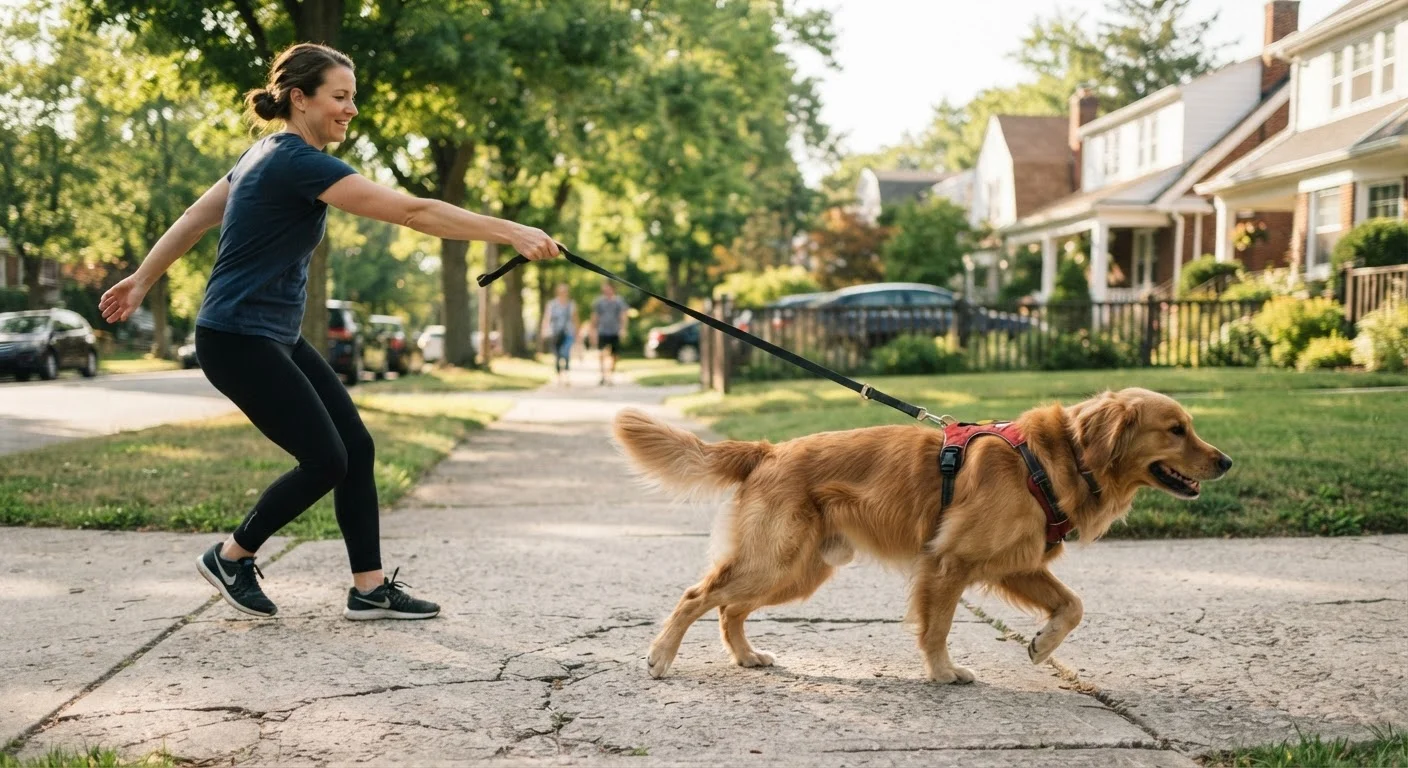
Leash pulling is frustrating, but it makes perfect sense from a dog's perspective. Dogs naturally walk faster than humans, and they're motivated by every scent, sound, and visual stimulus around them. The moment a dog lunges toward something interesting and the walk continues, the dog learns a simple lesson: pulling works.
This is called inadvertent reinforcement - when a behavior is accidentally rewarded. Most owners don't realize they're teaching their dog to pull simply by moving forward whenever the leash goes taut. The dog isn't being defiant; it's doing exactly what the environment has taught it to do.
Understanding this removes a lot of frustration. Pulling isn't a dominance display or a personality flaw. It's a learned habit - which means it can be unlearned with the right approach. If you're still in the early days of dog ownership, our guide for first-time dog owners covers the foundational routines that set you and your dog up for success from day one.
Common Mistakes That Make Pulling Worse
Most owners try several things before finding what works - and some common approaches can actually slow progress. Here are the mistakes that trainers and veterinary behaviorists most often see:
Continuing to walk when the leash is tight, hoping the dog will eventually tire out.
Why it happens: Owners often assume that a long walk will drain enough energy to reduce pulling, but movement itself is the reward the dog is seeking.
Relying solely on equipment - like a harness or head collar - without changing training technique.
Why it happens: New gear can feel like a quick fix, and some equipment does reduce the physical force of pulling. But it doesn't address the underlying habit.
Jerking the leash or using harsh corrections to stop pulling.
Why it happens: It can feel intuitive to respond to pulling with a counter-force. Some older training advice also recommended leash corrections.
Practicing only on familiar, low-distraction routes.
Why it happens: It's easier to train where there's less going on, and owners may assume that success at home will transfer automatically to busier environments.
Giving up on a session after one or two pulling incidents instead of resetting calmly.
Why it happens: Frustration builds quickly when a dog repeatedly pulls, and it can feel pointless to keep stopping and starting.
~80%
Dog owners who report leash pulling as a problem
Leash pulling is consistently cited as one of the most common behavioral complaints among dog owners, according to multiple veterinary behavior surveys.
4-6 weeks
Typical time frame for noticeable improvement with consistent training
Trainers generally note that most dogs show meaningful progress within a month of consistent daily loose-leash practice, though individual results vary.
What Actually Helps: Training Approaches Worth Trying
The most consistently recommended method for leash pulling is loose-leash walking training, built on positive reinforcement. The core idea is simple: your dog only moves forward when the leash is slack. The moment it tightens, you stop - or change direction - and wait. When your dog returns to your side and the leash loosens, you reward with a treat, praise, or forward movement.
A few principles that make this work:
- Reward frequently at first. In early sessions, mark and reward your dog every few steps for staying near your side. Gradually increase the distance between rewards as the behavior becomes reliable.
- Keep sessions short. Five to ten minutes of intentional loose-leash practice is more effective than a 45-minute walk where pulling is allowed most of the time.
- Be consistent. Every person who walks your dog needs to follow the same rules. One family member allowing pulling undoes progress made by another.
Learning to read your dog's body language also helps enormously - knowing when your dog is overstimulated or anxious can help you adjust your environment before pulling becomes uncontrollable. See our article on reading your dog's body language for practical guidance.
Don't Skip the Vet If Pulling Is Sudden
If your dog has previously walked well on a leash and suddenly begins pulling, straining, or resisting walks, physical discomfort could be the cause. Neck, shoulder, or joint pain can change how a dog moves and responds to leash pressure. Have your veterinarian rule out any medical issues before starting a new training program.
When to Ask for Help
If pulling is accompanied by lunging, barking, or reactivity toward other dogs or people, the issue may go beyond basic leash manners. A certified professional dog trainer (look for credentials such as CPDT-KA) or a veterinary behaviorist can assess what's driving the behavior and tailor a plan.
Also worth noting: if your dog suddenly starts pulling more than usual - or seems reluctant to walk at all - consider whether discomfort could be a factor. Dogs don't always show pain obviously. Our guide to signs your dog may be in pain outlines the subtle behavioral changes that can signal a vet visit is warranted. Rule out physical causes before intensifying any training program.
This article is for general informational purposes only and is not a substitute for professional training or veterinary advice. Every dog is different, and what works well for one may not suit another. A qualified trainer or veterinarian can help you develop an approach suited to your dog's specific needs.