

Key Takeaways
Our Verdict
Neither indoor nor outdoor gardening is universally better - each suits a different combination of plants, space, and lifestyle. Outdoor growing rewards those with yard access and a tolerance for seasonal rhythms, while indoor gardening suits apartment dwellers or anyone wanting year-round growing without weather risk.
| Best for | Recommended |
|---|---|
| Those with outdoor space and seasonal flexibility | Outdoor Gardening |
| Apartment dwellers or those in harsh climates | Indoor Gardening |
| Beginners wanting maximum control over growing conditions | Indoor Gardening |
| Gardeners growing vegetables, fruits, or large plants | Outdoor Gardening |
Understanding the Core Difference
When you're starting your first garden, one of the earliest decisions is deceptively simple: where will you grow? Indoor and outdoor gardening aren't just different locations - they're fundamentally different growing environments, each with its own set of conditions, constraints, and rewards.
Outdoor gardening means working with nature: soil, sunlight, rain, wind, and seasons all play a role. Indoor gardening means you're largely replacing nature - substituting grow lights for sunlight, watering by schedule instead of rain, and managing humidity with intention. Neither approach is harder in an absolute sense, but the skills they require are quite different.
Before choosing, it helps to think about three things: the plants you want to grow, the space you have, and how much time you can realistically commit. This comparison will walk you through the key factors so you can make an informed, confident decision.
Light: The Biggest Factor of All
Plants need light to photosynthesize - the process by which they convert light into energy for growth. Outdoors, sunlight is abundant and free, typically delivering far more light than any indoor setting. A south-facing outdoor bed in a US climate can receive 6-8 hours of direct sun daily, which most vegetables and flowering plants require.
Indoors, natural light drops significantly even near a bright window. South-facing windows are your best indoor option, but they still provide indirect or limited direct light for much of the day. Many popular houseplants - like pothos, snake plants, and peace lilies - are specifically adapted to lower light conditions, which is one reason they thrive inside.
If you want to grow herbs, vegetables, or flowering plants indoors, supplemental grow lights (electric lights designed to mimic the sun's spectrum) are often necessary. These add cost and electricity use, but give you control over your growing schedule regardless of season or window orientation.
Map Your Light Before You Plant
Before choosing plants, observe how light moves through your indoor space or garden plot throughout the day. Note where direct sun falls and for how long. This simple step takes about a day but prevents months of frustration from placing the wrong plants in the wrong spots. Most plants clearly label their light needs - match them to what you actually have, not what you wish you had.
Not sure how much light your indoor space gets? The pre-season garden checklist includes a simple sun-mapping exercise that works indoors and out.
Seasons, Climate, and Year-Round Growing
Outdoor gardening is tied to your local climate and the calendar. Most US regions have a defined growing season - a frost-free window during which tender plants can safely grow. In the Deep South, that window may span most of the year; in northern states, it can be as short as four months. Seasonal plants like tomatoes, squash, and cucumbers thrive outdoors during summer but cannot survive a frost.
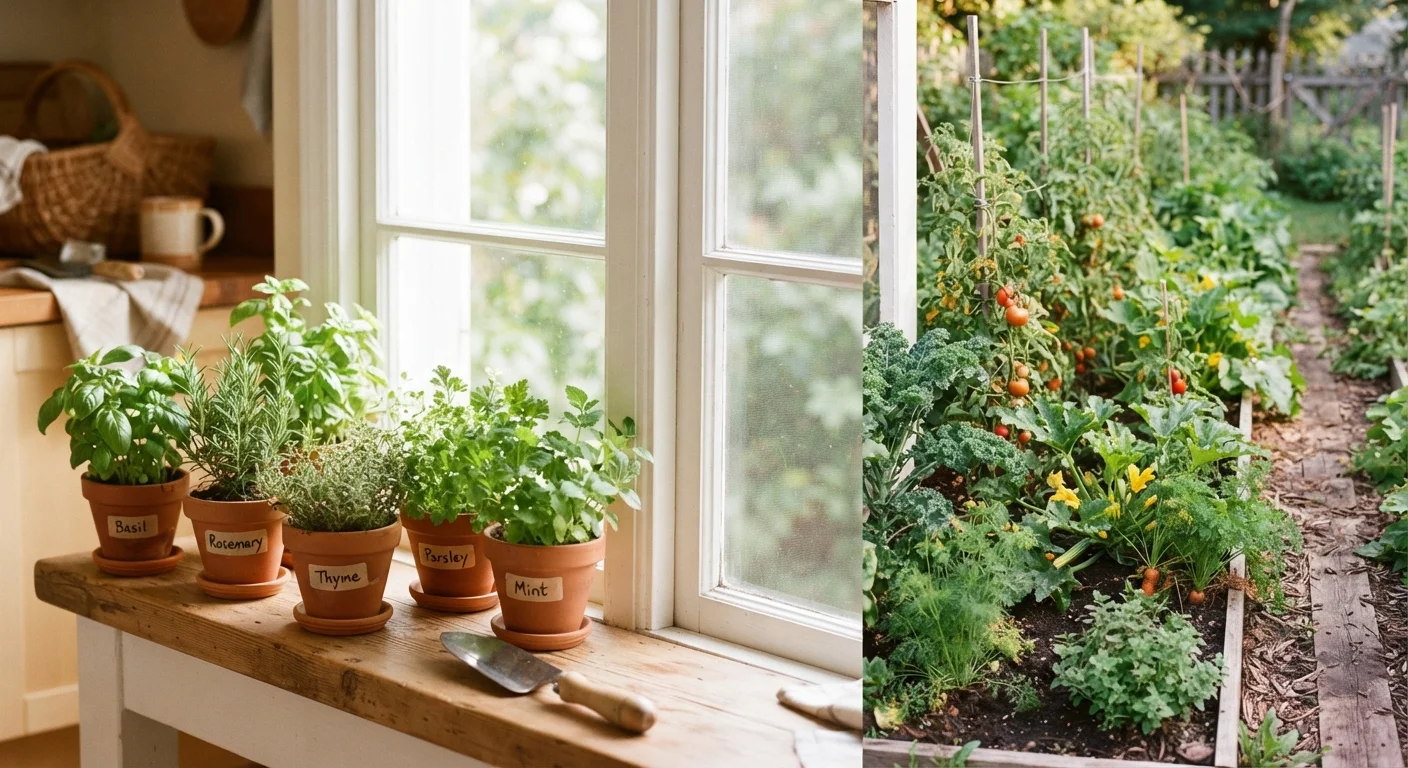
Indoor gardening sidesteps these limitations almost entirely. With stable indoor temperatures and artificial or window light, you can grow herbs, greens, and many tropical houseplants 365 days a year. This is a significant advantage for anyone in a cold climate or anyone who wants fresh herbs on the kitchen counter in January.
That said, outdoor gardeners can extend their season with tools like row covers (lightweight fabric draped over plants to trap warmth), cold frames (low glass or plastic enclosures), or by choosing cold-hardy varieties. For outdoor growing strategies beyond in-ground plots, see our guide to raised beds vs. in-ground planting.
Pest and Disease Management
Pests are an inevitable part of gardening - the question is which ones you'll face and how you'll manage them.
Outdoors, you're exposed to a wider variety of insects, fungi, and wildlife. Aphids, caterpillars, slugs, and deer are common depending on your region. However, outdoor gardens also benefit from a natural ecosystem of predators - birds, ladybugs, and beneficial wasps that help keep pest populations in check. Good garden design, including companion planting, can further reduce pest pressure without chemicals.
Indoors, the pest list is shorter but can include fungus gnats (tiny flies that breed in moist soil), spider mites, and mealybugs. Because indoor conditions are enclosed, infestations can spread quickly from plant to plant. Prevention - avoiding overwatering, inspecting new plants before bringing them home, and maintaining good air circulation - is your most effective tool.
Overwatering Is the Leading Cause of Indoor Plant Loss
Indoor plants have no rain or natural drainage to rely on, so watering habits matter enormously. Most beginners water too frequently - check soil moisture by pressing a finger an inch into the soil before watering. If it still feels damp, wait another day or two. Root rot caused by overwatering is difficult to reverse once it sets in, so err on the side of underwatering when in doubt.
Disease issues also differ. Outdoor plants face rain-borne fungal diseases like powdery mildew, while indoor plants are more susceptible to root rot from overwatering. Understanding your setting helps you catch problems early.
Space, Scale, and What You Can Realistically Grow
Outdoor gardens can scale up substantially - from a single raised bed to a full backyard plot. This makes them better suited to larger plants: fruit trees, sprawling vines like cucumbers or beans, and high-yield crops like corn or melons.
Indoor growing is inherently space-limited. Containers and shelves restrict root spread and overall plant size. Compact and dwarf varieties of herbs, lettuces, and some peppers do well indoors, but trying to grow a full tomato plant on a windowsill usually ends in frustration. If you have a patio or balcony, container gardening bridges the gap - see our guide to container gardening in small spaces for more on what works well in limited areas.
Soil quality also differs. Outdoor gardeners work with native soil, which may need amending - something you can learn more about in our article on identifying your garden's soil type. Indoor container plants rely entirely on potting mix, which is formulated for drainage and weight - never use outdoor garden soil in indoor pots.
| Factor | Indoor Gardening | Outdoor Gardening | |
|---|---|---|---|
| Light availability | Limited; may need grow lights | Abundant natural sunlight | |
| Season control | Year-round growing possible | Tied to local frost dates | |
| Pest exposure | Fewer pests, spreads quickly | More variety, natural predators help | |
| Space for plants | Limited to containers and shelves | Scalable from small bed to large plot | |
| Startup cost | Pots, grow lights, potting mix | Soil amendment, tools, outdoor beds | |
| Maintenance effort | Regular watering, humidity checks | Weeding, seasonal prep, weather watch | |
| Best plant types | Herbs, houseplants, compact greens | Vegetables, fruits, large flowering plants |
Which Environment Should You Start With?
If you have outdoor space and live in a temperate US climate, starting outside is often easier for beginners. Natural light, rain, and soil handle many variables for you, and mistakes tend to be more forgiving. You'll also have more plant variety to choose from and the satisfaction of watching a garden grow in a natural setting.
If you rent an apartment, live in a very cold or very hot climate, or simply don't have yard access, indoor gardening is not a compromise - it's a genuinely rewarding approach. Start with low-light-tolerant houseplants or a small herb garden near your sunniest window. As you gain confidence, explore supplemental lighting to expand your options.
Many gardeners do both: houseplants and herbs indoors, vegetables or perennials outside. Whichever path you choose, understanding the environment your plants are entering - not just which variety looks appealing - is the single most reliable predictor of success. To avoid common early mistakes, review popular gardening myths before you begin, and consider whether starting from seeds or buying seedlings best fits your setup.