

Key Takeaways
Our Verdict
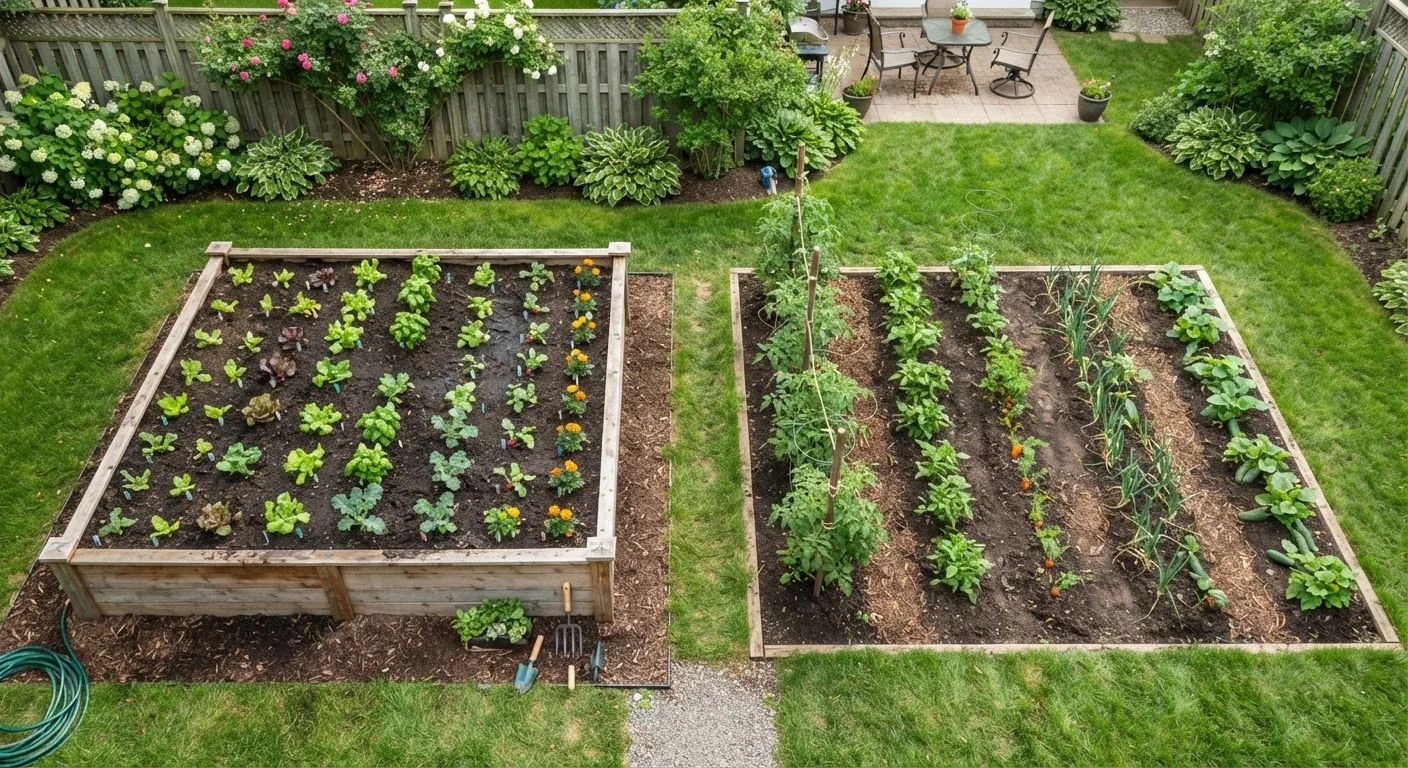
Neither method is universally superior - both can produce a thriving garden when matched to the right conditions. Raised beds suit beginners dealing with poor soil, limited mobility, or small, defined spaces. In-ground planting is a practical and economical choice where the native soil is workable and you have the room to grow.
| Best for | Recommended |
|---|---|
| Beginners with poor or unknown native soil quality | Raised Beds |
| Gardeners on a tight setup budget | In-Ground Planting |
| Those with back pain or limited mobility | Raised Beds |
| Anyone growing large or deep-rooted crops | In-Ground Planting |
What's the Real Difference?
At its core, the choice comes down to where your plants' roots live. Raised beds are enclosed growing areas - typically framed in wood, metal, or composite material - filled with soil you bring in yourself. In-ground planting means working directly with the native soil in your yard, amending it as needed before planting.
Both methods grow real food and real flowers. The differences show up in cost, effort, soil control, and long-term maintenance. If you're just getting started, see our complete first-timer's roadmap for a broader overview of what to plan before you dig anything.
| Raised Beds | In-Ground Planting | |
|---|---|---|
| Setup Cost | Moderate to high ($100-$300+ for basic bed) | Low (soil amendments and basic tools) |
| Soil Control | Full control - you fill with chosen mix | Dependent on existing native soil quality |
| Drainage | Excellent - drains quickly | Varies with native soil type |
| Spring Warm-Up Speed | Faster - elevated soil warms sooner | Slower - ground retains cold longer |
| Root Depth Available | Limited by frame depth (typically 10-24 in.) | Essentially unlimited |
| Weed Management | Easier - defined borders help | More effort required, especially early on |
| Physical Accessibility | Easier - less bending if built tall enough | Requires more bending and kneeling |
| Scalability | Each new bed costs materials | Dig more ground at minimal cost |
Raised Beds: The Upsides and the Trade-Offs
Raised beds are popular with beginners for a straightforward reason: you build the growing environment from scratch. You fill the frame with a balanced mix of topsoil, compost, and other amendments, so you're not gambling on what's already in your ground.
Key advantages
- Soil control: You choose what goes in, which matters enormously if your native soil is clay-heavy, sandy, or compacted.
- Drainage: Raised beds drain faster than flat ground, reducing the risk of root rot in wet climates.
- Earlier start: Elevated soil warms more quickly in spring, giving you a head start on the season.
- Easier on your back: A bed built 12-24 inches tall reduces bending, which many gardeners find less physically demanding.
- Defined space: Clear borders make weed management simpler and help keep grass from creeping in.
What to keep in mind
- Upfront cost: Materials for the frame plus purchased soil can add up - a common estimate for a basic 4×8 ft bed runs $100-$300 depending on materials and region.
- Watering frequency: Because they drain quickly, raised beds may need watering more often during dry spells.
- Root depth limits: Standard 10-12 inch beds aren't ideal for very deep-rooted vegetables like parsnips or sprawling crops like pumpkins.
Start Small With Raised Beds
If you're building your first raised bed, a 4×8 foot frame is a practical starting size - it's large enough to grow a meaningful amount of produce but small enough to manage comfortably. Fill it with a mix of topsoil, compost, and a perlite or coarse sand component to balance drainage and moisture retention. Avoid filling with straight garden soil from bags labeled for containers, as it tends to compact in larger volumes.
In-Ground Planting: The Upsides and the Trade-Offs
In-ground gardening is the oldest method on earth, and it remains a solid choice when your soil cooperates. Rather than building a container, you prepare an existing patch of ground by loosening the soil, removing weeds, and adding compost or other organic matter.
Key advantages
- Lower setup cost: You primarily need a spade, a soil test (inexpensive kits are widely available), and any amendments your test recommends.
- No frame to build or replace: There are no materials to rot, warp, or corrode over time.
- Deeper root space: Plants have essentially unlimited depth, which benefits crops like corn, squash, potatoes, and fruit trees.
- Scales easily: Expanding your plot typically just means digging more ground rather than purchasing additional materials.
What to keep in mind
- Soil quality varies: Many US yards have compacted, nutrient-poor, or clay-dominated soil that requires meaningful work before it supports a productive garden. A pre-season checklist can help you assess this before planting day.
- Weed pressure: Open ground gives weeds more opportunity to establish - consistent mulching helps.
- Slower spring warm-up: Ground-level soil takes longer to reach planting temperatures after winter.
Test Before You Dig In-Ground
Skipping a soil test is one of the most common beginner mistakes with in-ground planting. Many US yards - especially in newer suburban developments - have subsoil brought to the surface during construction, which can be low in nutrients and poorly structured. A soil test costs very little and prevents wasted effort planting into conditions that won't support healthy growth. Contact your local cooperative extension service for testing guidance specific to your state.
How to Choose What's Right for You
Most beginners find the decision becomes clear once they answer three honest questions:
- What is my soil like right now? If you don't know, a basic soil test (available at garden centers and through many cooperative extension programs) will tell you pH, nutrient levels, and texture. Heavy clay or very sandy soil may tip you toward raised beds.
- What's my budget for setup? If materials are a concern, in-ground gardening has a much lower barrier to entry. You can always add a raised bed later once you've learned what grows well in your yard.
- What do I want to grow? Herbs, lettuce, tomatoes, and most compact vegetables thrive in raised beds. Large sprawling or very deep-rooted crops generally do better in open ground. For a related question about how you'll start those plants, see our guide on seeds vs. seedlings.
You're also not locked in. Many gardeners use raised beds for high-value crops like salad greens and herbs while keeping perennials or larger vegetables in the ground nearby. And if a traditional outdoor garden isn't feasible at all, container gardening offers another path worth exploring.
~42%
US households that grow food at home
According to the National Gardening Association, food gardening participation in the US has grown steadily, with a significant share of households cultivating vegetables, herbs, or fruit.
4-6 weeks
Earlier planting potential with raised beds
Gardening extension resources note that raised beds can warm to workable temperatures several weeks ahead of in-ground soil, depending on climate and bed construction.