

Key Takeaways
Start here
Choose Your Garden Type and Location
Next
Understand Your Soil
Then
Pick the Right Plants for Beginners
When you're ready
Seeds vs. Seedlings: A Quick Decision
Keep it going
Watering, Feeding, and Ongoing Care
Choose Your Garden Type and Location
The first real decision every new gardener faces isn't what to plant - it's where to plant. Your available space, sun exposure, and physical access all shape what kind of garden makes sense for you.
Walk your outdoor space (or look at your windows and balcony if you're gardening indoors) at three different times during the day - morning, midday, and late afternoon. Count the hours of direct sunlight each spot receives. This simple observation prevents the most common beginner mistake: planting sun-loving vegetables in a shady spot.
Three Garden Formats Worth Knowing
- In-ground beds: Best if you have lawn or open soil. Requires clearing, weeding, and soil amendment, but offers the most growing space per dollar.
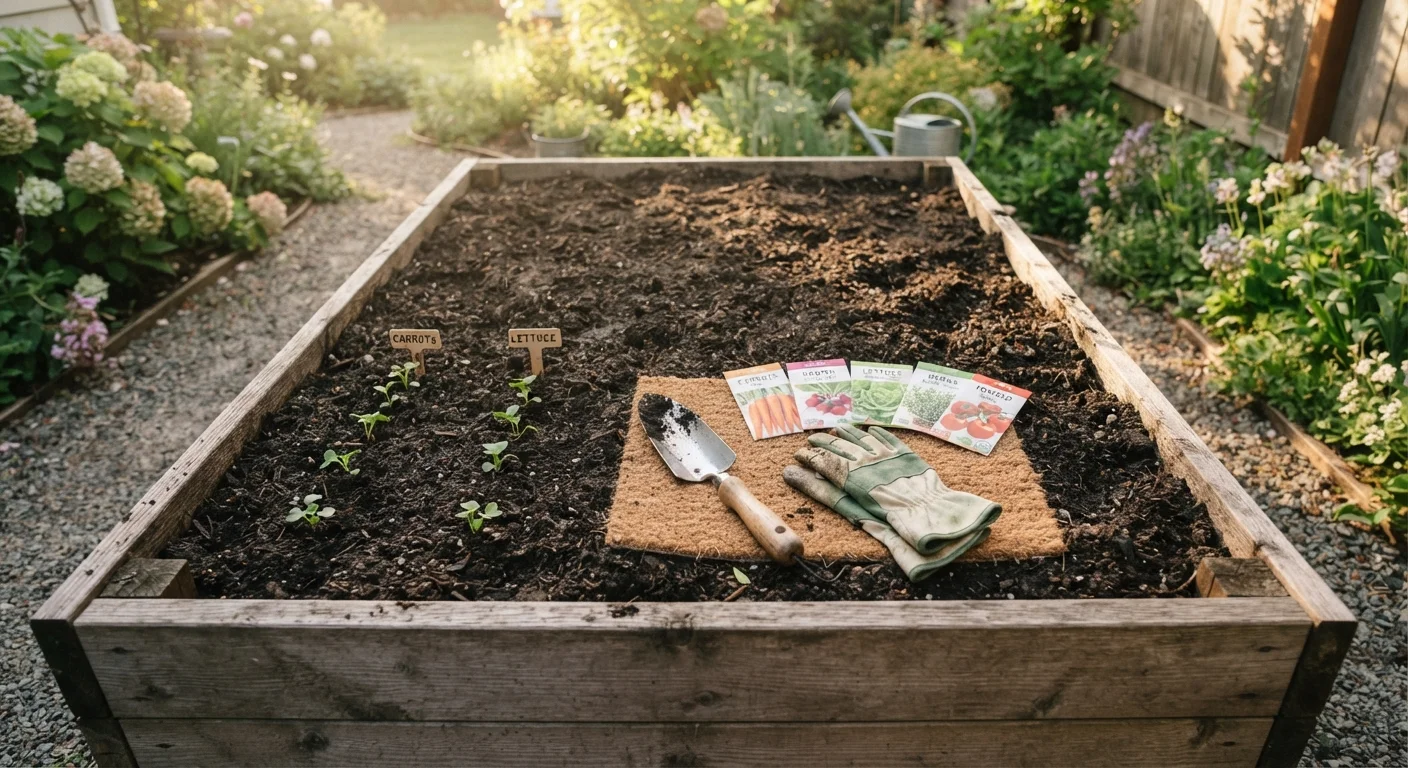
- Raised beds: Bottomless frames filled with quality growing mix, placed on top of existing ground. Easier on your back, excellent drainage, and you control the soil from day one. A common starter size is 4 feet wide by 8 feet long - narrow enough to reach the center without stepping in.
- Containers: Any pot, planter, or box with drainage holes. Perfect for patios, balconies, and renters. See our guide on container gardening in small spaces for what works best in pots.
Start smaller than you think you need. A 4×4 raised bed or three to four large containers is genuinely enough to grow meaningful amounts of food or flowers in your first season.
Start With One Bed, Not a Full Plot
It's tempting to convert your entire backyard in year one, but starting with a single small bed or a handful of containers keeps the project enjoyable. You'll learn more from one well-tended bed than from five neglected ones. Expand confidently in future seasons once you know what your garden needs.
Understand Your Soil
Plants live and die by what's happening underground. Soil is not just dirt - it's a living system of minerals, organic matter, air, water, and microorganisms that feeds your plants and anchors their roots.
pH
A scale from 0 to 14 that measures how acidic or alkaline your soil is. Most vegetables grow best in a slightly acidic range between 6.0 and 7.0.
Compost
Decomposed organic material - like kitchen scraps or fallen leaves - that improves soil structure and adds natural nutrients when worked into the ground.
Hardiness Zone
A USDA map system that divides the US into climate zones based on average minimum winter temperatures, helping gardeners know which plants will survive in their area.
Seedling
A young plant that has already sprouted and developed its first leaves, typically sold in small pots at nurseries and garden centers ready to transplant.
Mulch
A layer of material - such as straw, wood chips, or shredded leaves - spread on the soil surface to suppress weeds, retain moisture, and regulate soil temperature.
Raised bed
A bottomless frame or box placed on the ground and filled with growing mix, allowing you to control your soil quality independently of whatever native soil lies beneath.
What Good Garden Soil Looks Like
Healthy soil crumbles easily in your hand, is dark in color, and smells earthy rather than sour or stale. If your native ground soil clumps into hard lumps when dry or becomes slick and sticky when wet, it likely needs improvement before planting.
Simple Steps to Improve Soil
- Test it first. Inexpensive soil test kits - available at most garden centers and cooperative extension offices - tell you your soil's pH and basic nutrient levels. Most vegetables prefer a pH between 6.0 and 7.0.
- Add compost. Working 2-3 inches of finished compost into the top 6-8 inches of soil improves almost every soil type. It loosens clay soils, adds body to sandy ones, and introduces beneficial microbial life. Our guide on composting at home explains how to make your own for free.
- Use pre-mixed growing medium for raised beds. If you're building a raised bed, a commercial raised-bed mix is the easiest starting point. These are formulated for drainage and nutrition right out of the bag.
Before your first planting day, run through our pre-season garden checklist to make sure no step gets missed.
Pick the Right Plants for Beginners
New gardeners often choose plants they love to eat without checking whether those plants are forgiving for beginners. Some plants - looking at you, watermelon and corn - demand space, specific conditions, and patience that can discourage a first-timer fast.
Start with plants that are genuinely resilient and quick to show results. Our article on easy food plants for beginner gardeners goes deep on what to choose, but here's a quick-start list:
- Radishes: Ready in as little as 25-30 days from seed. Instant gratification.
- Lettuce and salad greens: Tolerates partial shade, grows fast, and you can harvest outer leaves repeatedly (called cut-and-come-again harvesting).
- Bush beans: Productive, low-maintenance, and don't require staking like pole beans do.
- Herbs (basil, chives, parsley): Thrive in containers, useful in the kitchen immediately, and very forgiving of beginner watering habits.
- Zucchini/courgettes: Produces abundantly with minimal care - often more than a new gardener expects.
Flowers Belong in a Food Garden Too
Marigolds, nasturtiums, and zinnias are excellent companions for vegetable beds. They attract pollinators that help fruiting plants set vegetables, and some - like marigolds - are thought to deter certain pests. Mixing a few flowering plants into your vegetable garden is a beginner-friendly way to support the whole garden ecosystem.
Resist the urge to plant a wide variety of twenty different things. Picking five to seven plant types lets you learn each one without becoming overwhelmed.
Seeds vs. Seedlings: A Quick Decision
Every plant in your garden begins as either a seed you sow yourself or a seedling (a young plant already started) that you transplant from a nursery or garden center. Both approaches work - the right choice depends on your timeline, budget, and how much setup you want to manage.
Seeds cost considerably less and offer a wider variety of choices, but they require more time and, in some cases, indoor growing equipment before your last frost date. Seedlings are faster and easier to establish, especially for plants like tomatoes and peppers that need a long head start indoors.
Our companion article Seeds vs. Seedlings: Which Starting Method Suits a New Gardener? walks through every factor in detail. For most beginners, a practical middle ground works well: start fast crops like radishes and beans directly from seed, and buy seedlings for slower crops like tomatoes and peppers.
Watch Out for Frost Dates
Planting warm-season seedlings too early - before your area's last expected frost date - can kill them overnight. Look up your USDA Hardiness Zone and local last frost date before transplanting anything outdoors. Your local cooperative extension office website is a reliable, free source for this information.
Watering, Feeding, and Ongoing Care
Once your plants are in the ground, consistent care is what carries them through to harvest. The good news: most beginner garden maintenance is simpler than it sounds once you have a rhythm.
Watering the Right Way
The goal is steady, even moisture - not wet-dry-wet-dry cycles that stress plants. A general guideline is approximately one inch of water per week, combined from rainfall and irrigation. Push your finger an inch into the soil: if it's dry, water deeply and slowly rather than lightly and quickly. Shallow watering promotes shallow roots; deep watering encourages plants to reach down and become more drought-tolerant over time.
Feeding Your Plants
If you started with quality soil or compost-amended ground, your plants may not need supplemental fertilizer early in the season. Watch for pale, yellowish leaves - a common sign of nitrogen deficiency - as a cue that feeding may help. A balanced, slow-release granular fertilizer applied at planting time is a simple, forgiving approach for beginners.
Managing Weeds
Weeds compete with your plants for water, nutrients, and light. The most effective approach: remove them when they're small, before they set seed. A thin layer of mulch (2-3 inches of straw, wood chips, or shredded leaves) around your plants suppresses weeds, retains soil moisture, and moderates soil temperature - three benefits in one step.
Gardening, like any skill, builds with practice. Your first season is as much about learning as it is about harvesting, so approach setbacks with curiosity rather than frustration.