

Key Takeaways
Why Starting With the Right Plants Matters
Choosing what to grow first is one of the most consequential decisions a new gardener makes - and it's one that's easy to get wrong. Pick something fussy or slow, and you may spend months waiting for results that never arrive. Pick something forgiving and fast, and you'll be harvesting real food before the season is half over.
The plants below were chosen because they share three qualities that matter most to beginners: they sprout or establish quickly, they tolerate irregular watering and imperfect soil, and they produce something you can actually eat without a long wait. Before diving in, it's worth doing a little groundwork - our pre-season garden checklist walks you through soil prep, sun mapping, and tool basics so your plants have the best possible start.
Not sure whether to sow seeds directly or buy young plants? That decision affects your timeline significantly - see our guide on seeds vs. seedlings to weigh both approaches before you plant.
Start Small for Better Results
Beginners often overplant in their first season, which leads to overwhelm and inconsistent care. Start with two or three crops from this list rather than attempting all eight at once. Once you understand the rhythm of watering, thinning, and harvesting, adding more variety becomes genuinely enjoyable rather than stressful. A small, well-tended patch produces more than a large, neglected one.
Eight Food Plants Worth Growing First
Radishes
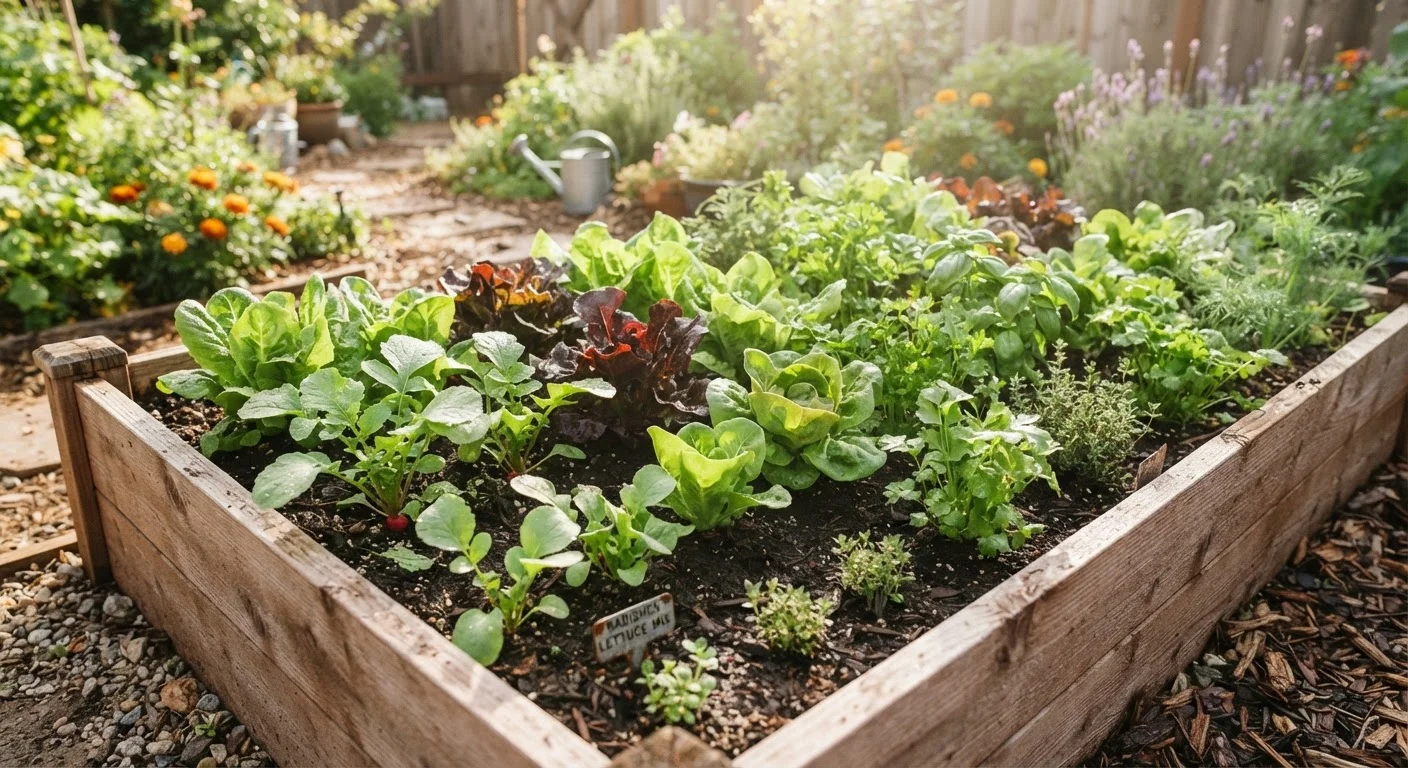
Radishes are arguably the fastest food crop available to home gardeners. Most varieties are ready to harvest just 22-30 days after sowing, which means you'll see results within a single month. Sow seeds directly into the ground or a container, cover with about half an inch of soil, and water regularly. They prefer cooler weather, so spring and early fall are ideal planting windows in most US regions. Thin seedlings to about two inches apart once they sprout - crowding is the main reason radishes turn out small or misshapen.
Most radish varieties are ready to harvest just 22-30 days after sowing.
Leaf Lettuce
Cut-and-come-again lettuce varieties (loose-leaf types rather than head lettuce) are ideal for beginners. You can begin harvesting outer leaves as soon as the plant reaches about four inches tall - typically 30-45 days from seed. Rather than pulling the whole plant, snip the outer leaves and the center continues producing new growth. Lettuce prefers partial shade in warmer months and moist, well-drained soil. It also grows well in shallow containers or window boxes, making it one of the most versatile beginner options.
Snip outer leaves and the center keeps producing - no replanting needed for weeks.
Bush Beans
Unlike pole beans, bush beans don't require staking or trellising - they grow as compact, self-supporting plants. Sow seeds directly in the garden after the last frost date for your region, and expect the first harvest around 50-60 days later. They prefer full sun (at least six hours daily) and well-drained soil. Bush beans also fix nitrogen in the soil, which gently improves soil quality over time - a slow-building benefit beginners often appreciate later. Water at the base of the plant rather than overhead to reduce the risk of fungal issues.
Bush beans need no staking and actively improve the soil while they grow.
Courgette (Zucchini)
Courgette - known as zucchini in the US - is famous among gardeners for how aggressively it produces. A single healthy plant can yield fruit continuously through the summer. Seeds germinate quickly (often within a week), and plants typically begin fruiting 50-65 days after sowing. The main beginner caution: courgette plants are large, spreading to two to three feet across, so give each plant adequate space. They need full sun and consistent watering, especially once fruit begins forming. Harvest fruit at around six to eight inches for the best flavor and texture.
One courgette plant can produce continuously through the summer with little intervention.
Basil
Among culinary herbs, basil is the one most new gardeners reach for first - and for good reason. It grows rapidly in warm conditions, tolerates container growing well, and is genuinely useful in the kitchen. Start seeds indoors six weeks before your last frost date, or plant seedlings outside once nighttime temperatures stay above 50°F. Basil needs at least six hours of sunlight daily. Pinch off flower buds as soon as they appear - this redirects the plant's energy into leaf production and extends the harvest season considerably. Avoid overwatering, as basil is prone to root rot in soggy soil.
Pinching off flower buds keeps basil productive for weeks longer than plants left to bolt.
Chives
Chives are among the most low-maintenance food plants available. They grow in clumps, regrow after cutting, tolerate partial shade, and can even survive mild neglect. Once established - from either seed or a small transplant - a clump of chives will produce for years with minimal intervention. They also deter certain pests, making them useful companions near other vegetables. Harvest by snipping the green tops down to about an inch above the soil; the plant regrows within a week or two. Chives work well in containers on a kitchen windowsill, giving you fresh herbs year-round.
Established chives regrow after cutting within a week or two and last for years.
Cherry Tomatoes
Full-size tomatoes can be challenging for beginners, but cherry tomato varieties are notably more forgiving - they tolerate irregular watering better, resist cracking more readily, and produce fruit over a long season. Choose a compact or dwarf variety if you're working with containers. Cherry tomatoes need full sun and should be started indoors 6-8 weeks before the last frost date, or purchased as seedlings. Stake or cage plants early, before they need support, rather than trying to wrangle them after they're established. Expect first fruit around 60-70 days after transplanting outdoors.
Cherry tomato varieties tolerate beginner mistakes far better than full-size types.
Spinach
Spinach is a cool-season crop that grows quickly and thrives in the shoulder seasons - early spring and fall - when many other vegetables aren't yet in production. It can be ready to harvest in as little as 37-45 days from sowing. Like lettuce, spinach can be harvested as a cut-and-come-again crop by snipping outer leaves. It prefers cooler temperatures and will bolt (go to seed and turn bitter) in summer heat, so time plantings accordingly. Spinach grows well in containers and doesn't need deep soil - six inches of depth is typically sufficient for a good harvest.
Spinach is ready to harvest in as little as 37 days, making it one of the fastest crops.
Once you have a few of these plants growing confidently, you can begin thinking about how they interact. Some food crops actively support each other when planted nearby - our article on companion planting explains which pairings are well-supported and why. And if you're working with a balcony, patio, or windowsill rather than a yard, nearly every plant on this list adapts well to containers - more guidance is available in our container gardening guide.
Growing in a Limited Space
Every plant on this list can be grown in containers if outdoor space is limited. Radishes, lettuce, spinach, chives, and basil all do well in pots as small as six to eight inches deep. Courgette and tomatoes need larger containers - at least five gallons - and reliable watering since pots dry out faster than garden beds. If you're starting from a balcony or windowsill, our container gardening guide covers setup and limitations in detail.