

Key Takeaways
Option A
Starting from Seeds
The patient, budget-friendly route with maximum variety.
Best for: Gardeners who want low cost, wide plant selection, and don't mind a longer timeline.
Option B
Buying Seedlings
The faster, more forgiving option for immediate results.
Best for: Beginners who want visible progress quickly and are willing to pay a little more for the head start.
If you're on a tight budget and growing several plants
Starting from Seeds
A single seed packet typically costs a fraction of what you'd pay for multiple nursery transplants, and leftover seeds can often be stored for next season.
If you want to see results quickly and avoid early frustration
Buying Seedlings
Seedlings bypass the trickiest stage of plant development, so you spend less time troubleshooting and more time actually gardening.
If you want to grow unusual or heirloom varieties
Starting from Seeds
Nurseries stock a limited selection; seed catalogs and packets offer hundreds of varieties you simply can't find as transplants.
If you have a short growing season or missed the early planting window
Buying Seedlings
Purchasing established seedlings lets you plant closer to your frost-free date without losing weeks to germination indoors.
What's the Real Difference Between Seeds and Seedlings?
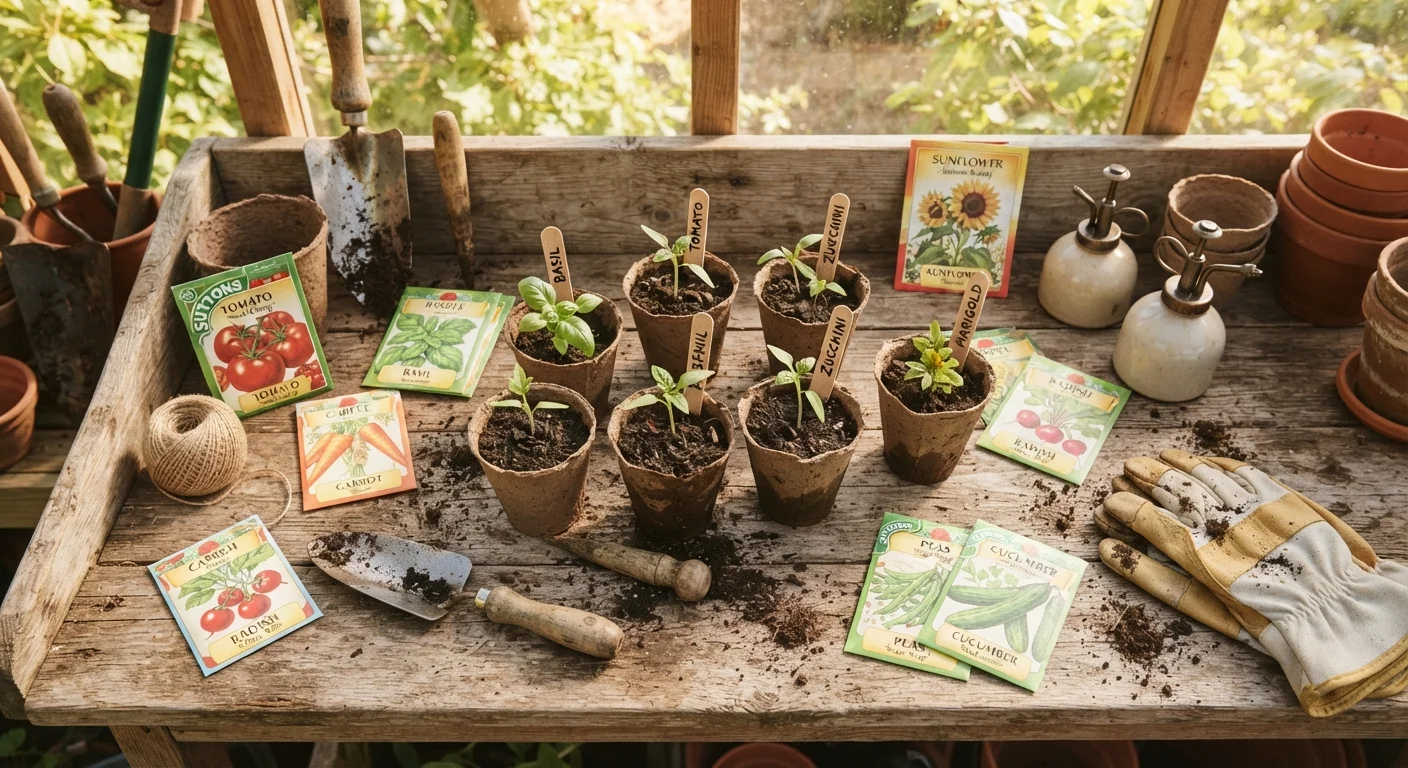
A seed is the starting point - a dormant plant embryo you sow into soil or a starter tray and nurture from scratch. A seedling (also called a transplant or starter plant) is a young plant that has already germinated and grown its first set of true leaves, typically sold in small pots or cell packs at garden centers.
The core trade-off is simple: seeds cost less and offer more variety, but require more time and attention. Seedlings cost more but compress the calendar, handing you a plant that has already survived its most vulnerable weeks.
For new gardeners, the choice often comes down to how much time you have, how comfortable you are with uncertainty, and what you're trying to grow. Neither method is universally better - and as you'll see, some plants actually prefer one approach over the other.
The Case for Starting from Seeds
Starting from seed gives you control from day one. You choose the variety, the growing medium, and the timing. For gardeners who enjoy the full process - watching a tiny sprout push through soil - it's deeply satisfying.
Where seeds make the most sense
- Root vegetables: Carrots, beets, radishes, and parsnips develop a taproot that does not transplant well. Direct-sowing them into their final spot almost always produces better results than transplanting seedlings.
- Fast germinators: Beans, cucumbers, squash, and zucchini sprout so quickly (often within a week) that starting them from seed is barely slower than buying a transplant.
- Large quantities: If you're planting an entire raised bed of lettuce or a row of sunflowers, seeds are dramatically more economical.
Before you sow, learn how to read a seed packet - it contains critical information about depth, spacing, days to germination, and hardiness zones that directly affects your success.
| Criterion | Starting from Seeds | Buying Seedlings |
|---|---|---|
| Upfront cost | Low (pennies per plant) | Higher (dollars per plant) |
| Variety selection | Hundreds of options | Limited to nursery stock |
| Time to harvest | Longer (weeks more) | Shorter (head start built in) |
| Difficulty level | Moderate - germination can fail | Easier - fragile phase is done |
| Equipment needed | Trays, lights, heat mat (indoors) | Just soil and a container |
| Best for root veg | Yes - direct sow preferred | No - transplanting damages roots |
| Best for tomatoes/peppers | Only with early indoor setup | Yes - saves 6-10 weeks |
The Case for Buying Seedlings
Nursery seedlings have already cleared the hardest hurdle: germination. By the time you bring one home, it has roots, a stem, and at least one set of true leaves. That head start matters - especially for slow-growing plants like tomatoes, peppers, and eggplant, which need 6-10 weeks of indoor growth before they're ready to go outside.
Where seedlings make the most sense
- Long-season crops: Tomatoes and peppers need far more lead time than most beginners realise. Buying transplants sidesteps weeks of indoor seed-starting and all the equipment it requires (grow lights, heat mats, humidity domes).
- First-year gardeners: If you've never gardened before, starting with seedlings gives you a more forgiving entry point. You're learning to care for a plant, not racing the clock to keep a fragile sprout alive.
- Limited space: Seed-starting at scale requires tray space, light sources, and consistent temperatures. A small apartment or a lack of sunny windowsills makes this challenging.
If your transplants do struggle after planting out, common seedling problems like overwatering and poor light are usually the culprit - and they're fixable.
6-10 weeks
Indoor lead time for tomatoes and peppers
Tomatoes and peppers require weeks of indoor growth before outdoor transplanting - a timeline that makes purchased seedlings attractive for most beginners.
~7 days
Typical germination time for beans and squash
Fast-germinating crops like beans and zucchini sprout so quickly from seed that buying transplants offers little practical time advantage.
Side-by-Side: What to Expect from Each Approach
The table above summarises the key practical differences, but a few points deserve extra attention for beginners.
Timing is everything. Both seeds and seedlings are governed by your local last frost date - the approximate date after which freezing temperatures are unlikely. Seeds sown too early indoors can become leggy and weak before outdoor conditions are ready; seedlings bought too early may sit in cold soil and stall. The USDA Plant Hardiness Zone Map is a useful starting reference for your region.
You don't have to choose just one. Many experienced gardeners buy tomato and pepper seedlings (because starting them from seed is genuinely demanding) while direct-sowing beans, squash, and salad greens from seed. Matching the method to the plant is a smarter strategy than committing to one approach for everything.
Your garden setup also matters. See how raised beds compare to in-ground planting if you're still deciding where your plants will live - some setups favor transplants more than others.
Hardening Off: A Step Beginners Often Skip
Whether you start seeds indoors or buy nursery seedlings, plants raised in protected environments need a gradual transition to outdoor conditions - a process called hardening off. Over 7-10 days, set your plants outside for progressively longer periods, starting with a few hours in a sheltered, partly shaded spot. Skipping this step can shock plants with wind, direct sun, and temperature swings, causing wilting or leaf scorch even in healthy transplants.
A Few Plants to Try First, Whatever You Choose
If you're not sure where to start, keep it simple. Some food plants are genuinely forgiving for first-time growers - radishes, lettuce, herbs, and zucchini all show results fast and tolerate beginner mistakes reasonably well.
A practical first-season approach: sow radishes and lettuce directly from seed (they're fast, cheap, and hard to mess up), and buy one or two tomato or basil seedlings from a local nursery. This way you experience both methods with low stakes, and by the end of the season you'll have a much clearer sense of which approach you enjoy more.
Gardening is a skill built season by season. Whether you start with a seed packet or a six-pack of transplants, the goal for year one is simply to grow something - and to learn from whatever happens.