

Key Takeaways
Companion Planting
Companion planting means intentionally growing two or more plant species near each other because they offer each other some kind of benefit - whether that's deterring pests, improving soil, or making smarter use of space. It's a practice rooted in traditional agriculture and supported, in some cases, by modern horticultural research. Not every claimed pairing has strong scientific backing, so it's worth knowing which ones do.
Mechanisms behind companion planting include allelopathy (one plant releasing chemicals that affect another), habitat creation for beneficial insects, and nitrogen fixation by legumes, which can enrich nearby soil.
Why Plant Placement Matters More Than You Might Think
When you're planning your first garden, it's tempting to arrange plants by size or color. But experienced gardeners know that which plants grow near each other can be just as important as how often you water or fertilize them. Some plants produce chemical signals, attract specific insects, or change soil conditions in ways that directly affect their neighbors - for better or worse.
This is the core idea behind companion planting. It's not magic, and not every pairing delivers dramatic results. But learning a few well-supported combinations can give your garden a meaningful head start, especially if you're also trying to grow food plants that reward beginners quickly.
Start with One or Two Proven Pairs
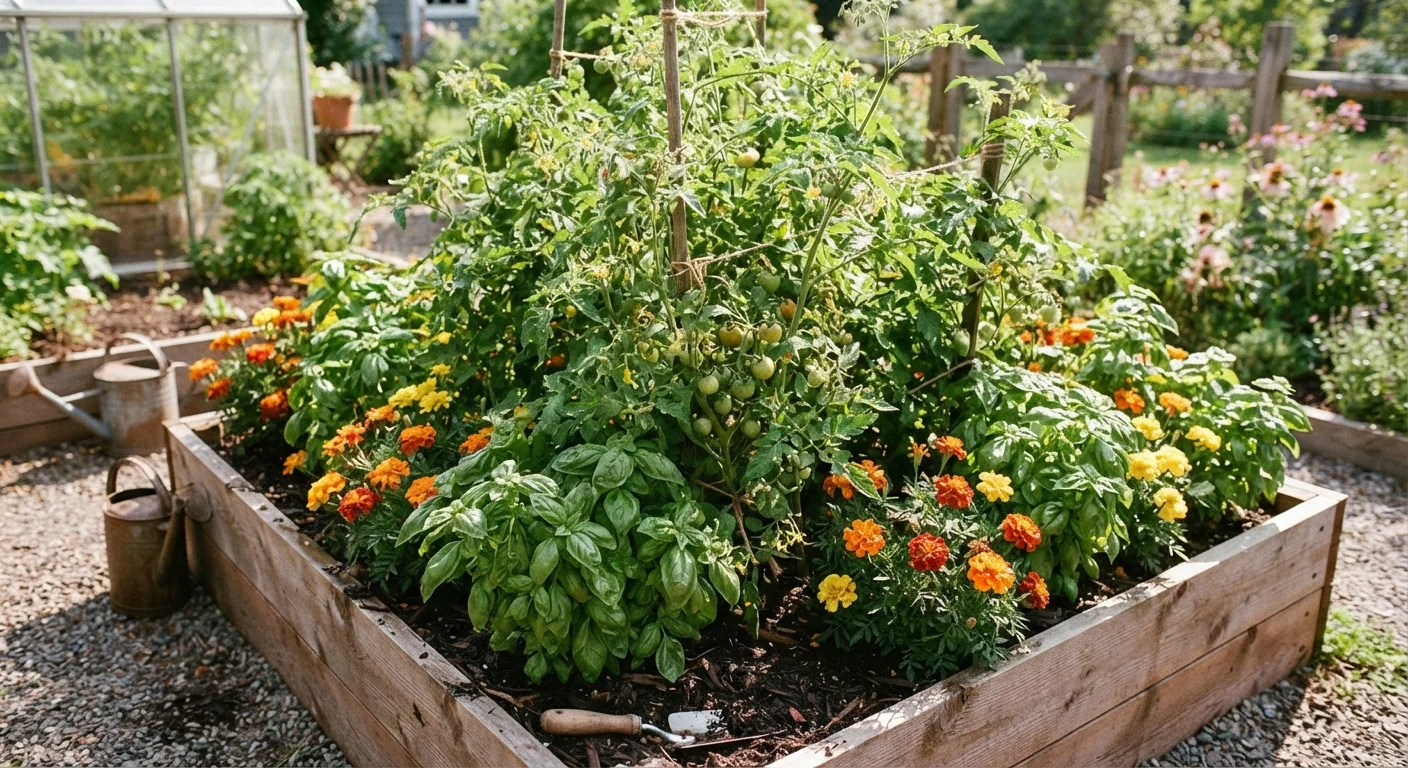
If you're new to companion planting, resist the urge to redesign your entire garden at once. Pick one well-supported pairing - such as tomatoes with basil, or squash with marigolds - and observe how they perform together this season. Building your knowledge gradually is more reliable than overhauling everything based on a long list of unverified tips.
Pairings Backed by Real Evidence
The most cited example in companion planting - and one with genuine historical and scientific grounding - is the Three Sisters: corn, beans, and squash grown together. Indigenous agricultural communities in North America developed this system centuries ago. Here's why it works:
- Corn grows tall and provides a natural trellis for climbing beans.
- Beans are legumes, meaning they fix atmospheric nitrogen into the soil, feeding the corn and squash.
- Squash spreads along the ground, its broad leaves shading out weeds and retaining soil moisture.
Each plant contributes something the others benefit from. This kind of complementary relationship is what companion planting is really about.
Another well-supported pairing: marigolds near tomatoes or other vegetables. Marigolds release a compound from their roots that has been shown in studies to suppress certain soil nematodes (microscopic worms that damage roots). They also attract pollinators and some predatory insects that feed on common garden pests.
3-in-1
Roles played by the Three Sisters combination
Corn, beans, and squash each serve a distinct function - structural support, nitrogen fixation, and ground cover - creating a self-reinforcing system documented by agricultural researchers.
~30%
Potential reduction in certain nematode populations
Research published in horticultural literature has found that specific marigold varieties can reduce root-knot nematode levels in surrounding soil when grown as a dense planting.
Herbs as Garden Allies
Aromatic herbs are popular companion plants because their strong scents can confuse or deter insects looking for their preferred host plants. A few pairings worth trying:
- Basil near tomatoes: A classic pairing. Basil may help repel thrips and aphids, and both plants share similar water and sun needs - making garden management simpler.
- Dill near brassicas: Dill attracts parasitic wasps that prey on caterpillars - a common pest of cabbage, broccoli, and kale. However, keep mature dill away from carrots, as they can compete.
- Nasturtiums as a trap crop: Nasturtiums are sometimes planted near squash or beans to attract aphids away from the main crop. You sacrifice the nasturtium, but protect your vegetables.
For gardeners working in small spaces, these same principles apply. See our guide on container gardening in pots and small spaces for tips on adapting companion planting to balconies and patios.
Tradition vs. Research in Companion Planting
Many companion planting recommendations come from generations of gardening tradition, not controlled scientific studies. That doesn't automatically make them wrong - but it does mean results can vary by climate, soil type, and local pest populations. Treat traditional pairings as reasonable experiments rather than guaranteed outcomes.
Combinations to Avoid - and Realistic Expectations
Just as some plants support each other, others compete or interfere. Fennel is often cited as a problematic neighbor for most vegetables - it releases compounds that many plants find inhibiting, and is best grown in its own dedicated spot. Onions and garlic can suppress bean growth, so keep these apart.
It's also worth being honest about the limits of companion planting. Much of the traditional wisdom - like planting carrots and onions together to confuse carrot flies - has limited rigorous research behind it. Some studies show modest effects; others show none. This doesn't mean these pairings are useless, but it does mean you shouldn't rely on companion planting alone as your pest management strategy.
A grounded, beginner-friendly approach: use companion planting as one layer of garden planning, alongside good watering habits and appropriate soil nutrition. For a broader look at what gardening advice holds up under scrutiny, our article on popular gardening myths is a useful companion read.