

Key Takeaways
Why Container Gardening Works for Small Spaces
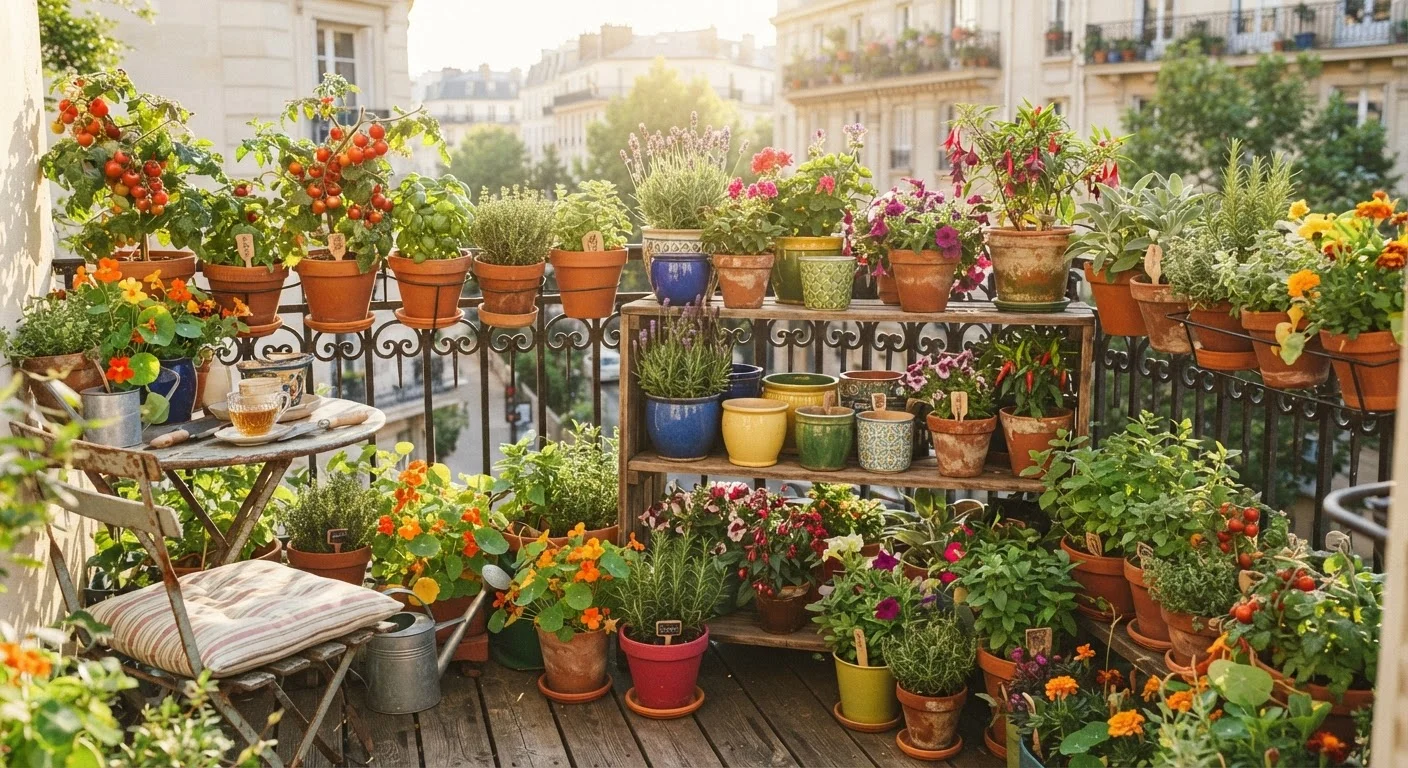
If you live in an apartment, townhouse, or any home without a traditional yard, container gardening puts growing food and flowers within reach. A sunny balcony, a south-facing windowsill, or a small concrete patio can all support a surprisingly productive garden - as long as you understand what plants need and how containers change those needs.
Container gardening also gives beginners a meaningful advantage: control. You choose the soil quality, the drainage, and exactly where each pot sits. If a plant isn't thriving, you can move it. If a pest appears, you can isolate the problem. For a complete first-timer, that flexibility is genuinely reassuring.
That said, containers come with real limitations. Plants grown in pots have a finite volume of soil, which means they run out of water and nutrients faster than plants in the ground. They also depend entirely on you - a missed watering in summer heat can stress plants quickly. Understanding both sides upfront sets you up for success rather than frustration. For a broader orientation to starting out, see our first-timer's complete garden roadmap.
Choosing the Right Containers
Container choice affects everything from moisture retention to root health. Here's what to look for:
- Drainage holes: Every container must have at least one hole at the bottom. Without drainage, water pools around roots and causes rot. This is the single most important feature to check before buying or repurposing any pot.
- Size: Bigger is generally better for vegetables. A standard 5-gallon container (roughly 12 inches across) suits herbs and lettuce. Tomatoes and peppers need at least 10-15 gallons. Dwarf fruit trees may need 20 gallons or more. Cramped roots mean stunted plants.
- Material: Terracotta (clay) pots are breathable and attractive but dry out quickly - a consideration in hot climates. Plastic pots retain moisture longer and weigh less, which matters on balconies. Fabric grow bags promote healthy root structure and are lightweight and inexpensive.
- Weight: If you're gardening on a balcony, keep weight limits in mind. Large containers filled with wet soil are heavy. Lightweight plastic and fabric options reduce risk. When in doubt, consult your building's specifications or a structural professional.
Repurposing Everyday Objects as Planters
You don't need to spend much on containers. Food-safe buckets, wooden crates lined with landscape fabric, and even colanders can all work as planters, provided drainage is present. Drill or punch holes in the bottom of any container that lacks them before planting.
You don't need to spend much on containers. Food-safe buckets, wooden crates lined with landscape fabric, and even colanders can all work as planters, provided drainage is present.
Soil Matters: What to Fill Your Pots With
Never fill containers with soil dug from your yard or garden. Garden soil compacts in pots, blocks drainage, and can introduce pests or disease. Instead, use a commercial potting mix - a blend of materials like peat moss or coco coir, perlite (volcanic glass granules that improve drainage), and compost, specifically designed for container use.
Look for a mix labeled for containers or all-purpose use. For vegetables and herbs, a mix with some compost added is ideal. For succulents or herbs from Mediterranean climates (like rosemary or lavender), choose a mix with extra perlite for sharper drainage.
The Gravel Drainage Myth
You may have heard that adding a layer of gravel at the bottom of a pot improves drainage. Research consistently shows this actually raises the level where water pools - called the perched water table - and can harm roots. Skip the gravel and focus on quality potting mix and a pot with drainage holes instead. Our article on popular gardening myths covers this and other common misconceptions in detail.
You may have heard that adding a layer of gravel at the bottom of a pot improves drainage. Research consistently shows this actually raises the level where water pools - called the perched water table - and can harm roots. Skip the gravel and focus on quality potting mix and a pot with drainage holes instead. Our article on popular gardening myths covers this and other common misconceptions in detail.
Best Plants for Containers (and What to Avoid)
A wide range of plants genuinely thrive in containers. Some of the most reliable choices for beginners include:
- Herbs: Basil, chives, parsley, mint (keep mint in its own pot - it spreads aggressively), and cilantro all do well in 6-8 inch pots. They're forgiving, useful in the kitchen, and fast to show results.
- Salad greens and lettuce: These are shallow-rooted and well-suited to window boxes and wide, shallow containers. They tolerate partial shade better than most vegetables.
- Cherry tomatoes and compact peppers: Dwarf or patio varieties are bred for containers. Full-size indeterminate tomato varieties grow very large and are harder to manage in pots.
- Radishes and green onions: Among the fastest-growing food plants available, these are ideal confidence-builders for new growers. See our guide to easy food plants for beginner gardeners for more ideas.
- Flowers: Marigolds, petunias, and nasturtiums thrive in containers and can also deter some common pests when planted near vegetables - a concept explored in companion planting.
Plants to approach with caution include large vining crops like pumpkins or full-size zucchini, which need substantial root space and sprawl, and deep-rooted crops like parsnips or large carrots, which need very tall containers.
Group your containers together rather than spacing them across a large area. Clustered pots create a slightly more humid microclimate around the plants, which reduces moisture stress - especially useful on exposed balconies.
Evaporation from surrounding pots and leaf surfaces raises the immediate humidity slightly, mimicking the canopy effect seen in denser plantings. This small adjustment can meaningfully reduce how often you need to water on hot, windy days.
Top-dress your containers with a thin layer of compost each season rather than replacing all the potting mix. This replenishes organic matter and beneficial microbes without the cost and labor of a full re-pot every year.
Potting mix degrades over time as organic material breaks down, but the process is gradual. Refreshing the top two inches with compost extends a mix's useful life and maintains soil structure around established roots.
Watering and Feeding Container Plants
Watering is where most container gardeners struggle early on. Pots dry out significantly faster than ground soil because roots are confined and evaporation happens from all sides of the pot, not just the top. During warm weather, many containers need water daily or even twice daily.
A reliable rule: push your finger an inch into the potting mix. If it feels dry at that depth, water thoroughly until water drains freely from the bottom holes. If it's still moist, wait. Overwatering is as harmful as underwatering - soggy soil drives out oxygen and rots roots.
Because containers are watered frequently, nutrients wash out of the potting mix over time. This means container plants need regular feeding. A balanced, water-soluble fertilizer (one designed for general vegetable or flower use) applied every one to two weeks during the growing season replaces those lost nutrients. Follow the label instructions for dilution rates and frequency - more fertilizer is not better and can damage plants.
6-8 hrs
Daily sunlight most vegetables require
The USDA and most horticultural extension programs cite six to eight hours of direct sun as the baseline for fruiting crops like tomatoes and peppers.
4-6 weeks
Before potting mix nutrients deplete
Most commercial potting mixes contain enough nutrients to sustain plants for approximately four to six weeks before supplemental fertilizing becomes necessary.
10-15 gal
Minimum container size for tomatoes
Cooperative Extension guidelines from multiple US states recommend at least a 10- to 15-gallon container for compact or patio tomato varieties to develop adequate root systems.
Common Beginner Mistakes to Avoid
Even with good intentions, a few missteps trip up most first-time container gardeners. Knowing them ahead of time is the best way to sidestep them:
- Underestimating sunlight needs: Most fruiting vegetables need 6-8 hours of direct sun daily. Observe your balcony or windowsill at different times before committing to a plant. Shade-tolerant greens are a better fit for lower-light spots.
- Choosing pots that are too small: A pot that looks large at the garden center often isn't large enough for the plant's mature root system. When in doubt, size up.
- Skipping fertilizer: Potting mix nutrients deplete within four to six weeks. Plants that look healthy in spring and then stall or yellow in midsummer are often simply hungry.
- Planting too many things together: A pot crammed with multiple plants looks appealing but creates competition for water, nutrients, and light. Give plants room.
- Giving up after one failure: Every gardener, at every experience level, loses plants. Container conditions vary - light, wind exposure, and seasonal temperature swings all affect outcomes. A plant that didn't thrive one year may succeed with a small adjustment the next.
For a comparison of how container growing stacks up against raised beds or in-ground planting, our article on raised beds vs. in-ground planting lays out each method's trade-offs clearly. And if you're weighing whether to garden indoors or outdoors, see our indoor vs. outdoor gardening comparison for a side-by-side breakdown.
Watch Balcony Weight Limits
Large containers filled with wet potting mix can be extremely heavy - a 15-gallon pot of saturated soil can weigh over 100 pounds. Before loading a balcony with multiple large pots, check your building's load specifications or consult a structural professional. Distribute weight along load-bearing walls or beams where possible.