

Key Takeaways
Why Watering Is Harder Than It Looks
If you're starting your first garden, watering probably feels like the easiest part. You pour water on plants; plants grow. But it turns out that watering incorrectly - too much, too little, or at the wrong time - is one of the most reliable ways to lose plants that had every other advantage. If you're working through your first season, our complete first-timer's roadmap covers the broader context this guide fits into.
The tricky part is that overwatering and underwatering can look nearly identical: both cause wilting, yellowing, and stunted growth. That means you can't just respond to how a plant looks - you have to understand what's happening in the soil beneath it.
Soil Type Affects How Water Behaves
Sandy soil drains quickly and may need more frequent watering, while clay soil holds moisture longer and is prone to waterlogging. If you're unsure what you're working with, see our guide on identifying your soil type before setting a watering routine. Matching your schedule to your soil is one of the most effective things a new gardener can do.
Core Practices for Watering Well
Good watering comes down to a handful of consistent habits. These aren't complicated, but they do require you to slow down and pay attention - especially in the first few weeks when you're still learning how your specific plants and soil behave.
Always check soil moisture before watering.
Plants don't follow a clock - they respond to actual conditions. Watering on a fixed schedule without checking the soil means you'll often water soil that doesn't need it, which compresses roots and promotes rot.
Water slowly and deeply rather than frequently and shallowly.
Shallow watering keeps moisture near the surface, which trains roots to stay shallow - making plants more vulnerable to heat and drought. Deep watering encourages roots to follow moisture downward, building a more stable, drought-tolerant plant.
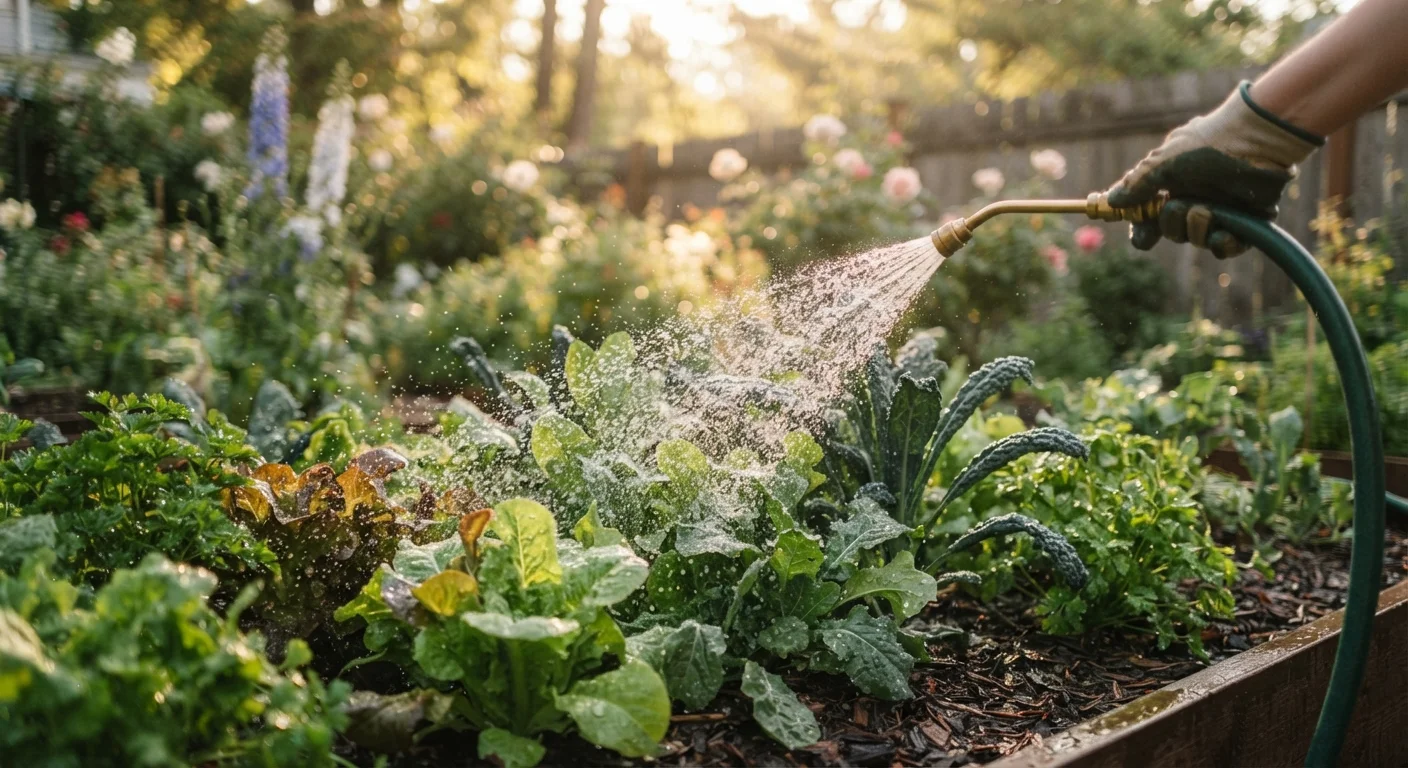
Water at the base of plants, not over the leaves.
Wet foliage sitting overnight is a common trigger for fungal diseases like powdery mildew. Directing water to the soil - where roots actually absorb it - is also more efficient and reduces evaporation.
Water in the morning whenever possible.
Morning watering gives any splash on leaves time to dry before nightfall, reducing disease risk. It also means less water is lost to midday evaporation compared to afternoon watering.
Learn to read plant stress signals before they become emergencies.
Both overwatered and underwatered plants can show wilting, which confuses beginners. Catching stress early gives you time to correct course before roots are permanently damaged.
How Much Water Do Different Plants Actually Need?
There's no single right answer, but understanding a few general categories helps. Most vegetables - tomatoes, squash, peppers - want consistently moist soil and will need watering every one to three days in warm weather. Herbs like rosemary and thyme prefer to dry out between waterings. Established perennial flowers and shrubs are generally more drought-tolerant than seedlings or annuals.
Container plants dry out significantly faster than in-ground plants, often needing daily water during summer heat. This is a common surprise for new gardeners - the pot size, material, and sun exposure all affect how quickly moisture escapes. For a deeper look at how indoor versus outdoor conditions change your approach, see our comparison of indoor and outdoor gardening environments.
Seedlings are the most vulnerable group of all - their root systems are shallow and fragile, and both drought and waterlogging can kill them within days. See our guide on why seedlings struggle if you've already had losses.
“The single most common gardening mistake is watering too much, too often, and at the wrong time of day. Roots need both water and air - and compacted, waterlogged soil starves them of oxygen.”
— University Cooperative Extension Service, US land-grant university horticultural outreach program
Quick Wins to Try This Week
You don't need to overhaul your entire routine overnight. Start with the habits below - each one takes less than five minutes and can make a meaningful difference within days.
One common myth worth addressing: watering in full sun does not actually scorch leaves. Research hasn't supported this claim, though it does lead to faster evaporation and less efficient watering. For more myth-busting on popular gardening advice, see the truth behind gardening myths.