

Home & Garden

Before Your First Plant Goes In: A Pre-Season Garden Checklist

Share
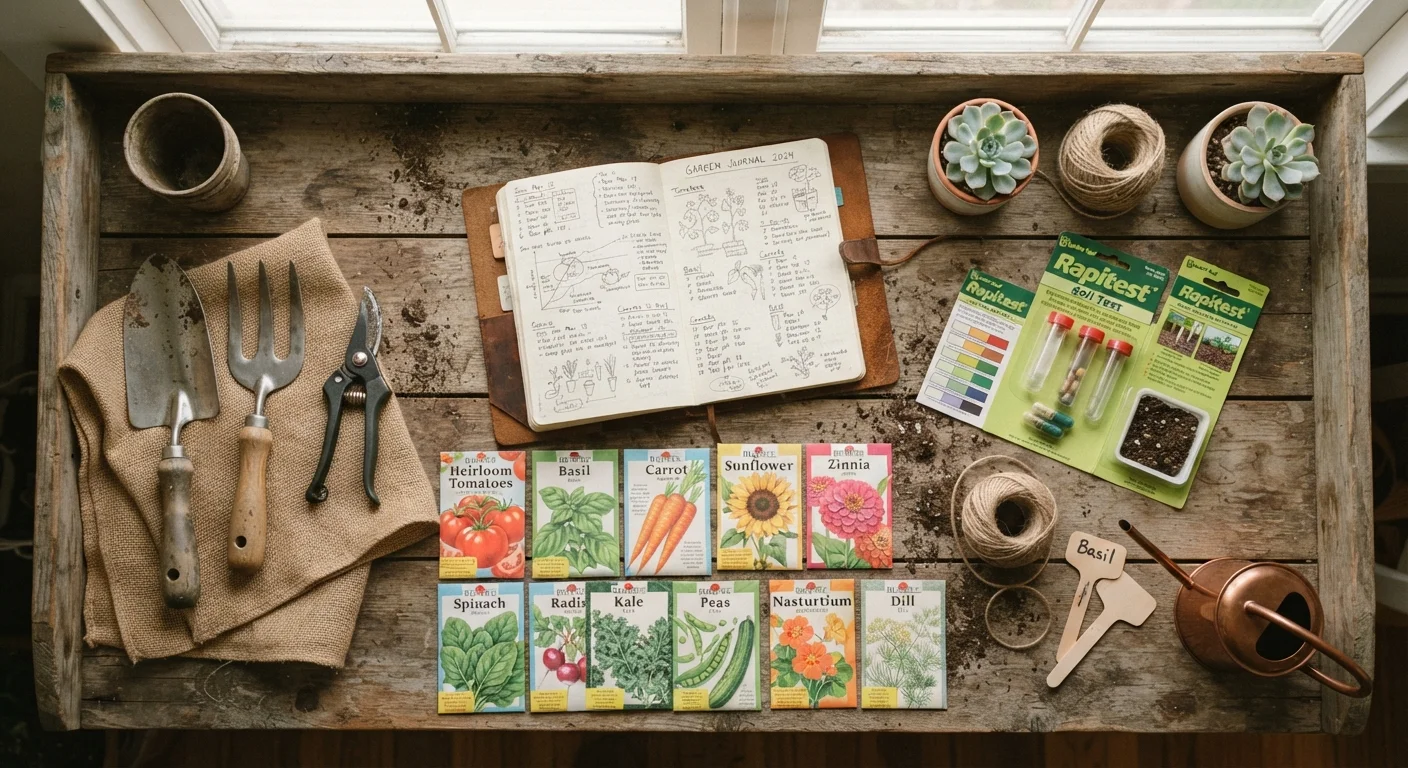
Gardening tools, seed packets, and a soil test kit arranged neatly on a wooden potting bench

Key Takeaways

Testing your soil before planting helps you correct problems that no amount of watering can fix later.
Mapping sunlight across your yard for a full day prevents mismatched plant placement.
Inspecting and cleaning tools before the season saves money and reduces the spread of plant disease.
Knowing your last frost date is the single most important factor in timing your planting.
Organizing seeds and supplies before you begin saves frustration once the growing season starts.
60–120 min

Summary

18 items · 1–2 hours spread across a weekend

Why Pre-Season Prep Is Worth Your Time

Most first-time gardeners lose plants not to bad luck, but to problems that existed before a single seed went in the ground. Compacted soil, shady spots misidentified as sunny, and rust-caked tools can all quietly undermine your efforts before spring even arrives.

Think of this checklist the same way you might approach a home walk-through before a busy season. Just as the seasonal home maintenance checklist helps you catch small issues before they become costly repairs, working through your garden prep systematically prevents avoidable failures.

You don't need a lot of experience — you just need a plan. Work through these groups in order, and you'll head into planting day with real confidence.

Know Your Space

Track sunlight across your intended garden area for one full day, noting which spots receive full sun (6+ hours), partial sun (3–6 hours), or shade (under 3 hours). Must
Identify your USDA Plant Hardiness Zone using the official USDA map to understand which plants are suited to your climate. Must
Look up your area's average last frost date using your state's cooperative extension service website. Must
Note any drainage trouble spots — areas where water pools after rain — since most vegetables and flowers dislike waterlogged roots. Should

Soil Preparation

Purchase a basic soil test kit from a garden center or send a sample to your local cooperative extension lab to check pH and basic nutrient levels. Must
Amend your soil based on test results — add lime to raise pH, sulfur to lower it, or compost to improve nutrient content and structure. Must
Turn the top 8–12 inches of soil in your planting beds using a fork or tiller to break up compaction and improve root penetration. Should
Add a 2–3 inch layer of compost to planting areas and work it in, even if your soil test results look reasonable. Should

Tool Check and Cleanup

Inspect all hand tools (trowels, pruners, rakes, hoes) for rust, cracked handles, or dull blades that make work harder and less precise. Must
Sharpen pruners, loppers, and hoe blades with a whetstone or hand file — clean cuts reduce plant stress and disease entry points. Should
Wipe metal tool surfaces with a light coat of oil after cleaning to prevent rust from returning during storage between uses. Nice to have
Check hoses, soaker hoses, and any irrigation fittings for cracks, leaks, or damaged connectors before the season begins. Should

Seeds, Transplants, and Supplies

Review any saved seeds from previous seasons and check the packet date — most vegetable seeds remain viable for 2–4 years, but germination rates drop over time. Must
Organize seeds and seedling supplies (seed-starting mix, trays, grow lights if used indoors) so they're accessible well before your planting schedule starts. Should
Write out a simple planting calendar noting when to start seeds indoors, when to harden off seedlings (gradually acclimate them to outdoor conditions), and when to transplant. Must
Confirm you have stakes, cages, or trellises for any climbing or top-heavy plants you plan to grow. Nice to have

Garden Bed and Perimeter

Clear last season's dead plant material from beds to remove potential disease and pest overwintering sites. Must
Refresh or add edging around garden beds to reduce grass and weed encroachment into your planting areas. Nice to have

Tools, Timing, and What to Gather First

Before you can follow the checklist, it helps to have the right items on hand. The tools and resources below are what most beginning gardeners will need to complete the prep steps effectively.

Required

Soil test kit or cooperative extension soil lab

Measures soil pH and basic nutrient levels so you know exactly what amendments your garden actually needs.

Required

Garden fork or spade

Used to turn and loosen compacted soil in planting beds before the season begins.

Required

Compost or aged compost

Improves soil structure, water retention, and nutrient content in nearly any type of garden bed.

Required

Pruners and a sharpening tool

Sharp pruners make cleaner cuts that help prevent disease from entering plants through ragged wounds.

Required

Notepad or planting calendar

Helps you map out seed-starting dates, transplant windows, and frost deadlines in one organised place.

Optional

Seed-starting trays and growing medium

Required if you plan to start seeds indoors before your outdoor planting date arrives.

Optional

Stakes, cages, or garden twine

Provides structural support for climbing plants like tomatoes, beans, and cucumbers once they're in the ground.

One detail beginners often overlook: timing. Your local last frost date — the average date after which freezing temperatures are unlikely — determines when it's safe to plant warm-season crops outdoors. You can look this up for free through your state's cooperative extension service (a network of university-based programs that provide practical gardening guidance for your region). Getting this date wrong by even a week or two can wipe out tender seedlings overnight.

Once you're ready to plant and water, be sure to read up on how to do it correctly. Watering your garden well is a skill in itself — more plants die from overwatering than from drought, and understanding depth and timing makes a real difference.

Don't Skip the Soil Test

It's tempting to skip soil testing and go straight to planting, but doing so is one of the most common mistakes beginners make. Soil that's too acidic or too alkaline prevents plants from absorbing nutrients even when fertilizer is present — a problem no amount of extra watering or feeding can overcome. Basic test kits are inexpensive and widely available, and cooperative extension labs often provide detailed results and amendment recommendations for a small fee.

Frost Timing Mistakes Can Be Costly

Planting warm-season crops like tomatoes, peppers, or squash before your last frost date has passed exposes them to temperatures that can kill plants overnight. Always verify your local last frost date each year, as microclimates (local temperature variations in your yard) can also shift that window. When in doubt, wait an extra week — plants establish quickly once conditions are consistently warm.

Home & Garden Editorial Team is the collective byline for our editorial team and contributor network. Articles published under this byline or an editorial pen name are researched, written, and reviewed according to our editorial standards for clarity, consistency, and independence before publication.

View all articles by Home & Garden Editorial Team →
Disclaimer: The content provided on our blog site traverses numerous categories, offering readers valuable and practical information. Readers can use the editorial team’s research and data to gain more insights into their topics of interest. However, they are requested not to treat the articles as conclusive. The website team cannot be held responsible for differences in data or inaccuracies found across other platforms. Please also note that the site might also miss out on various schemes and offers available that the readers may find more beneficial than the ones we cover.