

Key Takeaways
Soil Type
Soil type refers to the physical makeup of the ground in your garden - specifically the size and proportion of mineral particles it contains. The three main particles are sand (largest), silt (medium), and clay (smallest), and most garden soils are some combination of all three. The mix determines how your soil holds water, drains, and feeds plant roots.
Soil scientists classify soil texture using a triangle diagram that maps the percentage of sand, silt, and clay. Loam - widely considered ideal for most plants - sits near the center, with roughly 25-50% sand, 25-50% silt, and 10-25% clay.
Why Soil Type Matters for Every Gardener
Before you buy a single plant or seed, the ground beneath your feet is already shaping what will thrive there. Soil type affects how quickly water drains away, how tightly nutrients are held, and how easily roots can push through to anchor a plant. Getting this wrong - planting a moisture-loving fern in fast-draining sandy soil, for example - leads to frustration that looks like a gardening failure but is really just a mismatch.
The good news: identifying your soil type takes about fifteen minutes and no special tools. Once you know what you're working with, you can choose plants that suit it, or take targeted steps to improve it. If you're just getting started, our plain-language gardening glossary explains common terms you'll encounter as you dig deeper into soil research.
The Main Soil Types Explained
Most garden soils fall into one of five broad categories, each with distinct characteristics:
- Sandy soil feels gritty and loose. Water moves through it quickly - sometimes too quickly - which means nutrients can wash away before roots absorb them. It warms up fast in spring and is easy to dig, making it popular for root vegetables and drought-tolerant plants.
- Clay soil is dense and sticky when wet, rock-hard when dry. It holds water and nutrients well, but drains so slowly that roots can suffocate in waterlogged conditions. Heavy clay is also difficult to dig and compacts easily underfoot.
- Silt soil has a floury or soapy texture when damp. It's more fertile than sand and drains better than clay, but its fine particles compact readily and can form a surface crust after rain.
- Loam is the mix most gardeners aim for - a balanced blend of sand, silt, and clay that drains well, holds moisture, and supports healthy root growth. Most vegetables and flowering plants do well in loam.
- Chalky or peaty soils are less common but worth knowing. Chalky soil is alkaline and often shallow; peaty soil is dark, moisture-retentive, and acidic. Both require specific plant choices or amendment strategies.
Regional Soils Vary Widely
Soil composition varies significantly across the United States. The dense red clay of the Southeast, the alkaline soils of the Southwest, and the rich dark loam of the Midwest each present different starting conditions. What's typical in one region may be uncommon in another, so local cooperative extension offices can be a valuable resource for region-specific guidance.
Two Simple At-Home Tests to Identify Your Soil
You don't need a lab. These two methods give you a solid working picture of your soil in minutes.
The Hand Test
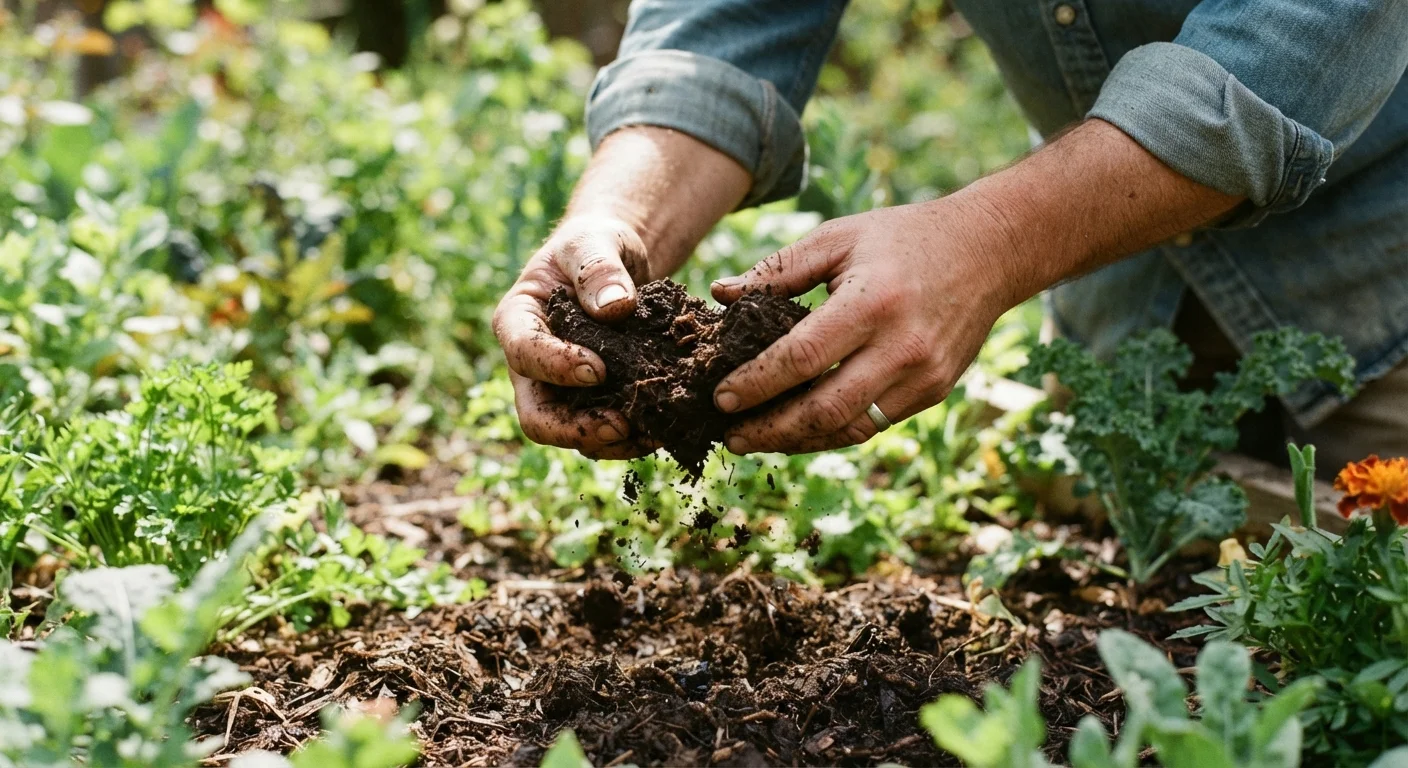
- Take a small handful of moist (not wet) soil from your garden bed, about 4-6 inches deep.
- Squeeze it firmly in your fist, then open your hand.
- If it holds its shape and feels sticky or smears on your fingers - you likely have a high clay content.
- If it crumbles apart immediately and feels gritty - it leans sandy.
- If it holds shape briefly then crumbles cleanly with no stickiness - you're probably looking at something closer to loam or silt.
The Jar Test
- Fill a clean glass jar about one-third full with garden soil.
- Add water until nearly full, secure the lid, and shake vigorously for one minute.
- Leave undisturbed for 24-48 hours.
- Sand settles to the bottom within minutes, silt in the middle layer, and clay remains suspended near the top longest.
- Compare the layer depths to estimate your soil's composition.
Test Soil From Multiple Spots
Soil composition can vary across a single yard - a shady corner near a fence may differ from a sunny central bed. Take samples from two or three locations and test each separately. This gives you a more complete picture and helps you make better planting decisions for different areas of your garden.
How to Work With - or Improve - What You Have
Soil type isn't a fixed sentence. Organic matter - primarily compost - is the most practical tool for improving almost any soil. Worked into clay, it opens up structure and improves drainage. Added to sandy soil, it acts like a sponge, holding moisture and nutrients closer to roots. Aim to add a 2-3 inch layer of compost each season, turning it into the top 6-8 inches of soil.
Understanding your soil also informs your watering approach - sandy soils typically need more frequent, lighter watering, while clay soils need less frequent but slower, deeper watering to avoid runoff and waterlogging.
If your plants have been consistently underperforming, a mail-in soil test through a university extension service can reveal pH imbalances or nutrient gaps that simple texture tests won't catch. It's a worthwhile step before your first planting season.
95%
Of plant problems linked to soil issues
Horticulture educators broadly estimate the vast majority of common plant health problems - including poor growth and root failure - trace back to soil conditions rather than pests or disease.
~6.0-7.0
Ideal soil pH range for most vegetables
The USDA and university extension services generally recommend a pH in this range for most common vegetable crops, as it allows optimal nutrient availability.
2-3 inches
Recommended compost layer per season
Horticultural guidance consistently suggests adding 2-3 inches of compost annually to maintain and gradually improve garden soil structure and fertility.