

Key Takeaways
Option A
Rolling
The space-saver favored by light packers.
Best for: Best for casual clothes, T-shirts, jeans, and travelers trying to maximize carry-on space.
Option B
Folding
The classic approach that protects structured garments.
Best for: Best for dress shirts, blazers, trousers, and clothes where maintaining shape matters.
If you're traveling carry-on only with mostly casual clothes
Rolling
Rolling compresses soft items efficiently and lets you fit more into a limited bag. It works especially well alongside packing cubes.
If you're packing formal or structured clothing for business or events
Folding
Folding preserves the shape of collared shirts, blazers, and dress trousers far better than rolling, reducing the need for ironing on arrival.
If you're packing a mix of casual and dressy items
Rolling
Use rolling for T-shirts, jeans, and underwear, and fold structured pieces on top - a hybrid approach most experienced packers rely on.
What Each Method Actually Does
Before comparing outcomes, it helps to understand what each technique involves. Rolling means laying a garment flat, folding the bottom hem up slightly, then tightly rolling from one end to the other - creating a compact cylinder. Folding means stacking a garment flat along its natural seams, the way it arrives from a store or drawer.
Both methods have been used by travelers for decades, but they behave very differently depending on the garment type, fabric, and suitcase shape. The debate isn't about which is universally better - it's about knowing when each one serves you.
If you're new to building a packing strategy, the beginner's guide to packing is a useful starting point before diving into technique.
| Criterion | Rolling | Folding |
|---|---|---|
| Space efficiency | Better for soft, casual items | Better for thick or structured items |
| Wrinkle control | Reduces fold-line creases | Keeps creases predictable along seams |
| Best garment types | T-shirts, jeans, underwear, leggings | Blazers, dress shirts, trousers |
| Ease for beginners | Simple once practiced | Familiar, intuitive for most |
| Works with packing cubes | Yes - fits neatly | Yes - especially flat cubes |
| Suitable for carry-on | Yes - maximizes space | Yes - if packing selectively |
Space Efficiency: Who Wins?
Rolling generally does compress clothes into a smaller footprint, particularly for soft, flexible fabrics like cotton T-shirts, leggings, underwear, and lightweight joggers. The cylindrical shape also fills the irregular corners of a suitcase more naturally than flat-folded stacks.
That said, rolling isn't always more efficient. Thick knits, structured blazers, and heavy denim can actually take up more space when rolled because the material resists compression. For those items, flat folding keeps them flatter and easier to layer.
~30%
Potential space saved by rolling soft clothes
Packing studies and travel bloggers have estimated rolling can recover roughly 30% more usable suitcase space for soft garments compared to flat folding, though results vary by garment and bag shape.
3-5
Items typically overpacked per trip
Travel surveys consistently find that travelers return home with several items they never wore, suggesting packing method matters less than item selection.
If space is a serious constraint - such as when traveling carry-on only - rolling casual items and folding denser or structured ones is a practical middle ground. See how this fits into a broader strategy in our article on carry-on only travel.
Wrinkles: What the Method Can and Can't Control
Wrinkles are the most common concern travelers raise about packing method. The truth is, fabric matters more than technique. Wool and synthetic blends tend to resist wrinkles under either method. Linen and cotton will wrinkle in a suitcase regardless of how carefully you pack them.
That said, rolling creates consistent pressure along the length of a garment, which can reduce fold-line creases - those sharp horizontal lines that appear when clothes sit flat for hours. Folding, when done along natural seams, keeps creases predictable and easier to shake or steam out on arrival.
For structured garments like dress shirts, folding with tissue paper between layers or using the bundle-wrapping technique (placing clothes around a soft core) reduces wrinkling more reliably than rolling. For casual clothes, rolling is generally wrinkle-neutral.
Many packing myths - including the idea that one method is always better - are explored in our piece on common packing myths.
Fabric Care Labels Are Worth Checking
Some delicate fabrics - such as silk, structured wool, or embroidered pieces - may specify flat storage or dry-cleaning only. Rolling these materials can distort their shape or damage surface texture. When in doubt, check the care label and consider wrapping fragile items in a layer of tissue or a soft T-shirt for added protection during transit.
How to Combine Both Methods Effectively
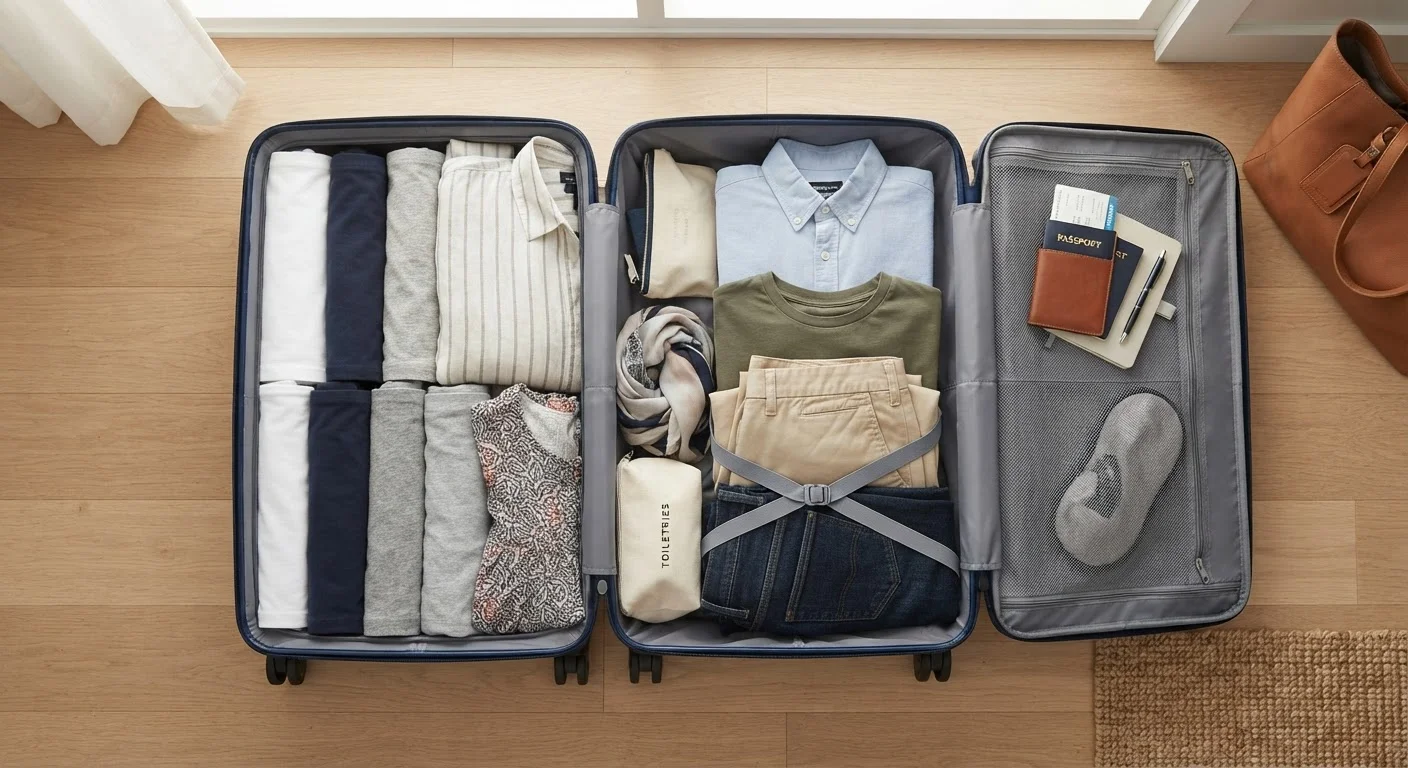
The most practical approach for most travelers isn't a strict choice - it's a hybrid. Roll soft, casual items: underwear, socks, T-shirts, lightweight pants. Fold structured items: blazers, collared shirts, dress trousers. Place folded items flat on the bottom, then use rolled items to fill gaps and corners.
Packing cubes work well with this system - rolled items slot neatly into cubes, keeping your suitcase organized without unraveling mid-journey. Heavier items should sit closest to the suitcase wheels to balance weight distribution when upright.
If you're still finding it hard to pare down your packing list even with efficient folding and rolling, the deeper issue may be what you're choosing to bring. Our guide on why packing light is harder than it sounds addresses that directly. The habits that tie these choices together are also covered in smart habits experienced travelers use.