

Key Takeaways
The Real Reason Packing Light Is Difficult
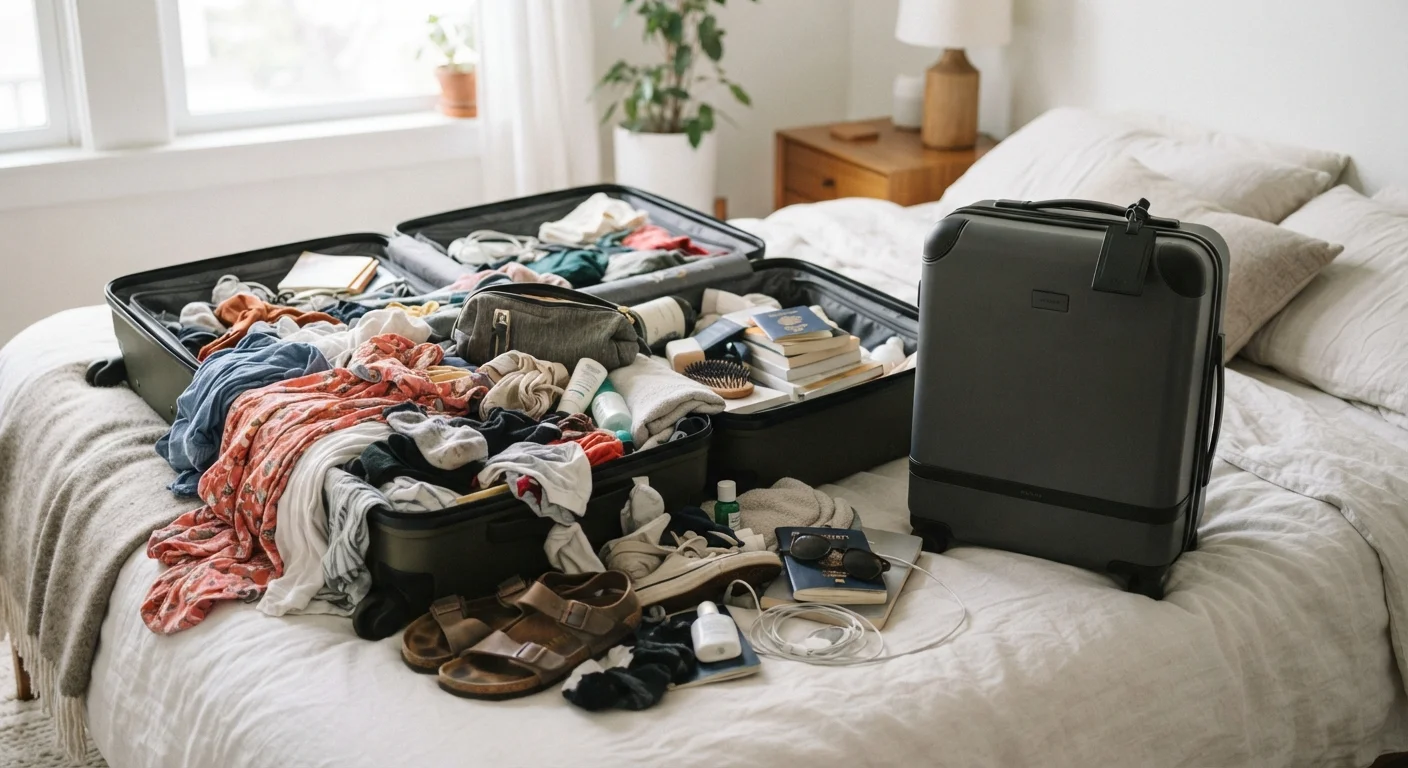
Every experienced traveler will tell you to pack light. Most first-timers nod along - and then stuff their bag anyway. That's not because the advice is wrong. It's because the instinct to overpack runs deeper than logic.
Packing is an act of prediction. You're trying to anticipate a future you haven't lived yet - and when that future feels uncertain, the natural response is to bring more. Every "what if" that crosses your mind tends to add another item to the pile.
If you're newer to independent travel, this beginner's introduction to building a packing strategy can help you establish a clearer starting point before diving into mistakes to avoid.
Packing for every possible scenario instead of the most likely ones.
Why it happens: First-time travelers mentally rehearse worst-case situations - a sudden downpour, a formal dinner, an unexpected cold snap - and pack for all of them simultaneously.
Bringing full-size toiletries when travel-size or purchasable alternatives exist.
Why it happens: People default to the products they use at home without considering that most destinations have pharmacies, grocery stores, or hotel amenities that cover basic needs.
Choosing a bag that's too large for the trip length.
Why it happens: A bigger bag feels like flexibility, but it mostly functions as permission to fill it. Available space almost always gets used, regardless of whether the contents are necessary.
Packing duplicate items "in case one gets dirty."
Why it happens: Travelers worry about running out of clean clothes mid-trip, which feels uncomfortable - so they pack backups of backups.
Packing items you never used last trip without reconsidering them.
Why it happens: A default packing list, once created, tends to be reused without revision - carrying forward items that were unnecessary the first time.
How to Build Better Packing Habits
Knowing the mistakes is one thing - changing the behavior behind them is another. The travelers who consistently pack light aren't doing so through willpower. They use systems that remove guesswork from the process.
Start with a structured clothing approach. Rather than choosing outfits by occasion, choose items that work across multiple occasions. A neutral-colored shirt that works at dinner and on a walking tour is more valuable than two shirts that each serve only one purpose. How you fold or roll those clothes also affects how much physical space they occupy in your bag.
Use a packing list - and edit it. Write down everything you intend to bring, then go through it once asking: "Would a missed day without this ruin the trip?" If the answer is no, it's a candidate for removal. Experienced travelers return to a refined version of this list every time they pack, adjusting based on what they actually used on previous trips.
Do a post-trip audit. When you return home, note what stayed in your bag untouched. That list becomes your guide for what to leave behind next time. Over two or three trips, your packing list tends to shrink significantly.
Don't Cut Essentials in Pursuit of Minimalism
Packing light is a practical goal, but it shouldn't come at the cost of genuine necessities - medications, travel documents, safety items, or destination-specific gear. The aim is to eliminate items you won't actually use, not to strip your bag down so far that you're unprepared. Always verify entry requirements, health documentation, and safety considerations with official government sources before travel, as these vary by destination and can change.
If you're weighing whether to commit to carry-on only travel, it's worth reading an honest overview of the real trade-offs that come with a one-bag approach before deciding. And if your itinerary spans different climates or multiple destinations, packing for variable weather requires a slightly different strategy than a single-climate trip.
1 in 3
Travelers who report regretting overpacking
Travel surveys consistently find that a significant share of travelers - particularly first-timers - say they brought more than they needed and would pack differently in hindsight.
~50%
Packed clothes often left unworn on a trip
Travel organizers and packing experts commonly observe that roughly half of the clothing packed on a typical trip goes unworn, suggesting most people overestimate their wardrobe needs.