

Key Takeaways
Why Multi-Climate Packing Trips Up First-Time Travelers
Trips that cross different climate zones - say, a city with cool evenings followed by a beach destination, or a mountain stop sandwiched between tropical ones - create a specific challenge: the temptation to pack a completely separate set of clothing for each leg. This almost always leads to an overstuffed bag, check-in fees you didn't plan for, and the exhaustion of hauling heavy luggage between connections.
The good news is that packing for multiple climates is a solvable problem. It requires a strategy rather than more stuff. If you haven't yet built a packing foundation, the beginner's guide to packing strategy is a useful starting point before working through the steps below.
Don't Pack for Every Worst-Case Scenario
First-time travelers often overpack by imagining the most extreme version of every weather situation. Unless you're heading somewhere genuinely remote, most destinations have stores where you can buy an umbrella, extra socks, or a light sweater. Packing for edge cases you're unlikely to encounter wastes valuable bag space.
What You'll Need Before You Start
Having the right tools on hand makes this process significantly easier. Below are the key items and resources worth gathering before you begin packing.
What you will need
Packing cubes
Organize and compress clothing by climate zone so items are easy to locate at each destination.
Packable rain jacket
Folds into its own pocket for easy storage; handles unexpected rain in any climate.
Lightweight base layers
Worn under other clothing to add warmth without bulk in cooler climates.
Neutral-colored clothing
Mixes and matches across outfits to maximize combinations from fewer items.
Compression bag
Reduces the bulk of thicker items like fleeces or knitwear to save space.
Step-by-Step: How to Pack for Multiple Climates
Follow these steps in order. Each one builds on the last, so skipping ahead - especially before completing your climate research - tends to result in poor choices you'll regret mid-trip.
Research the weather at every destination on your itinerary
Before touching your suitcase, look up the typical temperature range, rainfall likelihood, and humidity for each location during your travel dates. Note the coldest nighttime low and the warmest daytime high across all destinations. This range becomes your packing target - you need clothing that covers the full spread without duplicating items for each stop.
Choose a layering system as your core strategy
The layering method - used by hikers, climbers, and frequent travelers alike - works by combining three types of clothing: a moisture-wicking base layer worn against the skin, a mid-layer for insulation (such as a fleece or light sweater), and an outer layer that blocks wind and rain. Any combination of these three can be worn together or separately, giving you roughly six different configurations from just three pieces. This approach handles far more climate variation than packing separate outfits for each destination.
Build your wardrobe around neutral, mix-and-match pieces
Choose clothing in two or three complementary neutral colors - navy, grey, black, or tan work well. Every top should pair with every bottom you pack. This approach dramatically increases the number of distinct outfits you can assemble from a small set of items. Aim for versatile pieces that work across casual sightseeing, a nicer dinner, and light activity. Avoid packing single-purpose items that only work for one setting or one climate.
Assign packing cubes to different climate zones
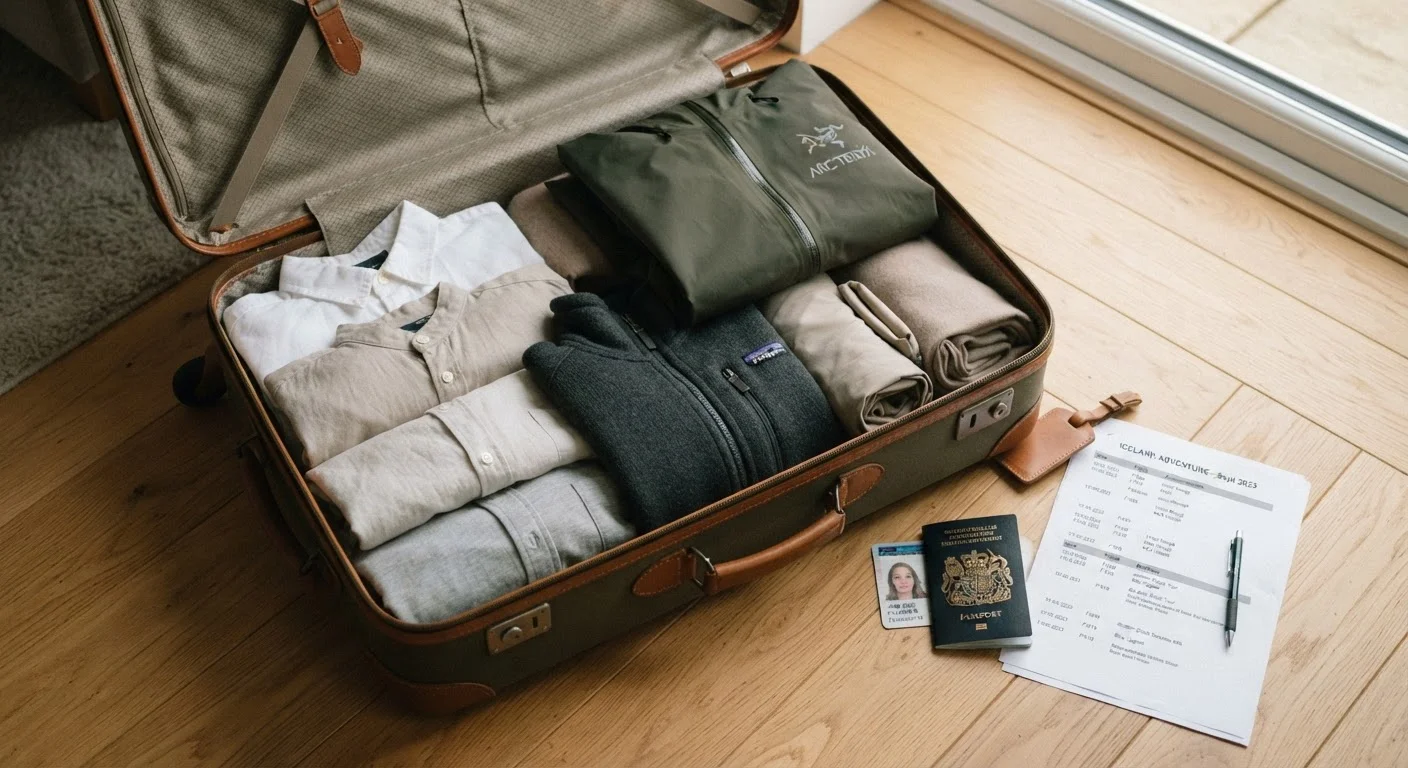
Once your clothing choices are final, sort them into packing cubes by climate category. Keep warm-weather items - light shirts, shorts, sandals - in one cube, and cold-weather layers - base layers, a mid-layer, thicker socks - in another. Your outer layer (the packable rain jacket) can sit in a side pocket for easy access anywhere. This system means you only unpack what you need at each destination without disturbing the rest of your bag.
Apply the one-week rule regardless of trip length
A common principle among experienced travelers is to pack for roughly seven days and plan to re-wear or hand-wash as needed. For most climates, seven days of clothing - chosen using the layering and mix-and-match strategies above - is sufficient even for trips two or three times that length. Lightweight fabrics dry overnight when washed in a sink with travel laundry soap, so you're never truly running out of clean options.
Do a final audit before zipping up
Lay every item out on a flat surface and ask: does this work in at least two different climates or settings on my itinerary? If the answer is no, it's a candidate for removal. Then check for the essentials - documents, medications, chargers, and any items specific to your activities. If your bag can't close comfortably without forcing it, remove two items before trying again. A bag that's overpacked at home becomes a significant burden on the road.
Use Packing Cubes to Separate Climates
Assign one packing cube to warm-weather items and another to cold-weather layers. This makes it easy to access only what's relevant at each destination without unpacking your entire bag. Compression cubes can reduce clothing volume by up to a third, giving you meaningful extra space.
Avoiding Common Mistakes and Staying Flexible on the Road
Even with a solid plan, multi-climate packing can go wrong in predictable ways. The most common mistake is treating the packing list as fixed once you leave home. In reality, conditions shift - a heatwave can arrive, a cold front can linger. Wearing your heaviest layer on the plane rather than packing it is a simple tactic that frees up significant space and keeps you comfortable in over-air-conditioned airports.
It's also worth understanding that some packing assumptions first-time travelers carry aren't based on reality. The common packing myths debunked article addresses several of these directly and is worth reading alongside this guide.
Check Entry and Airline Rules First
Before finalizing your packing strategy, confirm your airline's carry-on and checked bag size and weight limits. Policies vary widely and can affect how much you're able to bring. Additionally, verify any destination-specific rules - some countries restrict certain fabrics, footwear, or garments at cultural sites.
Finally, remember that flexibility is built into this system by design. If you arrive somewhere colder than expected, you layer up. If you arrive somewhere warmer, you shed layers and compress the rest into your cube. You don't need a perfect forecast - you need a versatile wardrobe and a system that adapts. For more habits that reinforce this mindset, see how experienced travelers approach every packing session.