

Key Takeaways
Why Packing Myths Are So Persistent
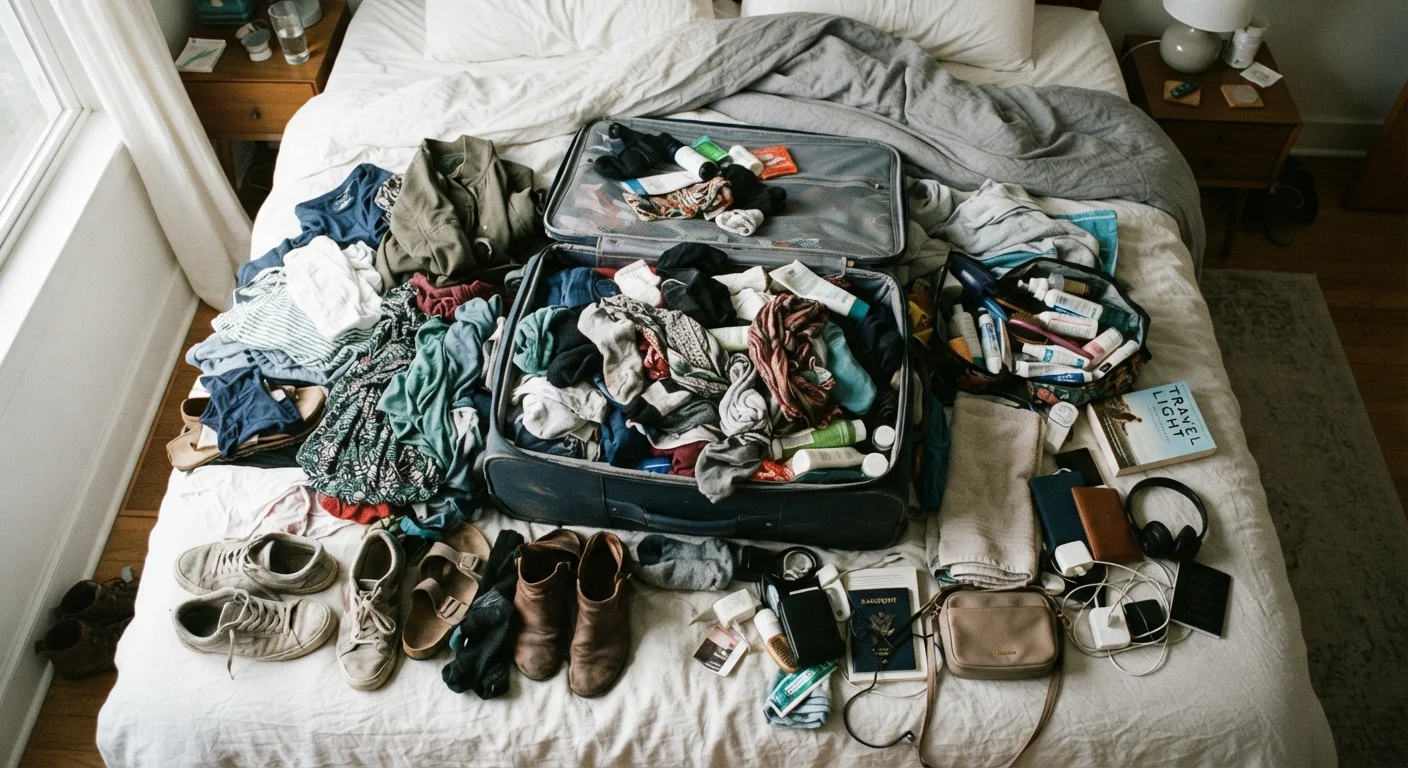
First-time travelers often pack based on anxiety rather than experience. Without a previous trip to reference, it feels safer to prepare for every possible scenario - which typically means hauling far more than necessary. The myths below are not random; they come from understandable fears about being underprepared in an unfamiliar place.
The good news: most packing mistakes are correctable the moment you understand what's actually driving them. If you'd like to build a solid foundation before diving into the myths, this beginner's packing introduction walks through essentials from scratch.
Myth
You need a fresh outfit for every single day of your trip.
Fact
A small set of mix-and-match pieces can cover a week-long trip without repeating the same look twice.
This myth causes more overpacking than almost any other. In practice, neutral-colored, versatile clothing items - a pair of dark pants, a few layering tops, one lightweight outer layer - can be combined in enough ways to handle daily variation. Most destinations also have laundry facilities, either at your accommodation or nearby. For longer trips, doing a mid-trip wash removes the need to pack for every single day. Understanding what makes packing light difficult can help you shift this thinking before you start loading up a bag.
Myth
You should always bring full-size toiletries so you don't run out.
Fact
Travel-size quantities are almost always sufficient, and toiletries can be restocked at local stores worldwide.
Full-size bottles are heavy, take up valuable space, and often run afoul of TSA carry-on liquid restrictions - which limit containers to 3.4 ounces (100 ml) each in a single quart-sized clear bag. For checked luggage, weight is the main issue. Most grocery stores, pharmacies, and convenience shops around the world carry basic toiletries. Packing a small amount and buying what you need locally is both lighter and more practical than hauling a month's supply for a week-long trip.
Myth
A bigger bag means more flexibility and fewer tough packing decisions.
Fact
Larger bags almost always get filled to capacity, making travel heavier and more cumbersome without adding real value.
This is sometimes called the "container principle" - packing tends to expand to fill whatever space is available. First-time travelers who choose an oversized suitcase frequently return home wondering why they brought half of what's in it. Choosing a bag that's slightly smaller than you think you need forces more deliberate decisions upfront and results in a lighter, easier trip. If carry-on-only travel interests you, the real pros and cons of carry-on only travel gives an honest look at both sides.
Myth
Checking a bag is always safer than relying on a carry-on.
Fact
Checked bags can be delayed, lost, or damaged - carry-on travel eliminates those risks entirely.
Many first-time travelers assume checking luggage is the cautious choice, but checked bags do get delayed or misrouted, particularly on connecting flights. Arriving at a destination without your bag for 24-48 hours is a real scenario. Carry-on travel isn't right for every trip - some itineraries genuinely require more gear - but defaulting to checked luggage out of habit or fear of packing restraint adds risk rather than reducing it. Evaluating both options based on your specific trip is always worth the few minutes it takes.
Myth
Rolling clothes always saves more space than folding them.
Fact
The method that saves space depends more on the garment type than any universal rule.
Rolling is well-suited for casual items like t-shirts, jeans, and knitwear - it reduces wrinkles and can fit awkward spaces in a bag. But structured items like blazers or dress shirts often fare better folded flat. In practice, most experienced travelers use a combination of both methods depending on what they're packing. For a detailed comparison, rolling vs. folding: the truth about packing clothes efficiently breaks this down by garment type.
Myth
Packing cubes are a must-have item that every traveler needs.
Fact
Packing cubes are a useful organizational tool for some travelers, but they are not essential for everyone.
Packing cubes compress and organize clothing into sections, which helps some travelers locate items quickly and keep bags tidy. However, they add a small amount of weight and bulk, and their benefit varies by packing style and bag type. They work particularly well in larger bags where items can shift around. For a clear-headed look at whether they'd actually help you, what packing cubes are and whether you actually need them offers an honest assessment for first-time travelers.
What Experienced Travelers Actually Do Instead
Once you let go of these myths, a cleaner packing strategy emerges. Experienced travelers don't have a secret bag or special gear - they simply think about packing differently. They build around a core wardrobe of items that work together, keep toiletries minimal and replaceable, and choose their bag size based on what they actually need rather than what they fear they might need.
~30%
Of packed items typically go unused on a trip
Travel industry surveys and traveler self-reports consistently suggest a significant portion of packed items never leave the suitcase.
3.4 oz
TSA carry-on liquid container limit
The U.S. Transportation Security Administration limits individual liquid containers in carry-on bags to 3.4 ounces (100 ml) each.
Toiletries deserve special attention because the rules around carry-on liquids catch many first-timers off guard. For a full breakdown of what's allowed and how to pack toiletries without surprises, see this guide on TSA rules and the liquids bag.
For travelers heading to destinations with changing weather or multiple stops, packing for different climates in a single trip covers how to layer strategically without overfilling your bag. And if you want to see the habits that tie all of this together, smart habits experienced travelers use every time they pack is a useful next step.
Don't Pack Based on Worst-Case Scenarios
Packing for every possible emergency - three backup outfits, a full medicine cabinet, tools for every situation - creates bags that are exhausting to carry and harder to manage through airports and public transit. Most genuine emergencies while traveling are better handled by local resources, travel insurance, or simply buying what you need. Build your packing list around what you'll realistically use, not your most anxious hypothetical.