

Key Takeaways
Start here
Why Packing Strategy Matters Before You Touch a Bag
Next
Choosing the Right Bag for Your Trip
Then
Building Your Packing List From Scratch
Getting practical
Packing Light Without Leaving Behind What You Need
Final check
Documents, Liquids, and Things First-Timers Often Forget
Why Packing Strategy Matters Before You Touch a Bag
The most common packing mistake isn't forgetting something - it's packing without a plan. When you open your bag and start filling it based on what feels right, you almost always end up with too much. A simple strategy, worked out before anything gets folded, changes that dynamic completely.
Packing strategy means deciding in advance what role each item plays on your trip, how your bag will be organized, and what your actual constraints are - bag size, airline rules, trip length, and activities. This kind of thinking takes maybe 20 minutes and saves hours of repacking, frustration at the airport, and sore shoulders on arrival.
If you haven't yet mapped out the full shape of your trip, the complete trip planning walkthrough covers those foundational steps before you get to the packing stage.
Carry-on bag
A bag small enough to bring onto the airplane with you and store in the overhead compartment, rather than checking it in at the counter. Size and weight limits vary by airline.
Checked bag
Larger luggage handed over to the airline at check-in and stored in the plane's cargo hold. You retrieve it at baggage claim after landing. Airlines usually charge a fee for this.
Packing list
A written inventory of everything you plan to bring on a trip, created before you start filling your bag. It helps prevent both overpacking and forgetting essentials.
Liquids rule
A security requirement at most airports limiting carry-on liquids, gels, and creams to containers of 3.4 oz (100ml) or less, all fitting in a single clear quart-sized zip-lock bag.
Packing cubes
Small fabric organizers that zip closed and fit inside your main bag. They keep clothing categories separated and can compress soft items to save space.
Versatile clothing
Items of clothing that can be combined in multiple ways to create different outfits, allowing you to pack fewer pieces while still having varied options.
Choosing the Right Bag for Your Trip
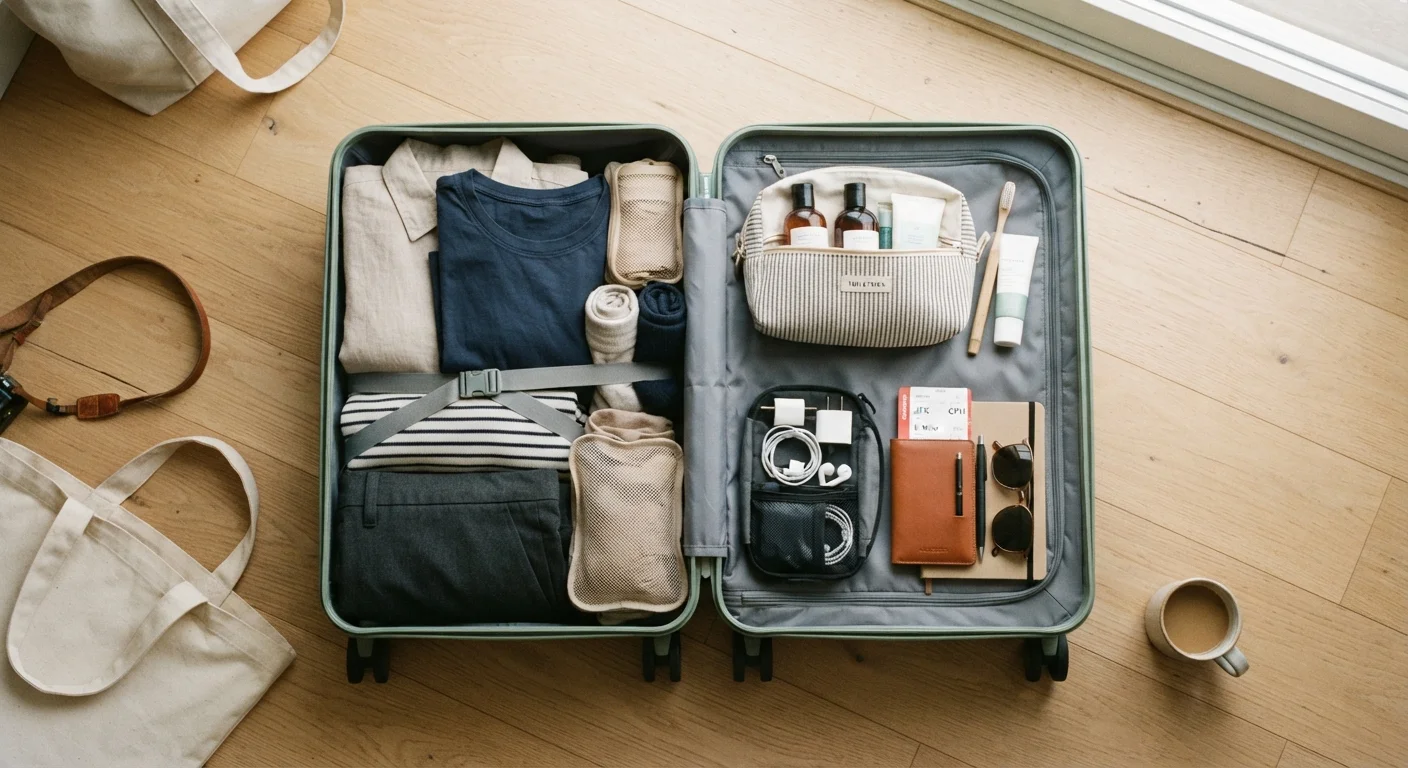
Your bag is the frame everything else fits into, so it matters more than most beginners realize. The two main options are a carry-on (typically a rolling suitcase or a backpack under airline size limits) and a checked bag (larger, stowed in the hold). There is no universally correct answer - the right bag depends on your trip.
- Trip length: A weekend trip rarely needs more than a backpack. A two-week journey may justify a medium-sized checked bag.
- Transport type: Road trips allow more flexibility. Flying means strict size and weight rules that vary by airline.
- Activities: Hiking gear, formal clothing, and sports equipment each affect bag type and size differently.
Whatever you choose, weigh your packed bag before leaving home. Overweight baggage fees can add up quickly, and most airlines publish their limits clearly on their websites. For a deeper look at building a reliable packing system around your bag choice, see The First-Time Traveler's Complete Packing Playbook.
Test Your Bag Before Travel Day
Pack your bag completely a day or two before your trip, then lift it and carry it around your home for a few minutes. If it feels too heavy immediately, that's a reliable sign it needs to be lighter - not that you need to get stronger. A bag you can manage comfortably makes every transit connection easier.
Building Your Packing List From Scratch
A written packing list is the single most effective tool available to a first-time traveler. It removes guesswork, prevents panic-packing the night before, and gives you something to check against when you're repacking to come home.
Start with broad categories, then fill in specifics:
- Clothing: Plan outfits, not individual pieces. Five days of travel doesn't need five separate full outfits if items mix and match.
- Toiletries: List only what you genuinely use daily. Many accommodations provide basics like soap and shampoo.
- Electronics and chargers: Every device needs its charger. Write them as pairs.
- Documents: Passport, ID, insurance, itinerary. These get their own section - more on this below.
- Medications and health items: Any prescription medication should be packed in its original labeled container and carried in your hand luggage.
Once your list is written, physically lay everything out before putting it in the bag. This step alone reveals what you're doubling up on or what genuinely doesn't fit the trip.
Packing Light Without Leaving Behind What You Need
Packing light is a skill, not a personality trait. Most people overpack their first few trips and refine their approach over time. The goal isn't to suffer - it's to carry only what earns its space.
A few principles that help:
- Choose neutral, versatile clothing. Items that pair with multiple other pieces multiply your outfit options without adding weight.
- Think in layers, not bulk. A lightweight base layer plus a mid-layer covers more temperature scenarios than one heavy item.
- Leave the "just in case" items behind. If you can buy or borrow something at your destination for a reasonable cost, it doesn't need to come with you.
- Wear your bulkiest items in transit. Wearing heavier shoes and a jacket on travel days keeps them out of your bag without leaving them behind.
Why Packing Light Is Harder Than It Sounds explores the psychology behind overpacking and practical methods for breaking the habit. It's worth a read before your first trip.
Overpacking Has Real Costs
Carrying a heavy bag isn't just uncomfortable - it can mean overweight baggage fees at the airport, slower movement through crowded transit hubs, and genuine physical strain on longer trips. Airlines enforce weight limits strictly, and fees for overweight bags vary but can be significant. Always weigh your packed bag at home before you leave.
Documents, Liquids, and Things First-Timers Often Forget
Three categories trip up beginners more than any others: documents, carry-on liquids, and the small practical items that only become obvious when they're missing.
Documents: Keep your passport, boarding passes, travel insurance details, and accommodation confirmations in one dedicated pocket or folder - always the same place, every trip. For a thorough breakdown of what to carry and how to organize it, Travel Document Organization: A Reference Guide is a practical reference. Always verify entry requirements directly with official government sources before international travel, as requirements change.
Liquids in carry-on bags: Airlines and security agencies typically enforce a rule limiting liquids to containers of 3.4 oz (100ml) or less, carried in a single clear zip-lock bag. Anything over that limit will be confiscated at the checkpoint. Verify current rules with the TSA or your airline before you fly.
Commonly forgotten items:
- Phone and device chargers
- Adapter for international outlets
- Any daily medication
- Headphones for long flights
- A reusable water bottle (empty before security)
There are also a number of persistent myths that lead first-timers astray - things like believing you need full-size toiletries or should pack for every possible scenario. Packing Myths That First-Time Travelers Still Believe addresses the most common ones directly.
Packing well is something you build trip by trip. Start with a list, choose the right bag, pack with intention, and give your documents their own dedicated home. The more deliberate your approach, the lighter and more confident you'll feel at the airport.