

| Domestic ID requirement (US) | REAL ID-compliant driver's license or state ID (U.S. Department of Homeland Security) |
| International travel requirement | Valid passport; visa may also be required depending on destination (U.S. Department of State) |
| Common passport validity rule | Six months of validity beyond travel dates required by many countries (Varies by destination - verify with the relevant embassy) |
| Recommended backup method | Scanned copies stored in secure cloud storage and emailed to a trusted contact |
| Where to keep documents during transit | On your person (carry-on bag or travel wallet), never in checked luggage |
| Key supporting documents | Booking confirmations, travel insurance, payment cards, emergency contact list |
Why Document Organization Matters Before You Leave Home
Misplaced or forgotten documents can derail an otherwise well-planned trip. Border agents may turn travelers away without proper paperwork; airlines won't board passengers without valid ID; hotels frequently require a physical form of payment at check-in. The good news is that a little organization before departure eliminates nearly all of these risks.
This guide breaks down every category of travel document a first-time traveler should know about, explains what each one does, and offers practical tips for keeping them safe and accessible throughout a trip. Pair it with the universal pre-trip checklist to make sure nothing slips through the cracks before departure.
| Domestic ID requirement (US) | REAL ID-compliant driver's license or state ID (U.S. Department of Homeland Security) |
| International travel requirement | Valid passport; visa may also be required depending on destination (U.S. Department of State) |
| Common passport validity rule | Six months of validity beyond travel dates required by many countries (Varies by destination - verify with the relevant embassy) |
| Recommended backup method | Scanned copies stored in secure cloud storage and emailed to a trusted contact |
| Where to keep documents during transit | On your person (carry-on bag or travel wallet), never in checked luggage |
| Key supporting documents | Booking confirmations, travel insurance, payment cards, emergency contact list |
The Core Documents Every Traveler Needs
Regardless of destination, most travelers will rely on the same foundational set of documents.
REAL ID
A U.S. federal standard for state-issued driver's licenses and ID cards. As of the current enforcement date, a REAL ID-compliant card is required for domestic air travel in the United States. Check your card for a star marking to confirm compliance.
Passport validity
The period during which your passport is legally valid for travel. Many countries require your passport to remain valid for at least six months beyond your planned departure date, even for short visits.
Entry visa
An official permission stamp or document issued by a destination country allowing you to enter for a specified purpose and duration. Requirements vary widely by nationality and destination.
Travel insurance policy
A contract that provides financial protection against certain travel-related losses, such as trip cancellation, medical emergencies abroad, or lost baggage. Coverage terms differ significantly between policies.
Travel document organizer
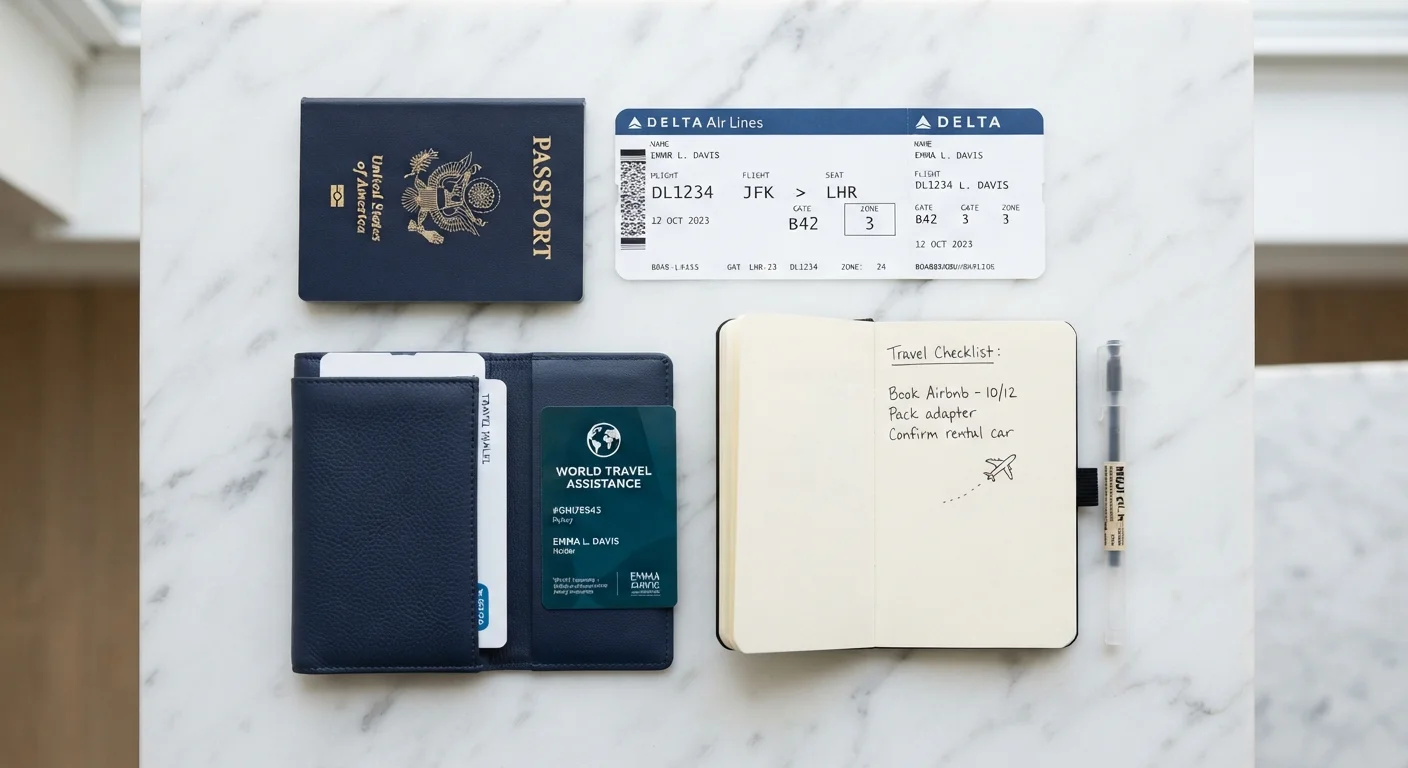
A compact wallet or folder designed to hold a passport, ID, boarding passes, and other travel papers in one accessible location. Typically carried on the person rather than in luggage.
Digital backup
A scanned or photographed copy of an important document stored electronically - such as in cloud storage or email. Useful for verifying identity or accelerating document replacement if originals are lost.
Domestic Travel
For travel within the United States, a government-issued photo ID - such as a driver's license or state ID compliant with the REAL ID Act - is required at airport security checkpoints. Check the current REAL ID requirements on the U.S. Department of Homeland Security website, as enforcement timelines have been updated multiple times.
International Travel
A valid passport is the non-negotiable starting point for crossing any international border. Many countries also require your passport to be valid for at least six months beyond your travel dates - even if your trip is shorter. For visa requirements, customs forms, and entry rules, always verify directly with the destination country's embassy or consulate. The passports, visas, and entry requirements guide explains these rules in plain language.
Supporting Documents You Should Always Carry
Beyond ID and passport, several other documents protect you financially and logistically during a trip.
- Flight and transport confirmations: Download boarding passes to your phone and carry a printed backup when possible. Train or bus tickets may be digital-only, but know where they are stored.
- Accommodation confirmations: Hotel or rental property addresses and booking reference numbers are essential at immigration and for rideshare drivers.
- Travel insurance documentation: Carry the policy number, the emergency contact number for your provider, and a summary of what is covered. This is not optional - it is your safety net if medical care or trip cancellation becomes necessary.
- Payment methods: At least two payment methods (a credit card and a debit card from different networks) reduce the risk of being stranded if one is blocked or lost.
- Emergency contact list: A written list of emergency contacts, your country's embassy address at the destination, and your doctor's contact details stored separately from your phone.
For a comprehensive look at everything that should be in your bag before departure, see the First-Time Traveler's Complete Packing Playbook.
How to Store and Protect Your Documents
Physical security and digital backups work together. Neither alone is sufficient.
Physical Storage
Use a dedicated travel document organizer - a slim, zippered wallet or folder that holds your passport, insurance card, and key confirmations in one place. Keep this on your person during transit, not in checked luggage. A money belt worn under clothing adds an extra layer of security in crowded environments.
Digital Backups
Photograph or scan every important document before leaving home: passport bio-data page, travel insurance card, accommodation confirmations, and any visas. Store copies in at least two places - a secure cloud folder and a trusted person's email at home. Some travelers also email copies to themselves. If your physical documents are lost or stolen, these copies help consulates and airlines assist you faster.
Replacing Lost Documents Abroad
If your passport is lost or stolen while traveling internationally, contact the nearest U.S. embassy or consulate immediately. They can issue an emergency travel document that allows you to return home. Having digital copies of your passport's bio-data page speeds this process considerably. Always know the location of the nearest embassy before you arrive in a new country.
Before your next trip, run through the pre-departure checklist to confirm every document is current, valid, and backed up.