

Key Takeaways
Why Packing Habits Matter More Than Products
First-time travelers often assume that packing well is about owning the right gear - the perfect bag, the best organizers, the most compact toiletry kit. Experienced travelers know the truth: consistent habits do the heavy lifting. A reliable process means you pack confidently whether you have two hours or two days to prepare.
Chaotic packing tends to follow a predictable pattern: throwing things in at the last minute, overpacking out of anxiety, and then arriving only to realize you forgot something obvious. The good news is that this is entirely fixable - not by buying more products, but by building a repeatable approach. If you're still working out the basics, our beginner's guide to packing is a useful starting point before diving into the habits below.
The Core Habits Experienced Travelers Rely On
These practices aren't complicated - they're consistent. The difference between a stressed packer and a calm one is usually that the calm one has done this before, in roughly the same order, every single time.
Maintain a master packing list you refine after every trip
A written list removes the burden of remembering what to pack from scratch each time. Updating it after every trip - adding what you forgot, removing what you never used - means the list improves with experience rather than staying static.
Choose clothing that works in at least two different contexts
Versatility is the single most effective way to reduce bag weight. When every item can be worn in multiple combinations or settings, you need far fewer pieces overall. This is the foundation of packing light without feeling underprepared.
Pack by category, not by day
Organizing your bag by category - all tops together, all electronics in one pouch, all toiletries in one bag - makes it faster to find things and easier to see if something is missing. Packing by outfit often leads to overpacking because it's harder to spot redundancy.
Check airline size and weight rules before finalizing your bag
Carry-on dimensions and weight allowances vary between airlines and even between fare classes on the same airline. Assuming your bag qualifies without checking can result in fees or being forced to gate-check a bag you planned to keep with you.
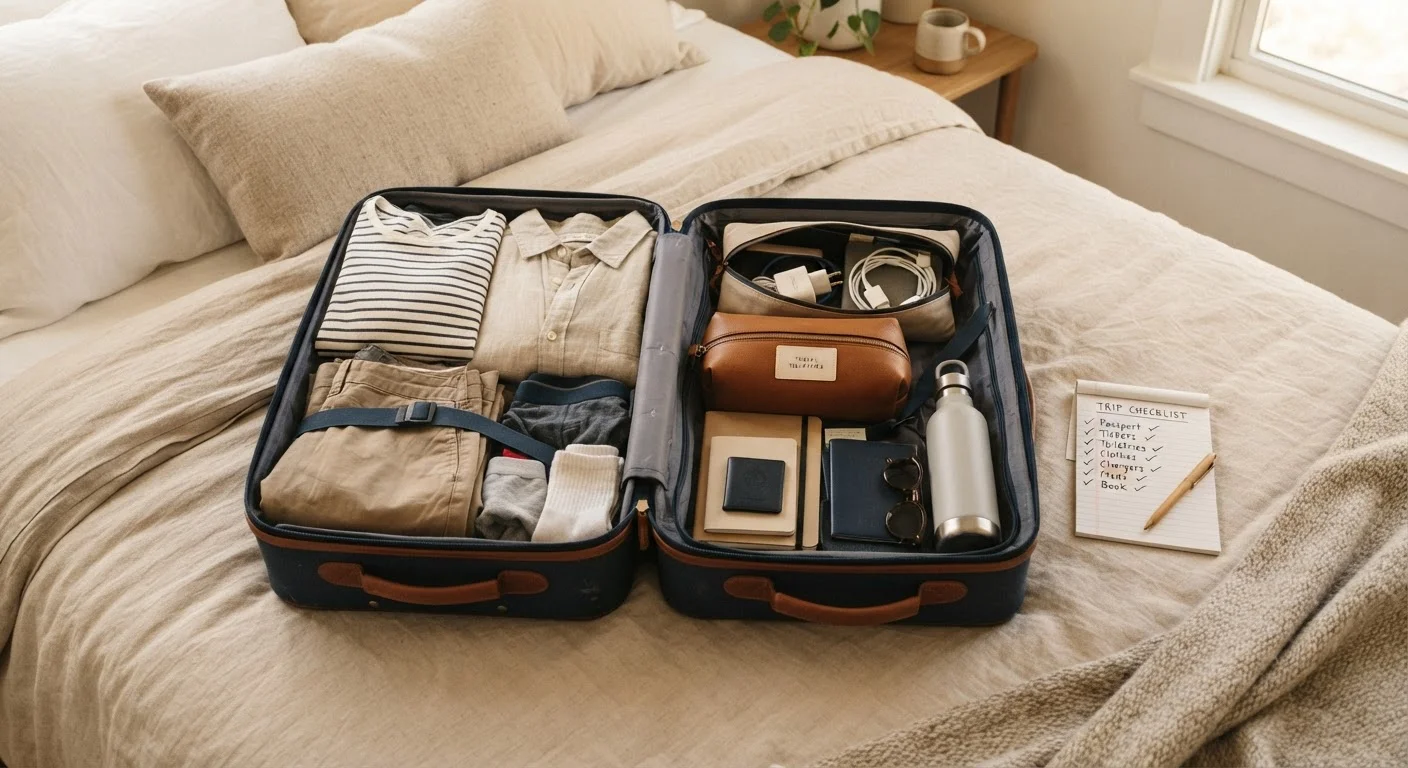
Do a pre-zip audit with everything laid out
Packing in stages means it's easy to set something aside and forget it entirely. A final check - emptying or reviewing every section of your bag before closing it - catches overlooked items when you still have time to add them.
It's also worth reading about common packing myths that may be working against you without your realizing it.
Quick Wins You Can Apply Before Your Next Trip
You don't need to overhaul your entire approach at once. Even adopting one or two of the habits below before your next departure will make a meaningful difference. Start small, and build from there.
For a broader look at everything you should handle before leaving home - not just packing - see our universal pre-trip checklist.
Packing Smarter for Any Kind of Trip
These habits apply whether you're spending a weekend away or several weeks across multiple destinations. If your itinerary involves changing climates or unpredictable weather, the challenge of packing light becomes more nuanced - our guide on packing for different climates in a single trip addresses exactly that.
Packing Cubes Can Help - But Aren't Required
Packing cubes are a popular organizational tool that compress and separate clothing within your bag. They're genuinely useful for many travelers, but they're not essential to pack well. If you're curious whether they'd suit your style, our honest explainer on packing cubes covers what they actually do and when they're worth using.
Travelers considering carry-on-only travel will find these habits especially valuable. Eliminating checked luggage requires discipline, but it's very achievable with a solid process. See what it realistically involves in our piece on carry-on only travel.
The goal isn't to pack perfectly on the first try - it's to pack a little more intentionally each time until the process becomes second nature.