

Key Takeaways
Packing Cubes
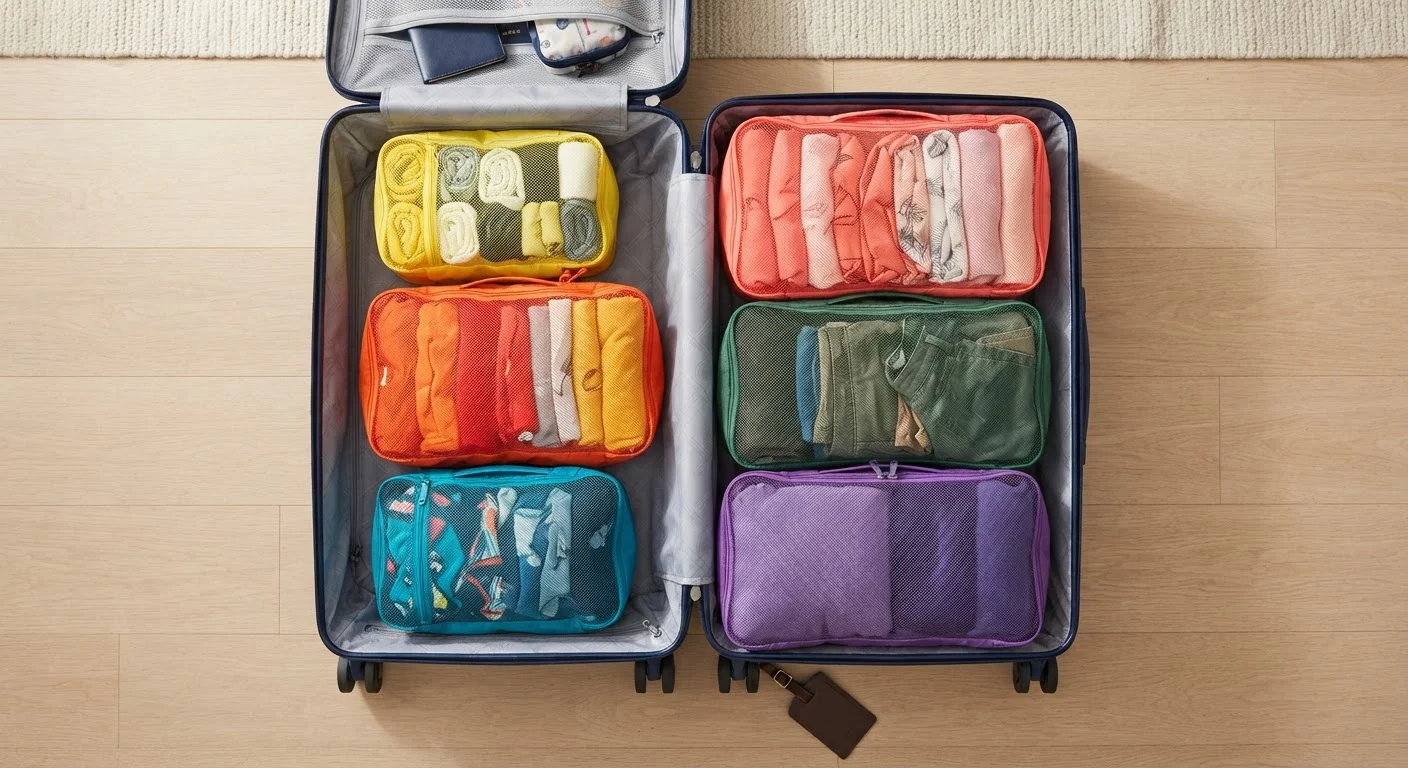
Packing cubes are zippered fabric compartments - usually rectangular - that you use to organize clothes and other items inside a larger bag or suitcase. Think of them as drawers inside your luggage. You fill each cube with a category of items (tops, bottoms, underwear), zip it shut, and stack the cubes neatly in your bag. They don't compress your clothes or magically create extra space, but they do keep everything sorted and easy to find.
Packing cubes are distinct from compression bags or packing folders; compression bags use a valve or roll mechanism to reduce air and volume, while standard packing cubes primarily organize rather than compress.
What Packing Cubes Actually Do
If you've seen packing cubes recommended in travel content and wondered whether they're genuinely useful or just a popular gadget, you're not alone. Before spending money on them, it's worth understanding exactly what they do - and what they don't.
A packing cube is simply a zippered fabric pouch, typically made of lightweight nylon or mesh. You use multiple cubes to divide your luggage into sections - one for shirts, one for pants, one for underwear and socks. Each cube zips closed and sits inside your bag. When you arrive at your destination, you can pull out just the cube you need instead of digging through your entire suitcase.
What packing cubes don't do is compress your clothes or create extra space. A common misconception is that cubes let you pack more - they don't. They reorganize what you're already bringing. If you're struggling to pack light, cubes won't solve that problem on their own.
Compression Cubes Are a Different Product
Some cubes marketed as "compression packing cubes" feature a double-zipper system that lets you squeeze out extra air and reduce bulk slightly. These do save some space, particularly with thicker items like fleece or light sweaters. Standard packing cubes don't have this feature, so check the product description carefully if volume reduction is your goal.
When Packing Cubes Are Genuinely Useful
Packing cubes earn their place in specific travel situations. The clearest use case is a multi-city or multi-stop trip. When you're moving between three hotels in ten days, being able to grab your "tops" cube without unpacking everything saves real time and frustration.
They're also valuable if you're sharing a bag with a travel partner - each person uses their own cubes, and the bag stays organized for both of you. Soft-sided backpacks benefit especially, since items tend to shift around without any internal structure.
Packing cubes also make unpacking faster. Rather than emptying your entire suitcase into a hotel dresser, you can simply place the cubes directly in the drawers or leave them in the bag and pull from them as needed.
When You Might Not Need Them
Packing cubes aren't the right tool for every traveler or every trip. If you're taking a weekend trip with a small bag, a single organized layer of clothing is easy enough to manage without cubes. The organizational benefit is smallest when you're carrying very few items.
Hard-sided suitcases with built-in dividers already provide some structure, reducing the need for additional organization. And if you tend to live out of your suitcase without unpacking at all, cubes may feel like an extra layer of zipping and unzipping without much reward.
Understanding your own packing habits matters here. The basics of building a packing strategy are the foundation - cubes are just one optional tool on top of that.
Start With Just Two Cubes
Before buying a full set, try a single trip with just two cubes - one for tops, one for bottoms. This is enough to experience whether the organizational benefit matters to you. Many travelers find that a minimal cube system works just as well as an elaborate one, and it takes up less room in the bag itself.
How to Use Them If You Decide to Try Them
You don't need a full matching set to start. Two or three cubes are enough to test whether they work for your style of travel. A simple system: one cube for tops, one for bottoms, one for underwear and socks. Keep a fourth small cube or pouch for cables, adapters, and accessories if needed.
Packing cubes work with any folding or rolling method. For tips on which approach saves the most space for different garment types, see our guide on rolling vs. folding clothes. The combination of a consistent folding method and organized cubes is what most experienced travelers rely on.
One practical habit: pack your cubes in the same order every trip - heaviest at the bottom of the bag, most-needed items in the most accessible cube. Consistency is what makes the system actually save time. For more habits that make packing less stressful, see how experienced travelers approach packing.
~60%
Travelers who say organization is their biggest packing challenge
Survey data from travel industry research consistently shows organization - not weight - as the primary packing frustration reported by leisure travelers.
2-3
Cubes most travelers find sufficient for a week-long trip
Travel packing guides and experienced traveler communities commonly report that two to three cubes cover most clothing categories without overcomplicating the system.