

Key Takeaways
Why So Many First-Time Owners Start on the Wrong Foot
Hamsters are one of the most popular first pets in the US - and one of the most frequently misunderstood. They're marketed as easy, inexpensive, and low-effort, but that framing sets up many new owners to make avoidable mistakes from day one. The gap between what's commonly sold and what hamsters actually need is surprisingly wide.
If you're weighing whether a hamster is right for your home, our overview on choosing between small pets can help you make a well-informed decision before committing. And if you're curious how hamsters compare to gerbils specifically, see our gerbil vs. hamster comparison.
Hamsters Are Not Low-Maintenance Pets
Many people assume hamsters require minimal care because of their small size. In reality, they have specific environmental, dietary, and social needs that, when unmet, lead to stress-related illness and shortened lifespans. Before bringing a hamster home, take time to understand what proper care actually looks like. Consulting a veterinarian who sees small exotic mammals is always a good step.
The Most Common Hamster Care Mistakes - and How to Fix Them
The mistakes below are among the most frequently seen in first-time hamster ownership. Each one is easy to fall into, and equally easy to correct once you know what to look for.
Buying a cage that is too small, then filling it with too little bedding.
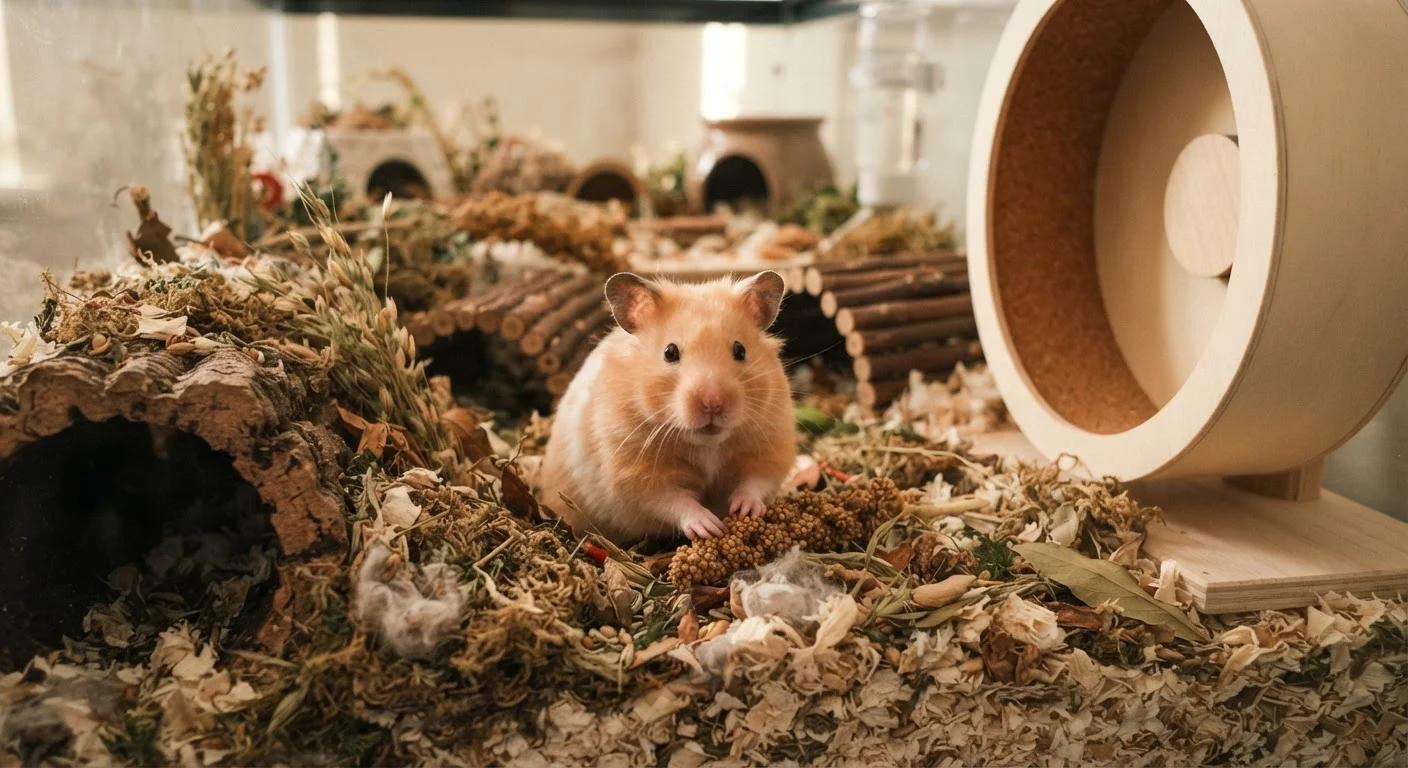
Why it happens: Pet store starter kits are often undersized, and packaging rarely explains that hamsters need 6 or more inches of bedding depth to burrow naturally.
Using a wheel that is too small, forcing the hamster to run with an arched back.
Why it happens: Small, colorful wheels are common in starter kits and look appropriately sized for a tiny animal - but hamsters run several miles nightly and need a wheel large enough to keep their spine straight.
Handling the hamster during the day when it naturally wants to sleep.
Why it happens: New owners are excited and assume daytime is a convenient time to interact, not realizing hamsters are crepuscular or nocturnal - most active at dusk and night.
Feeding an all-seed diet without any variety.
Why it happens: Pre-packaged seed mixes are widely sold and seem complete, but they are often high in fat and lack the protein, fiber, and micronutrients hamsters need for long-term health.
Placing the cage in a noisy, high-traffic, or brightly lit location.
Why it happens: Owners often put the cage where they spend the most time, thinking the hamster will enjoy company - but hamsters are sensitive to sound, light, and vibration.
Skipping the taming process and expecting the hamster to be handleable immediately.
Why it happens: A hamster purchased from a pet store has often had limited gentle human contact and needs time to associate your scent and presence with safety before being comfortable being picked up.
Never Use Cotton Fluff Bedding
Fluffy cotton nesting materials - sometimes marketed as 'hamster fluff' - are a serious hazard. Hamsters can ingest these fibers, which may cause intestinal blockages, or become entangled in them, leading to limb injuries. Stick to safe alternatives such as plain paper-based bedding or chemical-free tissue paper strips.
Getting the environment right is the single biggest lever you have over your hamster's wellbeing. For a broader look at space needs across small pets, our article on why small pets need more space than you think is worth reading alongside this one.
Building Better Habits From the Start
Most hamster health problems trace back to environmental stressors - the wrong cage size, the wrong schedule, the wrong diet - that build up quietly over weeks. The good news is that correcting these early makes a real difference.
5+ miles
Distance hamsters may run in a single night
Animal welfare researchers have documented that hamsters in the wild cover substantial distances nightly, underscoring why an adequate wheel is not optional.
6-8 inches
Minimum recommended bedding depth
Veterinary and animal welfare guidelines increasingly cite deep substrate as essential to hamster psychological wellbeing, enabling natural burrowing behavior.
Think of the first month as a setup phase: prioritize the enclosure, bedding, and wheel before worrying about enrichment extras. Once your hamster is burrowing freely and running at night, you'll have a clear sign that its core needs are being met. If you're also a cat owner, you might find it useful to compare notes with our piece on common cat feeding misunderstandings - the theme of well-meaning missteps showing up in everyday care applies across species.
This article is for general informational purposes only and is not a substitute for veterinary advice. If you have concerns about your hamster's health or behavior, consult a veterinarian experienced with small exotic mammals.