

Key Takeaways
Why Rushing Handling Sets You Back
Bringing home a rabbit, guinea pig, hamster, or rat is exciting - but for the animal, it's one of the most disorienting experiences of its life. Small prey species are wired to treat unfamiliar situations as potential threats. When a large hand descends into their space before they've settled in, many will freeze, bite, or thrash - all signs of genuine fear, not bad temperament.
The good news is that stress responses are almost entirely preventable with a structured approach. Before any handling begins, give your new pet at least 48 to 72 hours in their enclosure with minimal disturbance. Let them eat, explore, and sleep without interference. This decompression window is not wasted time - it's the foundation that makes every future interaction easier.
See our preparation checklist to make sure habitat and enrichment are ready before your pet even arrives home.
Best Practices for Safe, Confidence-Building Handling
The following practices reflect veterinary and animal behavior guidance for common small pets including rabbits, guinea pigs, hamsters, gerbils, and rats. Individual species vary - always research the specific needs of your pet.
Start with scent familiarization before any physical contact
Small animals rely heavily on smell to assess safety. Placing a worn cloth near - but not inside - the enclosure lets the pet associate your scent with its neutral, safe space before you ever reach in. This dramatically reduces fear when physical contact eventually begins.
Let the animal climb onto your hand rather than scooping it up
Reaching in from above mimics the movement of a predator - it triggers an instinctive flight response. Offering a flat, open hand at enclosure-floor level and waiting for the pet to step on gives the animal control, which is the core of trust-building.
Support the entire body weight during every lift
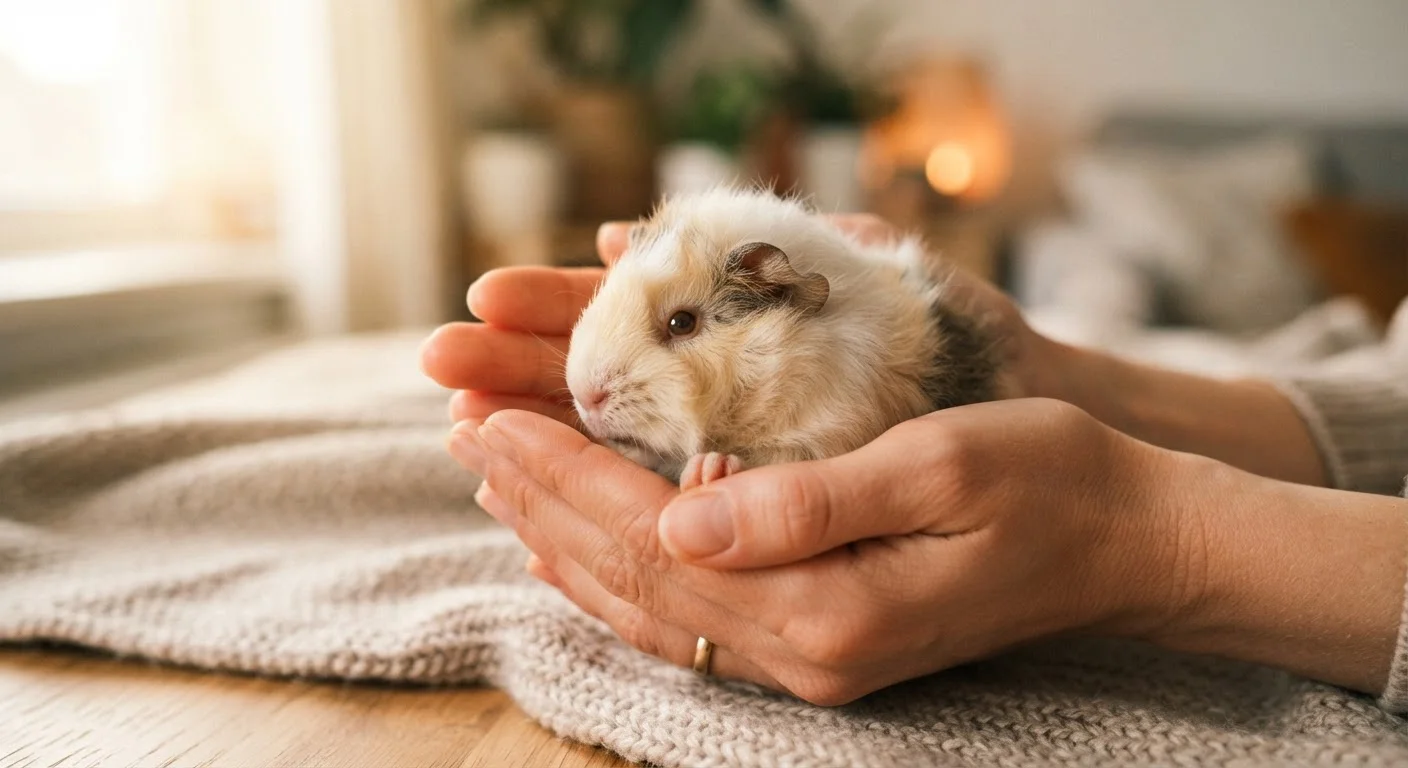
A dangling or unsupported rear end is physically uncomfortable and signals instability to the animal, triggering panic and wriggling that can lead to falls. Full body support - one hand under the chest, one under the hindquarters - communicates security.
Handle close to a flat, low surface so falls are not catastrophic
Even calm, well-socialized small pets can startle and leap suddenly. Falls from standing height can cause serious injury, particularly in rabbits and guinea pigs. Sitting on the floor or holding the animal over a bed or low table limits harm if a quick movement occurs.
Keep early sessions to two to five minutes and build duration gradually
Fatigue and sensory overload accumulate quickly in small animals. Ending on a calm, positive note - before the animal shows stress - means the pet associates handling with a neutral-to-good experience rather than with eventual discomfort.
Reading Stress Signals and Knowing When to Stop
One of the most important handling skills is recognizing when your pet is telling you it's done. Common stress signals across small pet species include freezing in place, teeth chattering, rapid shallow breathing, repeated attempts to escape, and vocalizing (squealing, hissing, or grinding teeth). Flattened ears, a hunched posture, or excessive grooming right after being set down are also signs the session was too much.
Know Your Species' Specific Signals
Stress signals differ between species. Rabbits thump and go rigid; guinea pigs purr loudly (a sign of agitation, not contentment) and chatter teeth; hamsters may bite without prior warning if startled from sleep. Spend time learning the specific body language of your pet's species - a quick read of a species-specific care guide or a conversation with an exotic animal vet can make these cues much clearer.
If you notice any of these cues mid-session, calmly return the animal to its enclosure. Never end a session by dropping or rushing the pet back - lower it gently, let it step off your hand rather than pulling away. The goal is for the enclosure to feel like a safe retreat, not a punishment.
Keeping sessions short - two to five minutes for new pets, gradually extending as trust develops - prevents habituation from being replaced by exhaustion. Pairing each session with a small, species-appropriate food reward immediately after reinforces that handling predicts good things. For ideas on keeping your pet mentally engaged between handling sessions, explore our guide on small pet enrichment.
Hamsters Are a Special Case
Hamsters are naturally nocturnal and are frequently startled when woken during the day for handling. Whenever possible, schedule sessions for early evening when they are naturally more alert. Waking a hamster abruptly is one of the most common causes of bites, and it isn't a reflection of the animal's overall temperament.
Getting the Whole Household on the Same Page
Inconsistent handling across family members is one of the most common reasons small pets remain fearful long-term. If one person handles calmly and another grabs or startles the animal, trust resets repeatedly. Before anyone picks up the pet, agree on a consistent approach: always approach from the front at the animal's eye level, use a quiet voice, move slowly, and support the full body weight.
Children in particular benefit from a supervised, seated introduction - sitting on the floor removes the risk of a dropped animal and keeps interactions at a manageable height. Explain to young children that the pet isn't ignoring them when it runs away; it's just still learning that people are safe.
Building this kind of consistent, calm environment is the same philosophy that applies when introducing any new pet to a home. If you're also navigating a new dog or cat alongside a small pet, our articles on bringing a dog home and introducing a second cat cover managing those transitions thoughtfully.
This article is for general informational purposes only. For guidance specific to your pet's health, behavior, or species needs, consult a qualified veterinarian or certified animal behavior professional.