

Key Takeaways
Option A
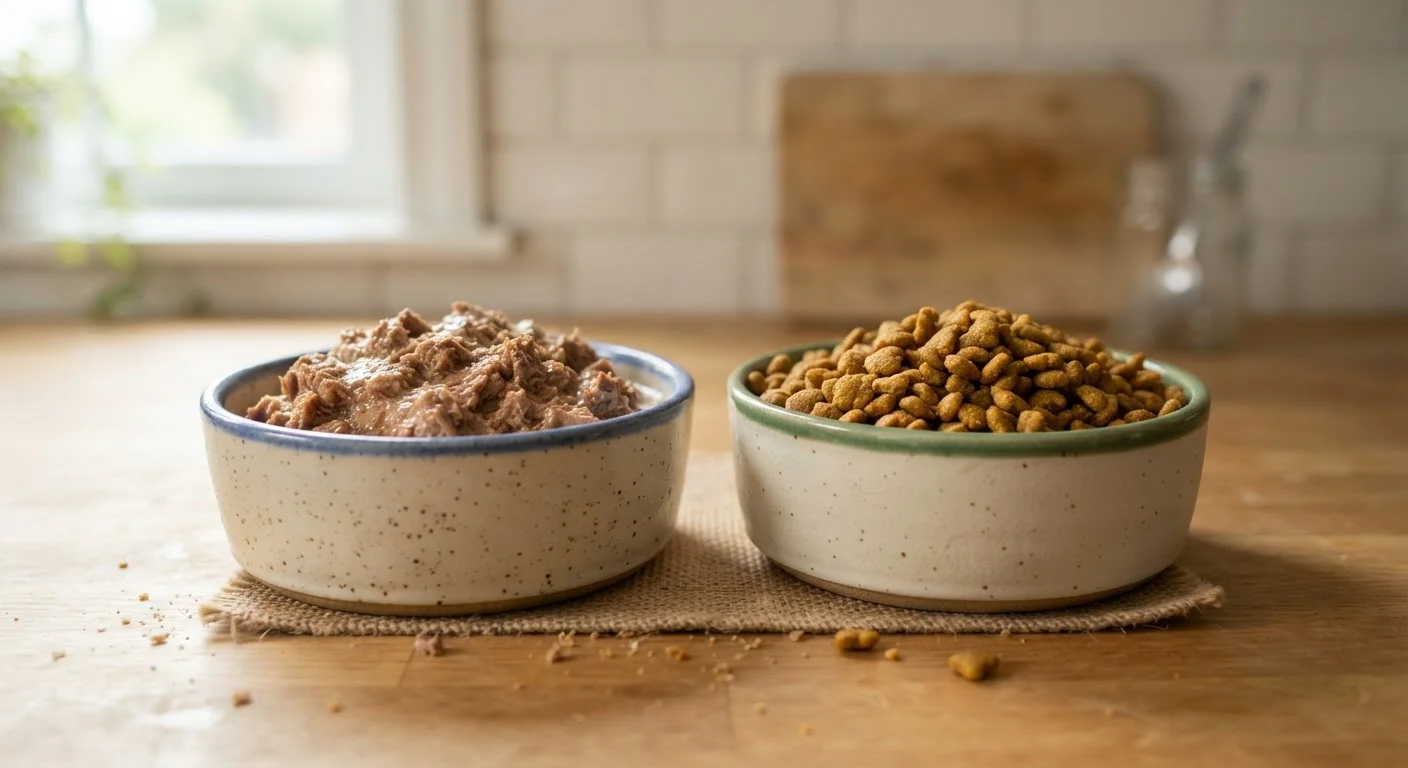
Wet Cat Food (Canned)
The moisture-rich, protein-forward option.
Best for: Cats who need extra hydration, picky eaters, or those with urinary or kidney concerns.
Option B
Dry Kibble
The convenient, budget-friendly everyday staple.
Best for: Multi-cat households, owners who free-feed, or anyone prioritising convenience and shelf life.
If your cat has urinary tract issues or chronic kidney disease
Wet Cat Food (Canned)
High moisture content helps dilute urine and supports kidney function. Consult your veterinarian for a diet plan tailored to your cat's condition.
If you need convenience and longer shelf life
Dry Kibble
Kibble can be left out safely for grazing throughout the day and is easier to store in bulk without refrigeration.
If you have a senior cat or one with dental problems
Wet Cat Food (Canned)
Soft texture is much easier to chew for cats with sore gums, missing teeth, or reduced jaw strength.
If you are managing a tight pet care budget
Dry Kibble
Dry food is generally more cost-effective per calorie, and its longer shelf life reduces waste.
If your cat is a picky eater or has a poor appetite
Wet Cat Food (Canned)
Stronger aroma and richer flavour often appeal to finicky cats, making mealtime more enticing.
How Wet and Dry Food Actually Differ
At the most basic level, the difference between wet and dry cat food comes down to water content. Canned wet food is typically 70-80% moisture, while dry kibble contains only about 10%. That gap has real consequences for how your cat's body processes each meal.
Cats evolved as desert hunters and historically obtained most of their water from prey. Because of this, they have a naturally weak thirst drive and may not compensate for a dry-food diet by drinking enough from a bowl. This makes moisture content one of the most practical factors to weigh when choosing a format.
Beyond water, both formats can be nutritionally complete - what matters most is whether the food carries an AAFCO statement (from the Association of American Feed Control Officials) confirming it meets standards for your cat's life stage. See our guide to reading cat food labels to understand exactly what that statement means and where to find it.
| Criterion | Wet Cat Food | Dry Kibble |
|---|---|---|
| Moisture content | 70-80% | ~10% |
| Hydration support | High - aids urinary health | Low - requires ample water bowl access |
| Calorie density | Lower per ounce | Higher per ounce |
| Cost | Generally higher | Generally lower |
| Shelf life (opened) | 24-48 hours refrigerated | Weeks in sealed bag |
| Dental benefit | Minimal | Modest at best |
| Appeal to picky eaters | High - strong aroma | Variable |
| Suitable for free-feeding | No - spoils quickly | Yes - stable at room temperature |
Hydration, Dental Health, and Weight
Wet food's moisture advantage is most significant for cats prone to urinary tract disease or kidney issues. Diluted urine reduces the concentration of minerals that can form crystals or stones. If your cat has been diagnosed with any urinary condition, ask your veterinarian whether a higher-moisture diet is appropriate - this article provides general information, not medical advice.
Dry kibble is sometimes credited with keeping teeth cleaner, though the evidence for this is modest. Most veterinary dental specialists note that the mechanical action of chewing kibble has limited effect on tartar buildup, and that dedicated dental hygiene - such as brushing - matters more. Our year-round grooming guide covers dental care alongside other routine maintenance.
For weight management, dry food's higher calorie density means portion control is essential. Free-feeding kibble (leaving food out all day) can lead to overeating in cats who don't self-regulate well. Wet food's lower calorie density per ounce makes it easier to offer a satisfying volume of food without exceeding caloric needs.
70-80%
Moisture in canned wet cat food
Compared to roughly 10% in dry kibble, according to general nutritional analysis figures cited by veterinary nutrition resources.
~60%
Of US cats fed dry food as primary diet
Industry surveys have consistently found dry kibble is the dominant format in American cat households, though mixed feeding is common.
Cost, Convenience, and Practical Feeding Tips
Dry kibble is generally less expensive per calorie and has a much longer shelf life once opened - a sealed bag can last weeks. Canned food, once opened, should be refrigerated and used within 24-48 hours to prevent spoilage. These are real practical differences for busy households or multi-cat homes.
A mixed feeding approach - wet food at one or two scheduled meals combined with measured dry kibble - is one way to capture the hydration benefits of wet food while keeping costs manageable. If you try this, adjust portions carefully to avoid unintentional overfeeding.
Whichever format you choose, transition slowly when switching foods. Abrupt changes can upset a cat's digestive system. Mix increasing amounts of the new food with decreasing amounts of the old food over seven to ten days.
If your cat's appetite suddenly changes, this can be a signal worth discussing with a vet - it's not always a food preference issue. Wellness and environment matter too; for instance, boredom can affect eating habits. See what cats really need to stay mentally stimulated for context on how enrichment supports overall wellbeing.
This article is for informational purposes only and is not a substitute for professional veterinary advice. Always consult your veterinarian about your cat's specific dietary needs.