

Key Takeaways
Why Grooming Matters Beyond Appearance
Cats are famously self-cleaning, but that doesn't mean they don't need your help. Regular grooming removes loose hair, reduces hairball formation, distributes natural skin oils, and gives you a chance to spot early signs of skin problems, lumps, or parasites. Think of it as a health check disguised as a pampering session.
If you're just getting started, our guide on bringing a cat home for the first time covers how to set up a calm environment - a good foundation before introducing any grooming routine.
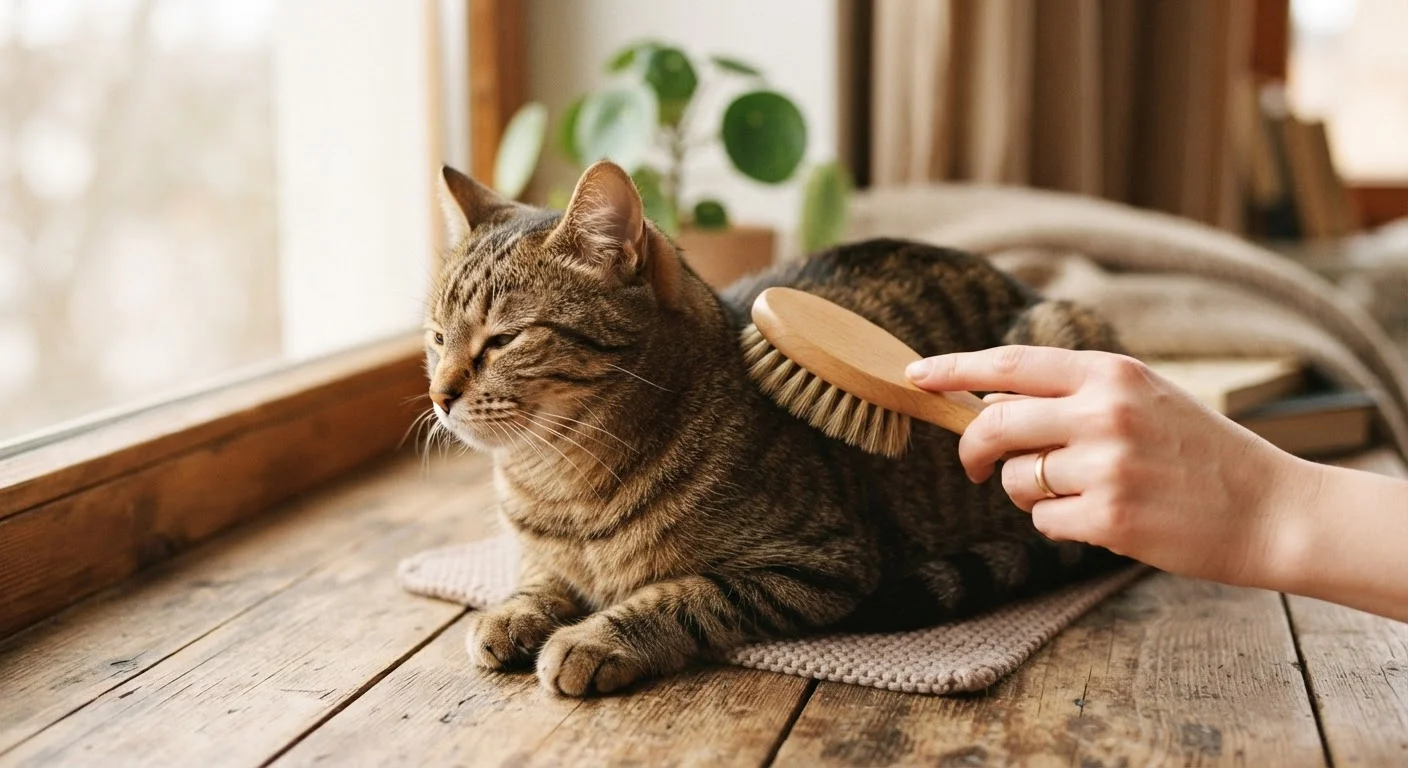
Brush your cat according to their coat length - short-haired cats weekly, long-haired cats daily.
Regular brushing prevents mats from forming in long-haired coats, which can become painful and difficult to remove without professional help. For short-haired cats, weekly brushing still removes loose hair and reduces hairballs, which form when cats swallow too much fur during self-grooming.
Trim your cat's nails every two to three weeks using proper cat nail clippers.
Overgrown nails can curl and grow into the paw pad, causing pain and infection. Regular trimming also reduces damage to furniture and accidental scratches during handling. Cat nails are not the same as human nails - only the clear tip should be cut, well away from the pink 'quick' that contains blood vessels.
Introduce tooth brushing or dental wiping as early in your cat's life as possible.
Plaque hardens into tartar within days if not addressed, and tartar buildup leads to gingivitis and tooth loss over time. Professional dental cleanings under anesthesia can be costly and carry some risk, so routine at-home maintenance is genuinely preventive.
Bathe your cat only when genuinely necessary, using a cat-specific shampoo and warm - not hot - water.
Most cats don't need baths as part of a routine; their self-grooming is effective under normal circumstances. However, a bath may be warranted if a cat gets into something sticky or toxic, has a skin condition that a vet recommends treating, or is a hairless breed that requires regular washing to remove skin oil buildup.
Check ears during grooming sessions for wax buildup, odor, or dark debris.
While ear cleaning is not a weekly need for most cats, grooming sessions are a natural opportunity to spot early signs of ear mites or infection. Catching these early means a simpler, faster treatment - typically handled by your veterinarian.
Brushing, Nails, Teeth, and Baths: What Each Requires
Each grooming task has its own rhythm. Brushing is the most frequent need; nail trims come next; dental care should happen regularly but is often started too late; and bathing is situational. Understanding the purpose and frequency of each task helps you build a routine that feels manageable rather than overwhelming.
Make Grooming a Positive Experience
Pair every grooming session with something your cat enjoys - a treat, a play session, or calm praise. If your cat pulls away or becomes tense, stop and try again later rather than pushing through. Cats that associate grooming with stress become harder to handle over time, while cats introduced gradually tend to tolerate - and sometimes enjoy - the routine.
Keep sessions short - five to ten minutes - especially at first. Cats respond well to consistency and positive association, so ending on a calm note matters more than finishing every task in one sitting.
Quick Wins to Start This Week
You don't need to overhaul everything at once. A few targeted actions can make a noticeable difference in your cat's comfort right away.
For more on reading your cat's comfort signals during grooming, see decoding common feline behaviors - understanding body language helps you know when to pause.
Building a Year-Round Grooming Habit
Seasonal changes affect your cat's coat. Many cats experience heavier shedding in spring and autumn as they cycle between their winter and summer coats. During these periods, increasing brushing frequency - even temporarily - helps manage loose fur and reduces the amount your cat ingests while self-grooming.
Shedding Season Is Normal
If your cat seems to be leaving more hair than usual in spring or autumn, this is a natural coat transition - not necessarily a health concern. Increasing brushing frequency during these periods is the most effective response. Persistent excessive shedding, bald patches, or skin irritation outside of seasonal changes is worth mentioning to your veterinarian, as it can sometimes signal nutritional gaps or an underlying condition.
Dental health deserves a special mention. Periodontal disease is one of the most common health issues in cats, yet many owners don't start any dental routine until problems are already visible. Even tooth-wiping with a finger brush a few times a week can slow plaque buildup. Your veterinarian can show you the safest technique at a routine visit. For a broader look at cat health, common cat health myths addresses some widespread misconceptions worth knowing about.
Up to 70%
Cats affected by dental disease by age 3
According to general estimates cited by veterinary dental organizations, the majority of cats show signs of periodontal disease by their third year of life.
2-3x/week
Minimum brushing for long-haired cats
Veterinary grooming guidelines commonly recommend brushing long-haired breeds at least two to three times weekly, with daily brushing as the ideal.