

| Standard Used in the US | ASTM D5489 (ASTM International) |
| Number of Core Symbol Categories | 5 (Washing, Drying, Ironing, Bleaching, Dry Cleaning) |
| What an X Through a Symbol Means | Do not perform that care action |
| What Dots Inside a Symbol Indicate | Temperature or heat level (more dots = higher heat) |
| Hand Wash Maximum Temperature | Typically 40°C / 104°F (General industry guideline) |
| When Labels Became Required on US Garments | 1971, under FTC Care Labeling Rule (Federal Trade Commission) |
Why Laundry Symbols Exist (and Why They Matter)
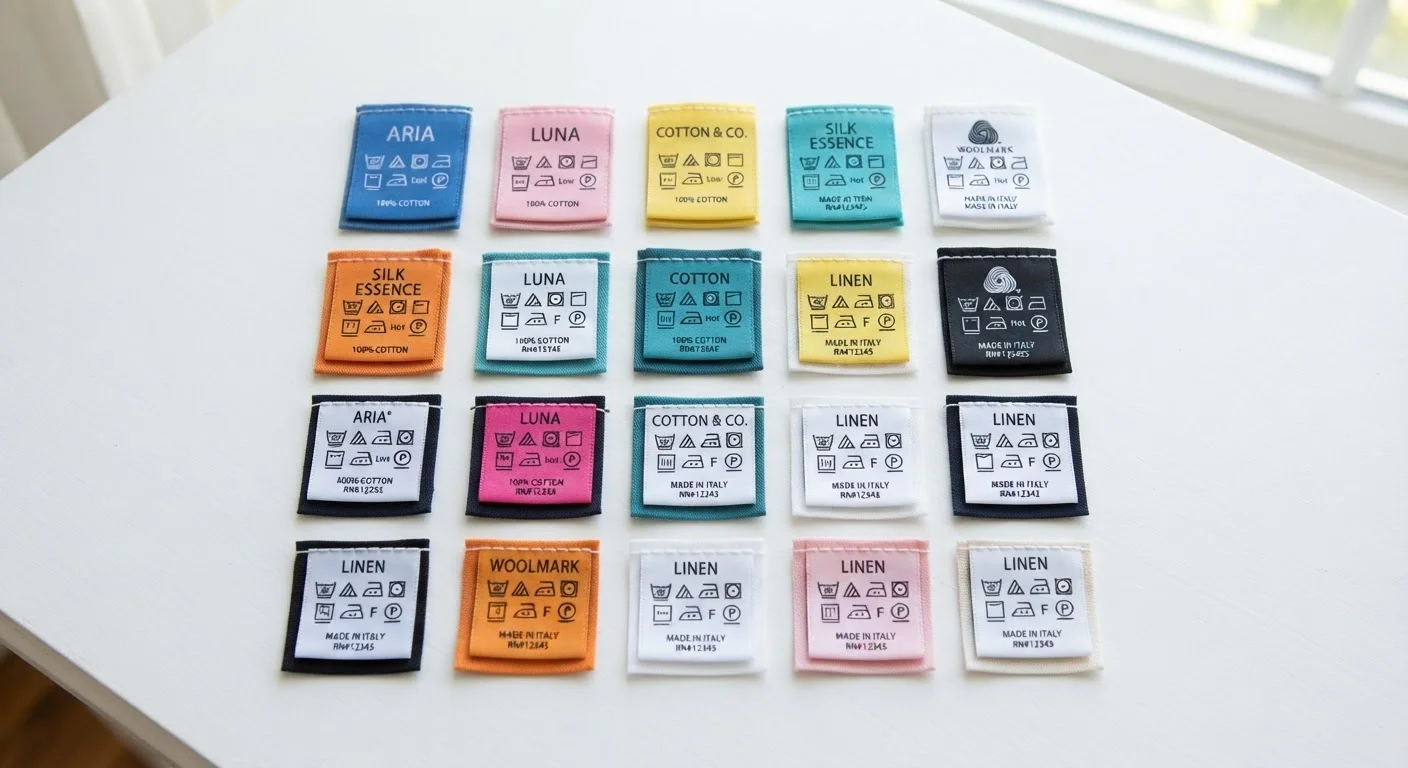
That row of tiny icons stitched into the back of your shirt isn't decoration - it's a care manual in miniature. Garment manufacturers are required by the Federal Trade Commission to include permanent care instructions on clothing sold in the US, and symbols are the universally understood shorthand. Get them wrong and a favorite sweater can shrink, fade, or fall apart after a single wash.
All US care symbols follow the ASTM D5489 standard, which groups instructions into five categories: washing, bleaching, drying, ironing, and dry cleaning. Once you recognize the base shape for each category, variations within that shape (dots, lines, X marks) tell you the intensity and any restrictions.
| Standard Used in the US | ASTM D5489 (ASTM International) |
| Number of Core Symbol Categories | 5 (Washing, Drying, Ironing, Bleaching, Dry Cleaning) |
| What an X Through a Symbol Means | Do not perform that care action |
| What Dots Inside a Symbol Indicate | Temperature or heat level (more dots = higher heat) |
| Hand Wash Maximum Temperature | Typically 40°C / 104°F (General industry guideline) |
| When Labels Became Required on US Garments | 1971, under FTC Care Labeling Rule (Federal Trade Commission) |
Labels decode other everyday mysteries too - if you enjoy untangling what printed information actually means, you might find the paint can label guide or our article on reading a nutrition label equally useful.
The Five Symbol Categories, Explained
Washing (Tub of Water)
A bucket shape filled with water is the washing symbol. A plain bucket means machine wash is fine. A hand dipping in means hand wash only. A single line underneath the bucket signals a permanent-press cycle; two lines mean a delicate/gentle cycle. Dots inside the tub indicate water temperature - one dot is cold (about 30°C/86°F), two dots is warm, three dots is hot.
Bleaching (Triangle)
An empty triangle means any bleach is safe. Lines drawn through the triangle diagonally mean only non-chlorine (oxygen-based) bleach may be used. An X over the triangle means no bleach at all - avoid it entirely on that fabric.
Drying (Square)
A square is the base shape for drying instructions. A circle inside the square means tumble dry; dots inside that circle show heat level (one = low, two = medium, three = high). Lines inside the square - but no circle - indicate air drying methods: a horizontal line means lay flat to dry; a curved line at the top means hang to dry; vertical lines mean drip dry.
Ironing (Iron Shape)
The iron icon works the same way as the wash tub: dots inside it indicate heat setting (one = low, for synthetics; two = medium, for wool; three = high, for cotton and linen). An X through the iron means do not iron. A steam icon with an X means iron without steam only.
Dry Cleaning (Circle)
A plain circle signals professional dry cleaning is safe. Letters inside the circle (like P or F) are instructions for the dry cleaner about which solvents to use - you don't need to act on these yourself. An X through the circle means do not dry clean.
Labels May Use Words or Symbols - or Both
Older or budget garments sometimes use text instructions instead of symbols, and some labels include both. If you see written instructions like 'warm wash, tumble dry low,' follow them just as you would a symbol. When in doubt, default to the gentler option: cold water and low heat preserve most fabrics safely.
Quick Reference: The Golden Rules
Rule 1 - X always means no. Any symbol with an X drawn through it means do not perform that action. This applies across all five categories without exception.
Rule 2 - More dots mean more heat. Whether the dots appear inside a wash tub, a dryer circle, or an iron, the count scales with temperature. When in doubt, choose fewer dots.
Rule 3 - Lines under the tub change the cycle. One underline = permanent press. Two underlines = delicate. No line = normal cycle is fine.
Rule 4 - When there's no symbol for a category, use common sense defaults. Missing ironing symbol? The fabric likely doesn't need ironing. Missing dry clean symbol? The garment probably isn't meant for dry cleaning.
Mastering labels is a foundational life skill, much like learning to read a home organization glossary - once you know the terms, everything becomes easier to manage. Keep a symbol chart near your laundry area until the icons become second nature.
5
Core care symbol categories on every label
Washing, bleaching, drying, ironing, and dry cleaning are the five standard categories defined by ASTM D5489.
1971
Year US garment care labels became mandatory
The Federal Trade Commission's Care Labeling Rule requires US-sold garments to include permanent, accurate care instructions.