

| Typical coverage (latex paint) | 350-400 sq ft per gallon (Assumes one coat on a smooth, primed surface) |
| Touch-dry time (water-based paint) | 1-2 hours (Varies by brand, humidity, and temperature) |
| Typical recoat time (latex) | 4 hours minimum (Check your specific label - oil-based paints often require 24 hours) |
| Low-VOC threshold (common industry standard) | Under 50 g/L (Definitions vary by manufacturer and certification body) |
| Recommended application temperature | 50°F-90°F (most latex paints) (Always verify on your specific can's label) |
| Cleanup method | Soap and water (latex); mineral spirits (oil-based) |
Why the Label Matters Before You Buy
Most first-time painters crack open a can and start rolling without a second glance at the label. That's understandable - the color chip at the store already did most of the convincing. But the label is where the practical information lives: how much paint you actually need, how long you need to wait between coats, how to ventilate your space safely, and whether the finish you picked will hold up in a bathroom or scuff off a hallway wall.
Reading the label before you buy - not just before you paint - can save you an extra trip to the store, protect your health during application, and help you get a result that lasts. Think of it the way you'd read a seed packet before planting: the details on the package are there to set you up for success.
| Typical coverage (latex paint) | 350-400 sq ft per gallon (Assumes one coat on a smooth, primed surface) |
| Touch-dry time (water-based paint) | 1-2 hours (Varies by brand, humidity, and temperature) |
| Typical recoat time (latex) | 4 hours minimum (Check your specific label - oil-based paints often require 24 hours) |
| Low-VOC threshold (common industry standard) | Under 50 g/L (Definitions vary by manufacturer and certification body) |
| Recommended application temperature | 50°F-90°F (most latex paints) (Always verify on your specific can's label) |
| Cleanup method | Soap and water (latex); mineral spirits (oil-based) |
The Key Sections Explained
Paint labels are dense, but they follow a predictable structure. Here's what each part is telling you:
Coverage Rate
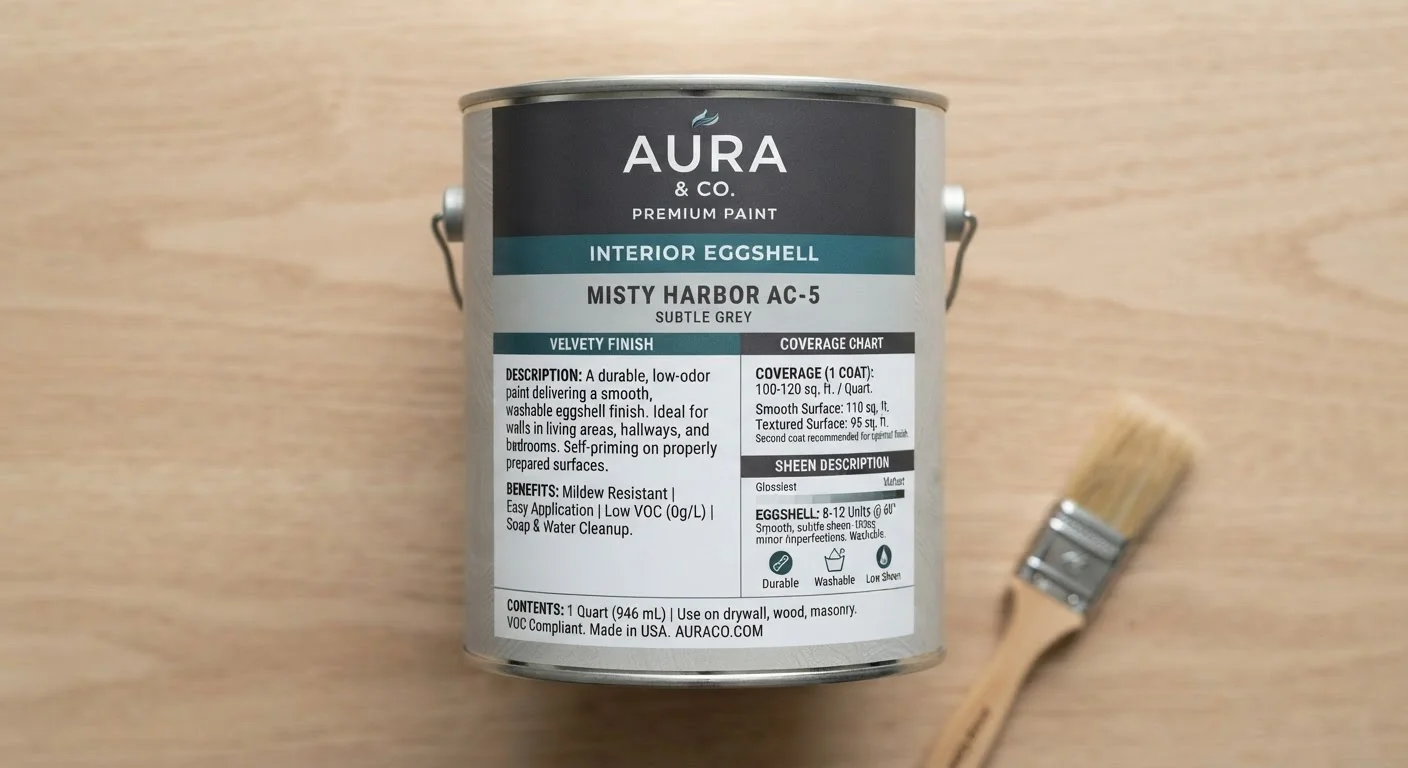
Usually expressed as square feet per gallon (e.g., 350-400 sq ft/gal). This number assumes a single coat on a smooth, properly primed surface. On rough, porous, or previously unpainted surfaces, you'll get less coverage - sometimes significantly less. Measure your wall area, account for two coats, and buy accordingly rather than assuming the label's maximum figure applies to your situation.
Sheen or Finish
Words like flat, matte, eggshell, satin, semi-gloss, and gloss describe how much light the dried surface reflects. Higher sheen generally means more durability and easier cleaning, but it also highlights surface imperfections. For a full room-by-room guide, see our interior paint finishes breakdown.
Dry Time vs. Recoat Time
These two figures are not the same. Dry to touch (often 1-2 hours for latex paints) means the surface won't transfer wet paint to your hand. Recoat time (often 4 hours or more) is how long you must wait before applying a second coat without trapping moisture or causing the finish to wrinkle or peel. Follow the recoat time, not the touch-dry time, when planning your project.
VOC Content
VOCs are chemical compounds that evaporate into the air as paint dries. Labels may list VOC content in grams per liter (g/L). Lower numbers generally mean less odor and better indoor air quality. Labels marked zero-VOC or low-VOC contain minimal amounts, which matters most in poorly ventilated rooms or households with children, pets, or individuals with respiratory sensitivities. Regardless of VOC rating, the label will recommend ventilating the space during and after application - follow that guidance.
Application Method and Temperature Range
The label specifies whether the paint is intended for brush, roller, or spray application, and the acceptable temperature window (commonly 50°F-90°F). Applying outside these conditions - in a cold garage in winter or during a heat wave - can cause poor adhesion, uneven drying, or a cloudy finish.
Cleanup Instructions
Latex (water-based) paints clean up with soap and water. Oil-based paints require mineral spirits or paint thinner. This section also tells you how to dispose of unused paint safely - most municipalities have specific rules about pouring paint down the drain or putting it in regular trash.
VOC (Volatile Organic Compound)
Chemical compounds in paint that evaporate into the air as the paint dries. High VOC levels can cause odor, eye irritation, and poor indoor air quality. Labels express VOC content in grams per liter (g/L).
Sheen
The degree of light reflectance in a dried paint finish. Ranges from flat (no shine) to gloss (high shine), with eggshell and satin falling in between. Higher sheen generally offers greater durability and stain resistance.
Recoat Time
The minimum time you must wait before applying a second coat of paint. Applying too soon can trap moisture and cause peeling or wrinkling. This is different from - and always longer than - touch-dry time.
Coverage Rate
The area one gallon of paint is expected to cover in a single coat, typically listed in square feet per gallon. Real-world coverage is often lower than the label maximum on rough or porous surfaces.
Latex Paint
A water-based paint type that cleans up with soap and water and dries relatively quickly. It is the most common type used for interior walls in US homes.
Primer
A preparatory coating applied to a surface before paint to improve adhesion and coverage. Some paints are labeled 'paint and primer in one,' though a separate primer coat is still recommended for bare or heavily patched surfaces.
Practical Takeaways for First-Timers
Before you leave the store, run through this quick mental checklist against the label:
- Does the coverage rate match your wall area? If you're painting 500 sq ft with two coats, a single gallon rated at 400 sq ft isn't enough.
- Is the sheen appropriate for the room? High-traffic and high-moisture rooms benefit from higher sheens; low-traffic areas can handle flat or matte.
- Do you have adequate ventilation? Even low-VOC paints need airflow. Plan to open windows or run a fan.
- Do you have the right cleanup supplies? Buy them before you start, not after your brushes have dried out.
- Can you meet the temperature requirements? If you're painting a garage or outdoor trim, check the forecast.
Labels carry a lot of detail, but once you know the structure, scanning one takes less than two minutes. That two minutes of reading is time well spent before you pick up a brush.
Paint + Primer in One: What That Label Really Means
Many paints are marketed as "paint and primer in one." This can work well on previously painted surfaces in good condition. However, on bare drywall, raw wood, or heavily patched areas, a dedicated primer coat applied first will typically produce better adhesion and more even color. When in doubt, check the label's surface preparation section - it will usually specify when a separate primer is recommended.