

| Finish types available | 5 main categories (flat, eggshell, satin, semi-gloss, high-gloss) |
| Best finish for ceilings | Flat / matte |
| Best finish for bathrooms | Semi-gloss or satin |
| Most versatile finish | Satin |
| Best finish for hiding wall flaws | Flat / matte |
| Easiest finish to clean | High-gloss |
Why Paint Finish Matters More Than You Think
When most beginners shop for paint, color gets all the attention. But the finish - also called sheen level - quietly determines how a room looks under light, how easy the walls are to clean, and how long the paint job holds up. Get the finish wrong and you may find yourself repainting a bathroom ceiling within a year or struggling to wipe crayon off a flat-finish wall.
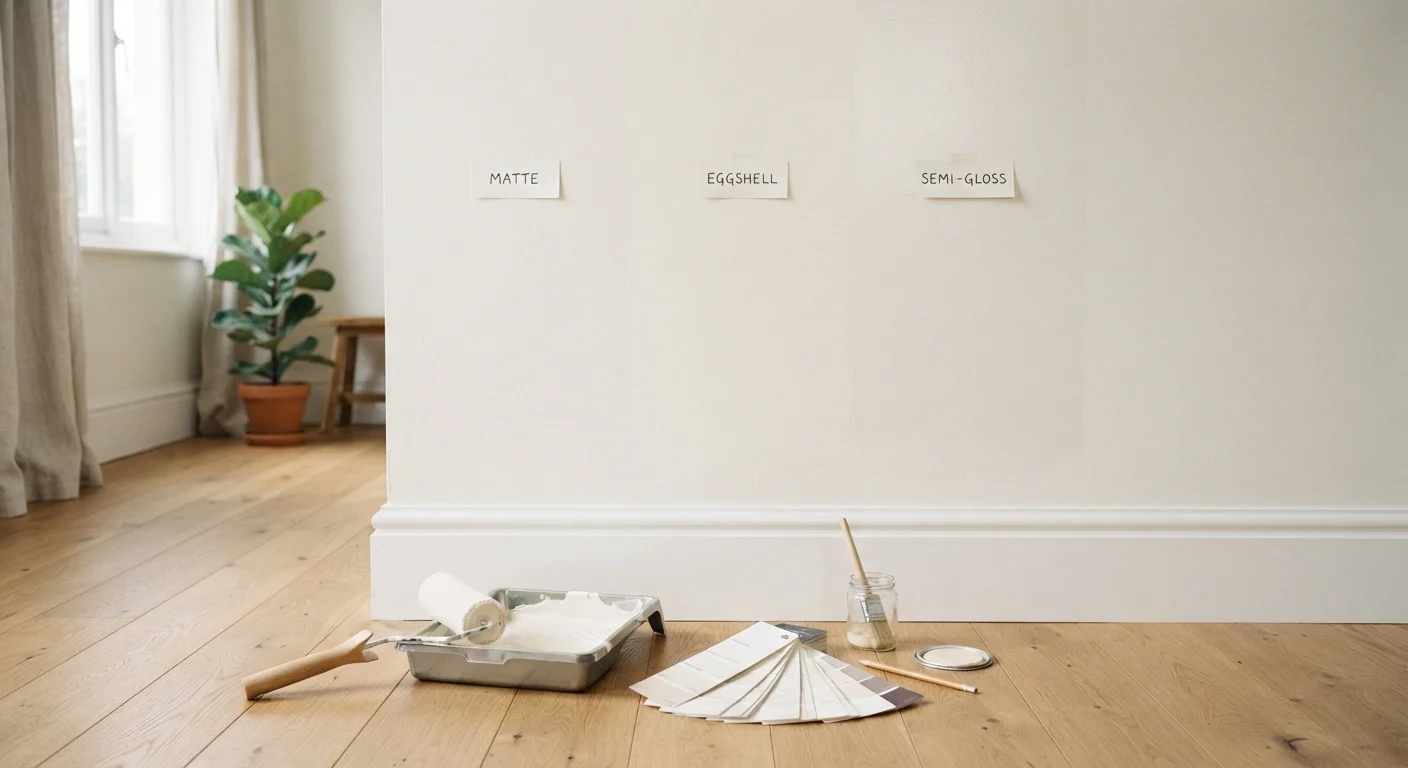
Paint finishes are measured by how much light they reflect. The spectrum runs from completely matte (flat) to highly reflective (high-gloss), with several stops in between. Before choosing a color, understand which finish belongs in each room.
| Finish types available | 5 main categories (flat, eggshell, satin, semi-gloss, high-gloss) |
| Best finish for ceilings | Flat / matte |
| Best finish for bathrooms | Semi-gloss or satin |
| Most versatile finish | Satin |
| Best finish for hiding wall flaws | Flat / matte |
| Easiest finish to clean | High-gloss |
If you want to understand everything a paint label tells you - including sheen ratings and coverage estimates - see our guide to reading a paint can label before you head to the store.
The Finish Spectrum: Flat to Gloss Explained
There are five main finish categories you will encounter in US paint aisles:
- Flat / Matte - No shine. Hides surface imperfections well, but marks easily and resists scrubbing poorly.
- Eggshell - Very subtle sheen, resembling the surface of an egg. More washable than flat, still forgiving of wall flaws.
- Satin - A soft, pearl-like glow. Good moisture resistance and easy to wipe clean; widely considered the most versatile finish.
- Semi-gloss - Noticeable shine. Highly durable and moisture-resistant; the go-to for trim, doors, and wet rooms.
- High-gloss - Mirror-like reflectivity. Maximum durability and easiest to clean, but amplifies every imperfection on the surface.
Sheen level
A measure of how much light a dried paint surface reflects. Higher sheen means more light bounces off, creating a glossier appearance and generally a harder, more washable surface.
Flat / Matte finish
A paint finish with no reflectivity. It absorbs light rather than bouncing it back, making wall imperfections less visible, but it is difficult to clean without damaging the surface.
Eggshell finish
A very low-sheen finish that provides slightly more durability and washability than flat paint while still minimizing the appearance of surface flaws.
Satin finish
A mid-range finish with a soft, pearl-like glow. It is moisture-resistant, easy to wipe clean, and suitable for most rooms in the home.
Semi-gloss finish
A noticeably shiny finish that is highly durable and moisture-resistant. Commonly used in bathrooms, kitchens, and on trim and doors.
High-gloss finish
The most reflective paint finish available. It is extremely durable and easy to clean, but it highlights every surface imperfection and is typically reserved for accents, trim, or furniture.
A key thing to remember: the shinier the finish, the more surface preparation matters. High-gloss paint will highlight every patch, dent, and brush stroke. Flat paint is far more forgiving of imperfect walls.
Room-by-Room Finish Recommendations
Living Rooms and Bedrooms
These low-traffic, low-moisture spaces are where flat or eggshell finishes shine (literally, they don't). Flat paint gives ceilings and large walls a smooth, gallery-like appearance and disguises the inevitable nail holes and minor dings found in most homes. Eggshell is a step up - it offers a hint of depth while still being gentle on imperfect surfaces, and it tolerates occasional wiping better than flat.
Kitchens
Kitchens deal with grease, steam, and frequent splashing. Choose satin or semi-gloss for kitchen walls. Satin handles everyday cooking residue well and cleans up without streaking. Semi-gloss is worth the extra sheen on areas near the stove or sink, and it's almost always the right call for kitchen cabinets and trim.
Bathrooms
Moisture is the enemy of paint adhesion. A finish that can't handle humidity will eventually blister and peel. Semi-gloss or satin are the standard choices for bathroom walls, with semi-gloss preferred in small, poorly ventilated bathrooms. Using the wrong finish is one of the most common reasons paint fails in wet rooms - our article on the hidden causes of peeling paint explains the moisture and adhesion problems that cause failure from the inside out.
Hallways and Kids' Rooms
High-traffic zones that collect scuffs, handprints, and crayon artwork need a finish you can scrub. Eggshell or satin strikes the best balance here: durable enough to clean repeatedly without looking shiny or institutional. If you notice uneven results after painting a high-traffic hallway, our guide on why painted walls go patchy covers the technique issues that cause streaks and thin spots.
Ceilings
Ceilings almost universally call for flat paint, ideally a ceiling-specific formulation. The low angle of light hitting a ceiling amplifies any texture or imperfection, and flat paint minimizes that effect. Shiny ceilings draw the eye to roller marks and are rarely an intentional design choice.
Surface Prep Is Even More Critical With High Sheens
The shinier the finish you choose, the more important it is to fill holes, sand patches smooth, and prime bare spots before painting. A semi-gloss or high-gloss finish will reflect light directly onto imperfections that a flat finish would quietly absorb. If your walls have significant damage, consider a lower sheen or invest extra time in preparation.