

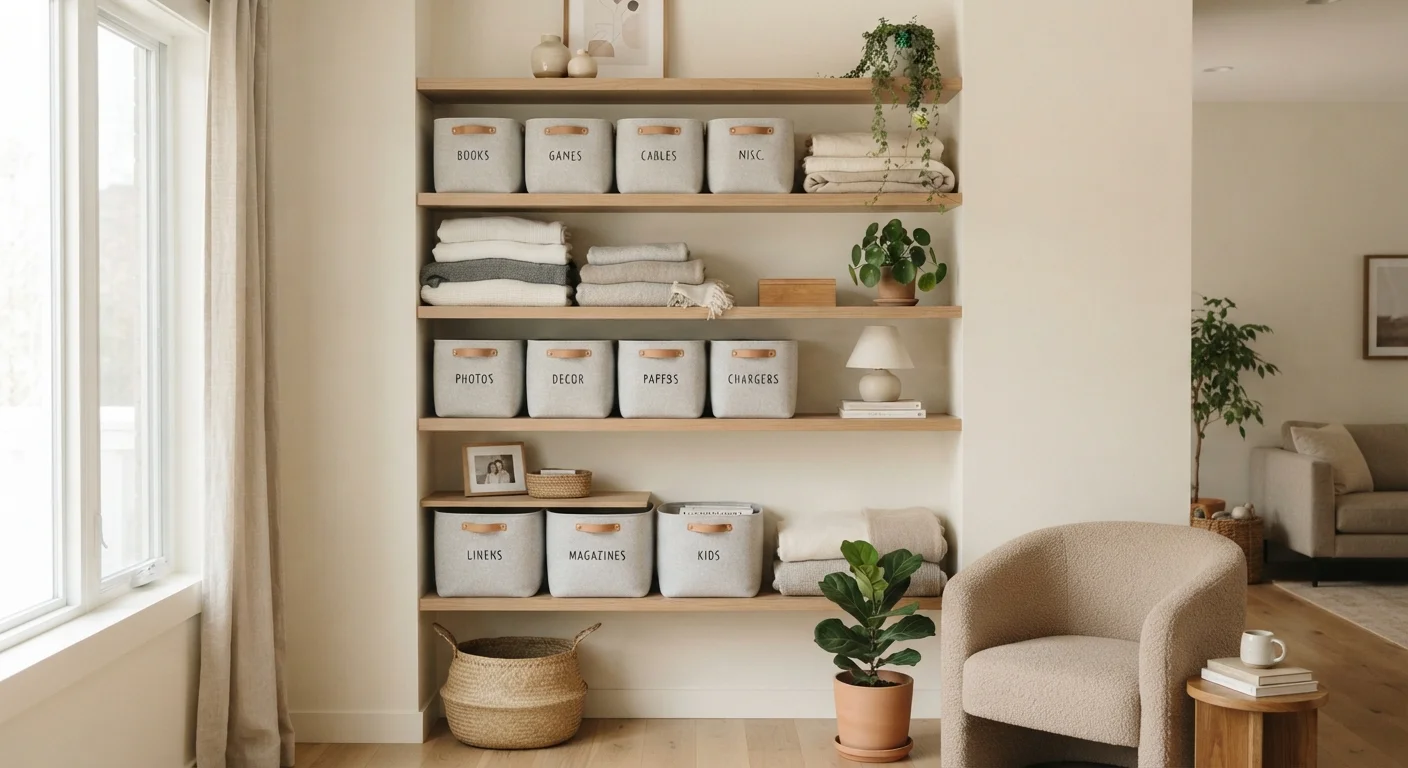
| Most common starting point | The closet or bedroom |
| Core principle across all methods | Items need a designated home |
| Zone system benefit | Reduces time spent searching for items |
| One-in-one-out rule purpose | Prevents re-accumulation after organizing |
| Decanting caution | Preserve original labels with expiry or safety info |
| Negative space misconception | Empty shelves are not wasted space |
Why This Glossary Exists
Home organization content is full of shorthand. Terms like capsule wardrobe, decant, and flow appear constantly in organizing guides, videos, and social media - often without explanation. For a beginner trying to tackle a cluttered closet or an overwhelming kitchen, the jargon can feel like a barrier before you have even started.
This reference guide cuts through that. Below, you will find plain-language definitions for the most common home organization terms, grouped by how they tend to be used. Bookmark it, print it, or keep it open while working through any organizing project. If you are planning to tackle a specific space, our closet organization walkthrough is a practical next step once you are familiar with the vocabulary.
Organization Language Varies by Source
Different professional organizers, books, and online communities sometimes use these terms differently or interchangeably. The definitions here reflect their most common, widely accepted meanings. When following a specific method or guide, use that source's definitions as your reference.
The Core Vocabulary, Defined
The terms below are the ones you will encounter most often. They describe either a philosophy, a process step, or a physical approach to storage. Understanding them gives you a shared language with any organizing guide you use.
For terms related to where and how things are stored physically, see our article on vertical versus horizontal storage - it applies several of these concepts directly to real rooms.
Quick-Reference Facts for Beginners
Beyond definitions, a few practical facts help ground these concepts in everyday use. The quick-reference card below covers the most useful starting-point information.
| Most common starting point | The closet or bedroom |
| Core principle across all methods | Items need a designated home |
| Zone system benefit | Reduces time spent searching for items |
| One-in-one-out rule purpose | Prevents re-accumulation after organizing |
| Decanting caution | Preserve original labels with expiry or safety info |
| Negative space misconception | Empty shelves are not wasted space |
One important nuance worth noting: decanting is one of the most visually satisfying organizing steps, but always set aside or photograph the original packaging if it contains safety instructions, expiry dates, or usage warnings before transferring contents to a new container.
If you share your home with others who have a different clutter threshold than you do, the compromises involved in organizing together deserve their own attention. Our guide on organizing shared spaces addresses exactly that situation.