

Key Takeaways
Why Closet Organization Feels So Hard
Most people don't struggle with closet organization because they're disorganized by nature - they struggle because they never had a clear system to begin with. Clothes get shoved in, hangers multiply, and seasonal items pile up on the floor until opening the door feels like a small act of courage.
The good news: a cluttered closet is a solvable problem, not a personality flaw. This guide walks you through a repeatable process that works even if you're starting with a complete jumble. If you're tackling organization beyond just the closet, our guide on organizing approaches that actually work can help you decide where to begin across your whole home.
Set a Time Limit Before You Start
Block out two to three hours for your initial closet overhaul rather than trying to squeeze it between other tasks. Stopping halfway through leaves items in limbo and makes the project feel unfinished. A dedicated window means you can finish in one go and immediately enjoy the result.
Step 1: Empty Everything Out
This step feels dramatic, but it's non-negotiable. Pull every single item out of your closet and place it on your bed or floor. Don't try to reorganize while things are still inside - you'll miss hidden items and fall back into the same patterns.
Once the closet is empty, take a moment to wipe down shelves and vacuum the floor. Starting clean gives you a mental reset and makes the space feel like a fresh canvas rather than a problem waiting to happen.
80%
Clothes worn only 20% of the time
Professional organizers commonly cite an 80/20 pattern in which most people regularly wear a small fraction of their wardrobe, while the rest occupies space.
1 in 4
US households with an overcrowded closet
Survey data from home organization research suggests a significant share of US households feel their primary closet is too small or too cluttered to function well.
Step 2: Sort and Edit What You Own
With everything visible, divide items into three groups: Keep, Donate/Sell, and Discard. Be honest but not harsh with yourself - the goal isn't minimalism, it's keeping only what earns its space.
Ask these practical questions for each item:
- Have I worn or used this in the past 12 months?
- Does it fit properly and feel good to wear?
- Would I buy it again today?
Items that pass all three questions go back in. Everything else moves out. Donate bags should leave your home within 48 hours - the longer they sit, the more tempting it is to reclaim things.
Turn all your hangers backward at the start of each season. After wearing something, rehang it forward-facing. By season's end, anything still backward is a clear donation candidate.
This simple visual trick removes the guesswork from editing decisions and works passively - no extra effort required during your daily routine.
Store folded items vertically in drawers or bins rather than stacking them horizontally. This file-folding method means every item is visible at a glance, so nothing gets buried and forgotten.
Horizontal stacking hides items at the bottom of the pile, making them effectively invisible and far less likely to be used - which contributes to the feeling that you have nothing to wear despite a full closet.
Step 3: Plan Your Closet Layout
Before putting anything back, sketch a simple layout. Consider three organizing principles:
- Frequency of use: Items you reach for daily belong at eye level and within easy arm's reach. Seasonal items can go on high shelves or in bins near the floor.
- Category grouping: Keep like with like - all tops together, all bottoms together, shoes in one zone. This removes the daily guesswork of where to find things.
- Vertical space: Most closets waste the area above the top shelf and below hanging clothes. Stackable bins, shelf risers, and hanging organizers can reclaim this space without any construction.
Permits and Modifications Are Rarely Needed
Simple closet organization - adding bins, rearranging shelves, or installing an over-the-door organizer - requires no permits and no professional help. However, if you're considering structural changes like moving walls, adding built-in cabinetry, or modifying electrical outlets inside a closet, consult a licensed contractor and check local building requirements before proceeding.
You don't need to purchase a specialized system to get results. Many effective closet layouts use a combination of standard hangers, a few baskets, and a shelf divider or two - all widely available at home goods stores.
Step 4: Put It Back - Strategically
Now comes the rewarding part. Return your Keep items using the layout you planned. A few practical tips as you go:
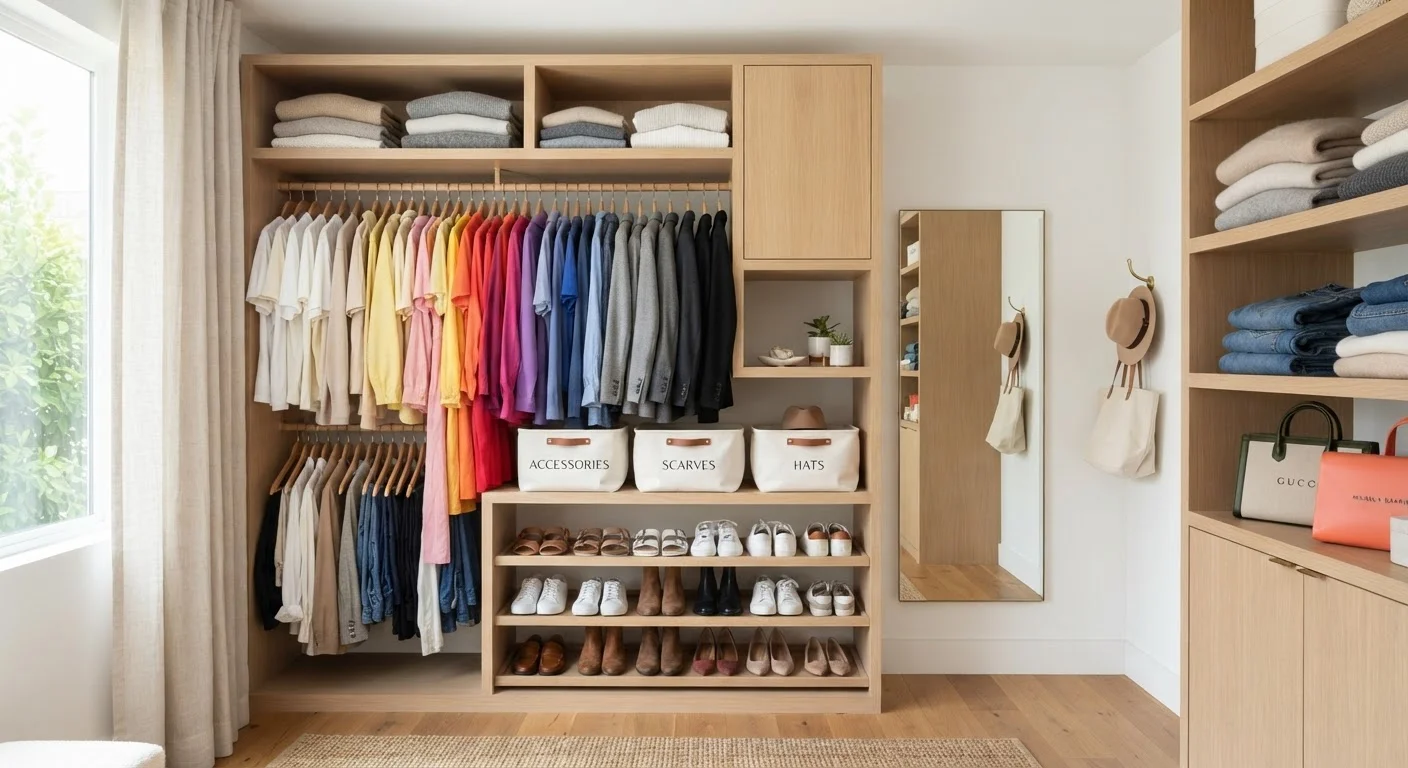
- Color-sort hanging clothes within each category. It sounds cosmetic, but it genuinely speeds up getting dressed.
- Face all hangers the same direction. After wearing something, rehang it in the opposite direction. In six months, anything still facing the original way is a candidate for donation.
- Use the floor intentionally. A shoe rack or small drawer unit keeps the floor from becoming a dumping ground.
- Label bins and baskets. Even a simple sticky note prevents miscellaneous items from accumulating in the wrong place.
If your closet is in a small apartment or shared space, see our full guide on organizing a small apartment room by room for strategies tailored to tighter square footage.
Keeping It Organized Long-Term
The most common reason closets revert to chaos is the absence of a maintenance habit. The closet didn't get messy overnight, and staying organized doesn't require a massive weekly effort - it requires small, consistent actions.
Try a one-in, one-out rule: whenever a new item enters the closet, something leaves. This keeps volume stable without requiring discipline on any individual day.
Schedule a 10-minute monthly reset - re-fold anything that's shifted, return items to their correct zones, and pull out anything you haven't touched since the last reset.
If you share your space with others who have different organization standards, the strategies in organizing a home when not everyone is on board can help you build systems that work for multiple people. And if the organizing bug spreads to other areas of your home, tackling kitchen drawer chaos is a natural next project using many of the same principles.