

Key Takeaways
Why Kitchen Drawers Become Catch-All Zones
Kitchen drawers fill up fast because they're designed for convenience - easy to open, easy to toss something into, and easy to ignore when you're busy. Over time, items migrate from room to room and land wherever there's available space. The result is a drawer that contains everything from rubber bands to takeout menus to a single birthday candle, none of which belongs together.
The good news is that drawer chaos is almost always a system problem, not a space problem. Even a small drawer can hold a surprising amount when items are grouped logically and given a consistent home. If you've been feeling frozen by the scale of the mess, our one-box approach to decluttering offers a similarly low-pressure starting framework you can apply room by room.
The kitchen is particularly worth prioritizing because it's a high-traffic work area. Disorganized drawers slow down cooking, create frustration during cleanup, and can even pose minor safety risks when knives or sharp tools aren't stored properly. Fixing one drawer at a time is enough to make a meaningful difference.
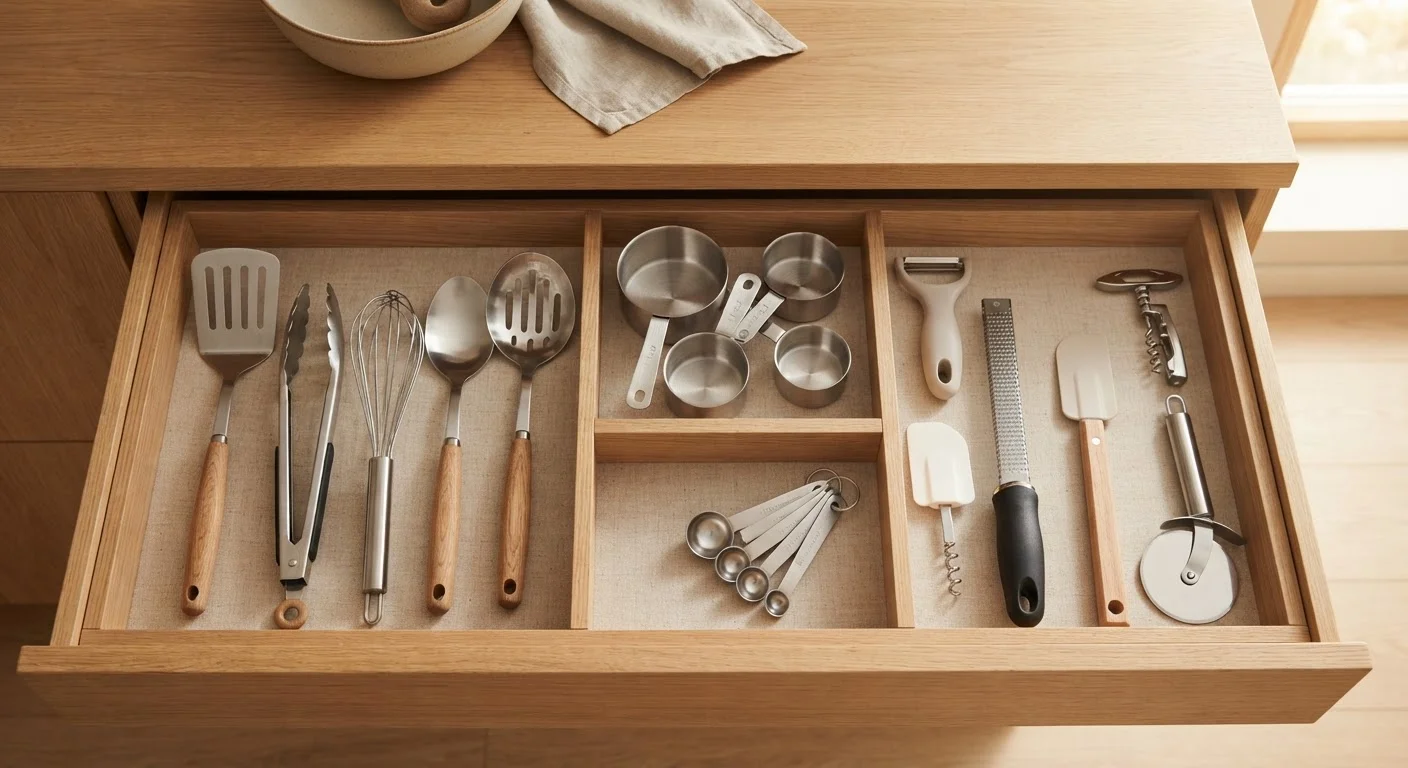
Drawer dividers or organizer trays
Create defined sections inside drawers so items don't migrate or pile up.
Measuring tape
Measure drawer dimensions before purchasing any organizers to ensure a proper fit.
Trash bag and donation box
Immediately remove discards and donations as you sort so they don't end up back in the drawer.
Sticky notes or masking tape
Temporarily label sorted piles or new drawer zones while you decide on permanent placement.
Small adhesive labels
Mark organizer sections so other household members know where things belong.
How to Organize Your Kitchen Drawers Step by Step
Follow these steps in order. Each builds on the last, and skipping ahead - especially past the sorting phase - tends to result in organizers that don't fit the actual contents of the drawer.
Don't Skip the Full Empty-Out Step
Organizing around existing clutter almost never works. Pulling everything out first lets you see duplicates, expired items, and things that simply don't belong in the kitchen. It takes an extra few minutes but saves far more time later.
Choose one drawer and empty it completely
Pick the single most frustrating drawer in your kitchen - usually the one you dig through every day. Pull out every item and place everything on a flat surface like the kitchen table or counter. Resist the urge to work on multiple drawers at once; finishing one gives you real momentum and a visible win.
Sort items into three groups: keep, relocate, discard
Go through each item and assign it to one of three piles. Keep means it belongs in this drawer and you use it regularly. Relocate means it's useful but lives in the wrong spot - a garage tool tucked in the utensil drawer, for example. Discard covers duplicates, broken items, and anything you haven't touched in over six months.
Be honest but not ruthless - the goal is a functional drawer, not minimalism for its own sake.
[tip_callout]Clean the drawer interior
Before anything goes back in, wipe down the drawer with a damp cloth or an all-purpose cleaner. Crumbs, grease residue, and dust accumulate quickly in kitchen drawers and are much harder to clean once items are back inside. Let it dry fully before proceeding.
Measure the drawer and select appropriate organizers
Use a measuring tape to record the interior length, width, and depth of the drawer. Write these down before shopping or ordering anything. Look for adjustable dividers or modular bins that fit your specific dimensions. Many standard kitchen drawers accommodate off-the-shelf organizer trays sold at home goods stores, but verify sizing before purchasing.
[warning_callout]Arrange items by frequency of use
Place the things you reach for daily - spatulas, a favorite knife, measuring spoons - toward the front of the drawer. Items used weekly sit in the middle, and rarely used tools go toward the back or get relocated to a less accessible drawer. This layout means you're never digging past clutter to get to what you need right now.
Establish a simple reset habit
Organization is only as durable as the habits that maintain it. After doing dishes or tidying the kitchen, spend two to five minutes returning stray items to their designated spots. This small, consistent action prevents gradual drift back into chaos. If you share the kitchen with others, a brief explanation of where things now live goes a long way toward keeping the system intact.
Once you've worked through your most-used drawer, apply the same process to the next. Most people find the second and third drawers go significantly faster once the habit is established. For broader storage challenges throughout your home, the principles of vertical vs. horizontal storage can help you rethink how you use every cabinet and shelf in the kitchen as well.
If kitchen organization is part of a larger effort to streamline a small living space, the room-by-room guide for small apartments covers strategies that work even when square footage is limited. And if paper clutter - receipts, instruction manuals, takeout menus - keeps ending up in your drawers, managing household documents can help you find a better home for all of it.