

Key Takeaways
Why Nutrition Labels Feel Confusing (and Why They Don't Have to Be)
If you've ever picked up a box in the grocery aisle, scanned the Nutrition Facts panel, and quietly put it back down feeling more confused than when you started - you're in good company. Labels are dense by design: they're required to show a lot of information in a small space. But once you understand the structure, the numbers stop feeling random.
This guide walks you through each part of a standard US Nutrition Facts label, in the order you're likely to encounter it. You don't need a nutrition background. You just need a few minutes and a label in front of you. If you'd like to go even deeper afterward, our Nutrition Label Checklist gives you a quick reference for evaluating products at the shelf.
What you will need
How to Read a Nutrition Label, Step by Step
Work through these steps the next time you pick up a packaged food. With a little practice, this process takes under a minute.
Start with the serving size
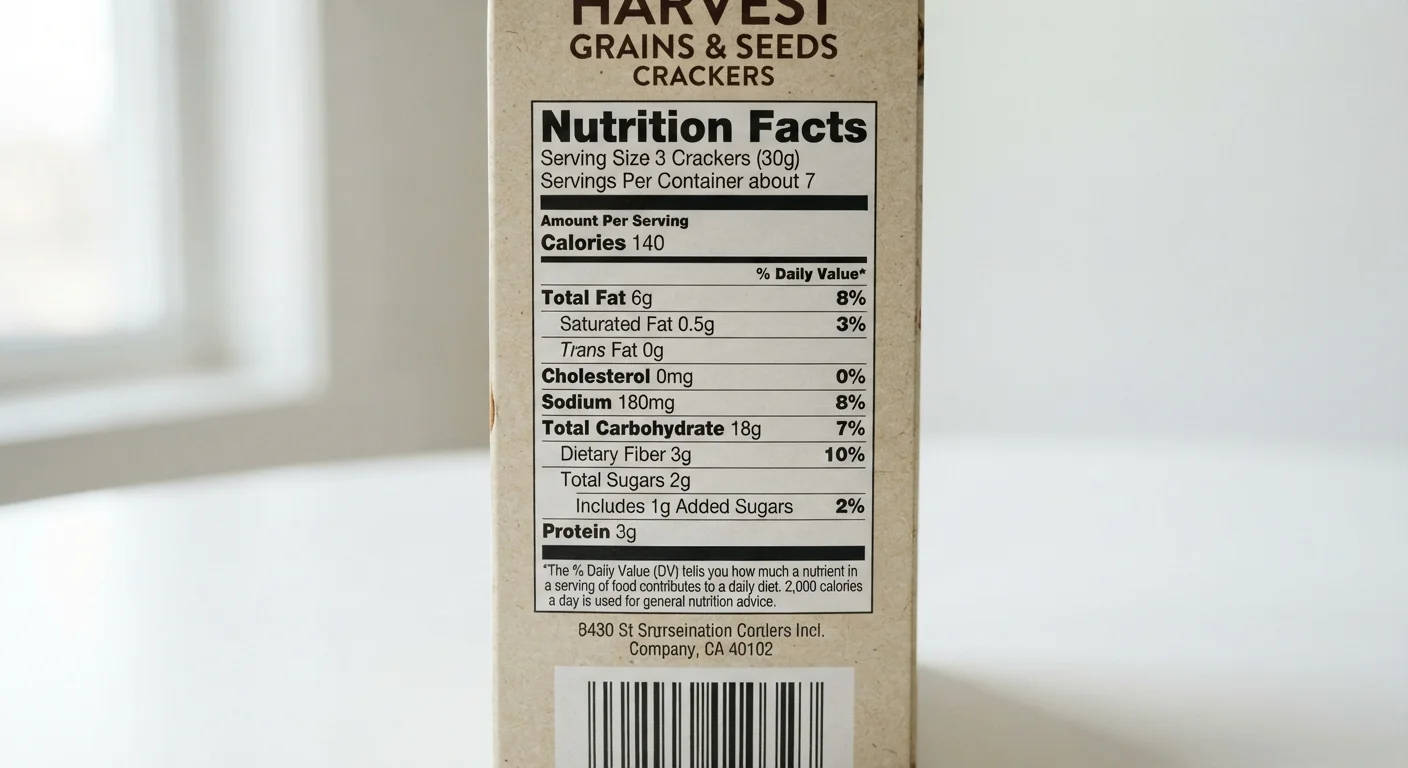
At the very top of the panel, you'll see Serving Size - for example, "2 crackers (28g)" - followed by Servings Per Container. Every single number below this line is based on that one serving, not the whole package. If you eat two servings, double every figure. This is the most important line on the label and the most commonly overlooked.
Note the calories per serving
Calories tells you how much energy one serving provides. This number is displayed prominently in large type. It's useful context, but calories alone don't indicate whether a food is nutritious - a handful of almonds and a handful of gummy candies might have similar calorie counts but very different nutritional profiles.
Review the nutrients to limit
The label highlights Saturated Fat, Trans Fat, Cholesterol, and Sodium - nutrients that US dietary guidelines generally suggest keeping in check for most people. You'll see each listed with an amount in grams or milligrams, plus a % Daily Value (% DV). A % DV of 5% or less is considered low; 20% or more is considered high. These are general benchmarks, not hard rules.
Look at nutrients to get enough of
Below the nutrients to limit, you'll find Dietary Fiber, Vitamin D, Calcium, Iron, and Potassium. These are nutrients many Americans don't get enough of. Aiming for higher % DV values here is generally a positive sign. For a plain-language overview of what these micronutrients actually do, see our Micronutrients at a Glance guide.
Find the added sugars line
Added Sugars appears as a sub-item under Total Sugars. This distinction matters: natural sugars (like those in plain milk or whole fruit) behave differently in the body than sugars added during processing. The % DV for added sugars is based on a limit of 50g per day for a 2,000-calorie diet. Keeping this number low across the day is a practical goal for most people.
The 5/20 Rule Is a Handy Shortcut
When scanning % Daily Values, use this quick guideline: 5% DV or less means a nutrient is low in that food; 20% DV or more means it's high. This rule works for both nutrients you want more of (like fiber) and those you want less of (like sodium). It's not a perfect measure, but it makes comparison shopping much faster.
Understanding the Ingredient List
The ingredient list lives below the Nutrition Facts panel and works differently from the numbers above it. Ingredients are listed in descending order by weight - meaning the first ingredient makes up the largest portion of the product, and the last makes up the least.
A few things worth knowing: if sugar (or one of its many alternate names, like cane syrup, dextrose, or maltose) appears near the top of the list, the product contains a meaningful amount of it. Our article on where added sugar hides in everyday foods explains how to spot it under its many names. Also, a long ingredient list isn't automatically bad - some minimally processed foods have simple lists, while some nutritious ones are more complex. Context matters.
"Natural" and "Healthy" Are Not Label Terms
Words like "natural," "wholesome," or "clean" on the front of a package are marketing language, not regulated nutritional claims. They don't guarantee anything about the ingredient list or nutrient content. Always flip to the Nutrition Facts panel and ingredient list to form your own assessment.
Putting It All Together
Reading a label well doesn't mean memorizing every number. It means knowing which figures are most useful for your situation and reading them in context. Calories, serving size, saturated fat, added sugars, and sodium are the most commonly relevant starting points for most people.
If tracking the bigger picture of what you eat feels like a lot to take on at once, our guide Nutrition for People Who Hate Thinking About Nutrition offers a gentler framework. And if you're pairing label-reading with smarter shopping habits, Grocery Shopping on a Budget Without Sacrificing Nutrition is a helpful companion read.
This article is for general informational and educational purposes only and is not a substitute for personalized dietary or medical advice. For guidance tailored to your health needs, consult a registered dietitian or qualified healthcare professional.