

Key Takeaways
Why Budget Grocery Shopping Feels Hard at First
Many beginners assume that eating well requires spending a lot. Walk into any grocery store without a plan and it's easy to leave with a cart full of processed snacks, duplicated ingredients, or items that expire before you use them. The result is both financial waste and a diet that drifts away from nutritional goals.
The good news is that eating nutritiously on a limited budget is genuinely achievable - not through extreme couponing or complicated meal prep, but through a handful of repeatable habits. For a broader foundation on eating well every day, the Nutrition Basics hub is a helpful starting point.
~30-40%
Food wasted by average US household
According to USDA estimates, US households waste roughly 30-40% of the food supply, much of it at the consumer level - representing direct financial loss.
3x
Cost ratio of processed vs. whole foods per serving
Research published in nutritional economics literature consistently finds that whole staple foods such as legumes, oats, and eggs deliver significantly more nutrition per dollar than processed packaged snacks.
Best Practices for Budget-Friendly, Nutritious Grocery Shopping
The following practices are straightforward enough for complete beginners and hold up over time. Each one addresses a common place where shoppers lose money or nutritional quality without realizing it.
Build a weekly meal plan before writing your shopping list.
Without a plan, shoppers tend to buy ingredients that don't combine into complete meals, leading to food waste and extra spending on last-minute takeout. A simple five-day plan - even a rough one - gives your list a clear purpose and helps you buy only what you'll actually use.
Anchor your cart in whole, minimally processed staples.
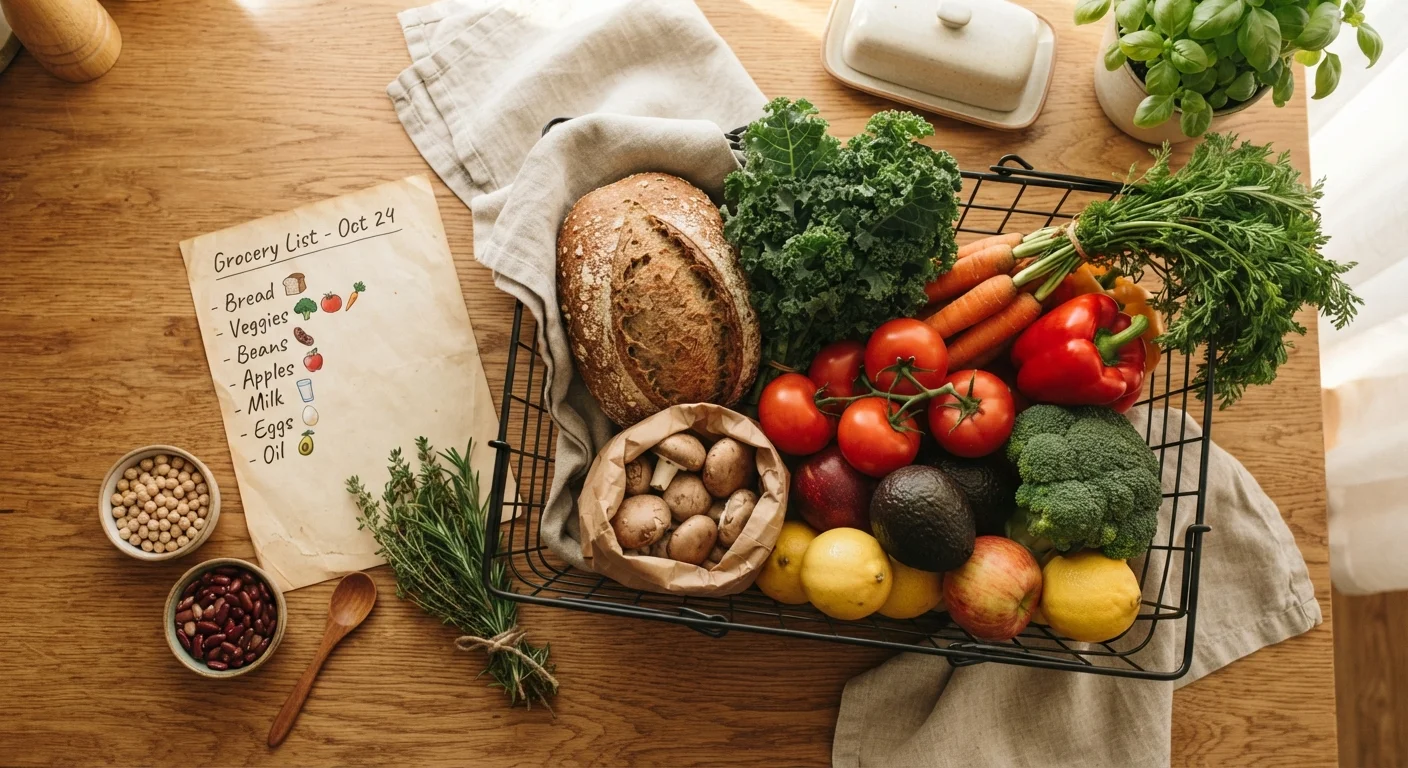
Dried legumes, oats, brown rice, eggs, and seasonal vegetables consistently offer the most nutrients per dollar spent. These foods are also more filling than ultra-processed alternatives, meaning you naturally eat less over the course of a day.
Compare unit prices rather than package prices.
A larger package often - but not always - costs less per ounce or per serving. Checking the unit price label on the shelf edge reveals the true cost comparison and prevents the common mistake of assuming a familiar brand or medium-sized item is the better deal.
Choose store-brand versions of staple items by default.
For shelf-stable staples like canned vegetables, dried pasta, flour, oats, and frozen produce, store-brand products are typically manufactured to the same standard as name-brand equivalents. The nutritional profile is nearly identical, and the savings are consistent.
Shop the perimeter and frozen aisle intentionally.
Fresh produce, proteins, and dairy tend to be located around the store's perimeter. Frozen fruits and vegetables are equally nutritious as fresh - often more so, since they're frozen shortly after harvest - and cost significantly less, especially out of season.
Reduce food waste by shopping with a use-first mindset.
The average American household discards a significant portion of the food it buys. Before each shopping trip, checking what's already in your fridge and pantry and planning meals around those items first cuts waste and lowers your spending.
Quick Wins You Can Use Before Your Next Trip
Even if you're starting from scratch, a few immediate actions can make a visible difference on your next grocery run. These don't require planning ahead - just a few minutes before or during your shop.
For more ideas on maintaining these habits week after week, see Weekly Grocery Habits That Support Consistent, Balanced Eating.
Understanding Labels and Ingredient Lists Without Getting Overwhelmed
One hidden cost of grocery shopping is buying packaged foods that seem healthy but deliver little nutritional value per dollar. Learning to read a nutrition label quickly helps you make faster, more confident decisions at the shelf.
Use the Five-Ingredient Rule at the Shelf
When evaluating a packaged product, a useful rule of thumb is to glance at the ingredient list. If the list is longer than five to seven items and you can't recognize most of them, that's a signal the product is heavily processed - and often less filling per dollar spent. This isn't a strict nutritional rule, but it's a fast, low-effort filter that helps beginners make quicker decisions without needing to decode every label.
Focus on a few key markers: the serving size (which affects every other number on the label), the fiber content, and the ingredient list length. A shorter ingredient list with recognizable whole-food ingredients usually signals a less processed product. For a detailed walkthrough, Reading a Nutrition Label Without Getting Lost breaks it down step by step.
If you want a fast reference tool, the Nutrition Label Checklist: What to Look for Before You Buy gives you a practical checklist format you can use while shopping.
This article is for general informational and educational purposes only. It does not constitute medical or dietary advice. For guidance specific to your health needs, consult a qualified healthcare professional or registered dietitian.