

Key Takeaways
Summary
18 items · 10-20 minutes per grocery trip
Why Nutrition Labels Can Feel Confusing (And How to Fix That)
Standing in a grocery aisle squinting at tiny print while a cart rolls past you is a familiar experience for most of us. Nutrition labels pack a lot of information into a small space, and it's genuinely hard to know what deserves your attention and what you can scroll past.
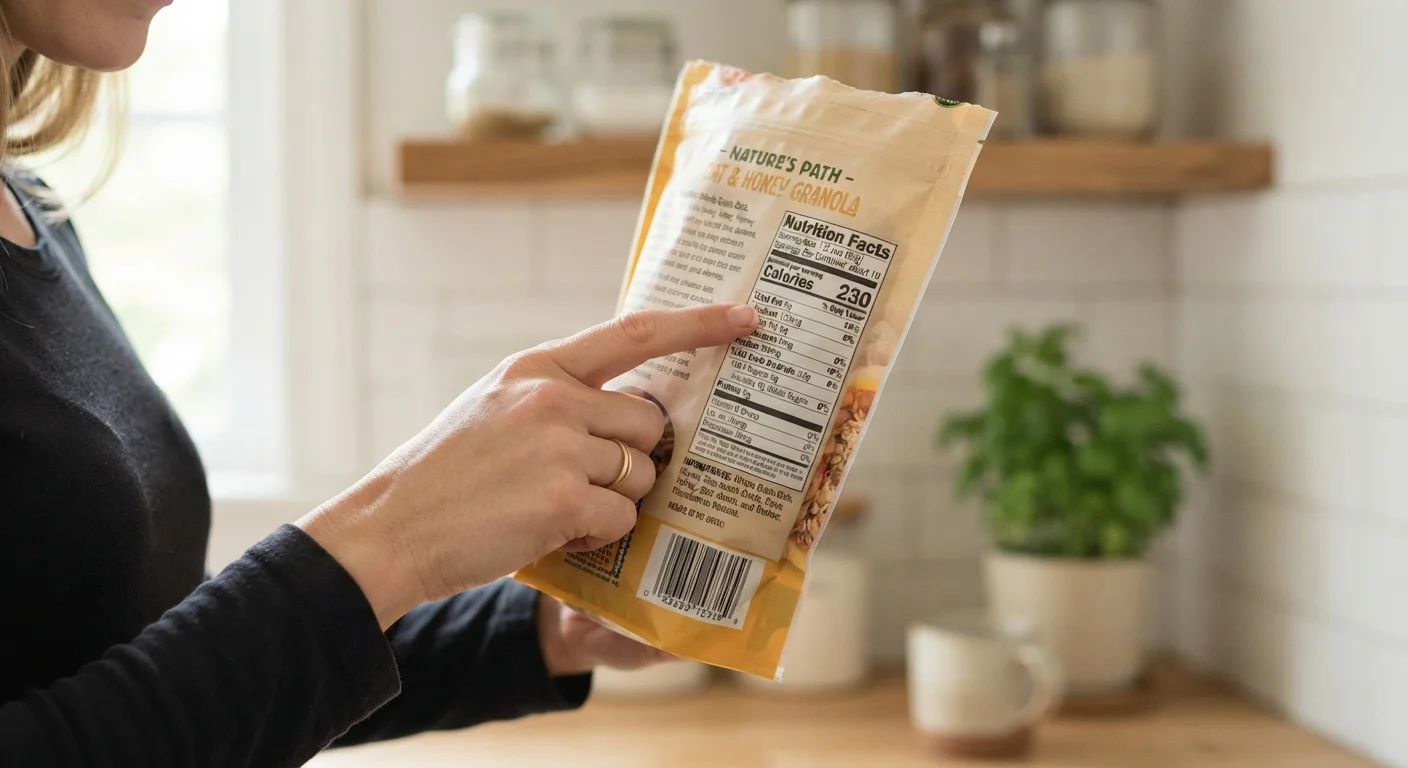
The good news: once you know what to look for, the label becomes one of the most useful tools you have. You don't need a nutrition degree - you just need a short, repeatable checklist. That's exactly what this guide gives you.
Use the checklist below every time you pick up a new packaged food. Over time, reading labels will become second nature. And if you'd like to dive deeper into one sneaky ingredient, our article on where added sugar hides in everyday foods is a helpful next step.
Front-of-Package Claims Can Be Misleading
Words like "natural," "wholesome," or "made with real fruit" are marketing terms, not regulated nutrition claims. They can appear on foods that are high in added sugar or sodium. Always flip the package over and use the Nutrition Facts panel and ingredient list as your primary sources of information.
What You'll Need
You don't need any special equipment to start reading nutrition labels more effectively. A few simple aids can make the process even smoother, especially when you're first building the habit.
Reading glasses or phone magnifier
Nutrition label text is small - magnification helps you read ingredient lists and fine print accurately.
Notes app or a small notepad
Jot down brands or products that meet your criteria so future shopping trips go faster.
FDA Nutrition Facts label reference guide
The FDA publishes a free, plain-language guide explaining every section of the US Nutrition Facts panel.
Your Nutrition Label Checklist
Work through these items in order the first time. The groups follow the physical layout of the Nutrition Facts panel as it appears on most US packaged foods, regulated by the FDA.
Start Here: Serving Information
Calories
Nutrients to Limit
Nutrients to Seek Out
Percent Daily Value (%DV)
Ingredient List
Label Claims - Read with Context
This Is General Information, Not Personal Dietary Advice
Nutritional needs vary significantly depending on age, health status, medications, and other individual factors. The guidance in this checklist reflects general public health principles for healthy adults. If you have a medical condition, food allergy, or specific dietary concern, please work with a registered dietitian or your healthcare provider to determine what's right for you.
For a practical application of these skills, see our guide on grocery shopping on a budget without sacrificing nutrition - because eating well and spending wisely go hand in hand.
This article is for general informational and educational purposes only and is not a substitute for advice from a registered dietitian or qualified healthcare professional. Nutritional needs vary by individual. Please consult a healthcare provider with questions about your specific dietary requirements.